Magnetic Resonance Imaging–Based Artificial Intelligence in Predicting Prostate Cancer Biochemical Recurrence: Systematic Review and Meta-Analysis - Scorecard - MDSpire
Advertisement
Magnetic Resonance Imaging–Based Artificial Intelligence in Predicting Prostate Cancer Biochemical Recurrence: Systematic Review and Meta-Analysis
Clinical Scorecard: Utilizing Artificial Intelligence in MRI to Forecast Biochemical Recurrence of Prostate Cancer: A Comprehensive Review and Meta-Analysis
At a Glance
Category
Detail
Condition
Prostate Cancer
Key Mechanisms
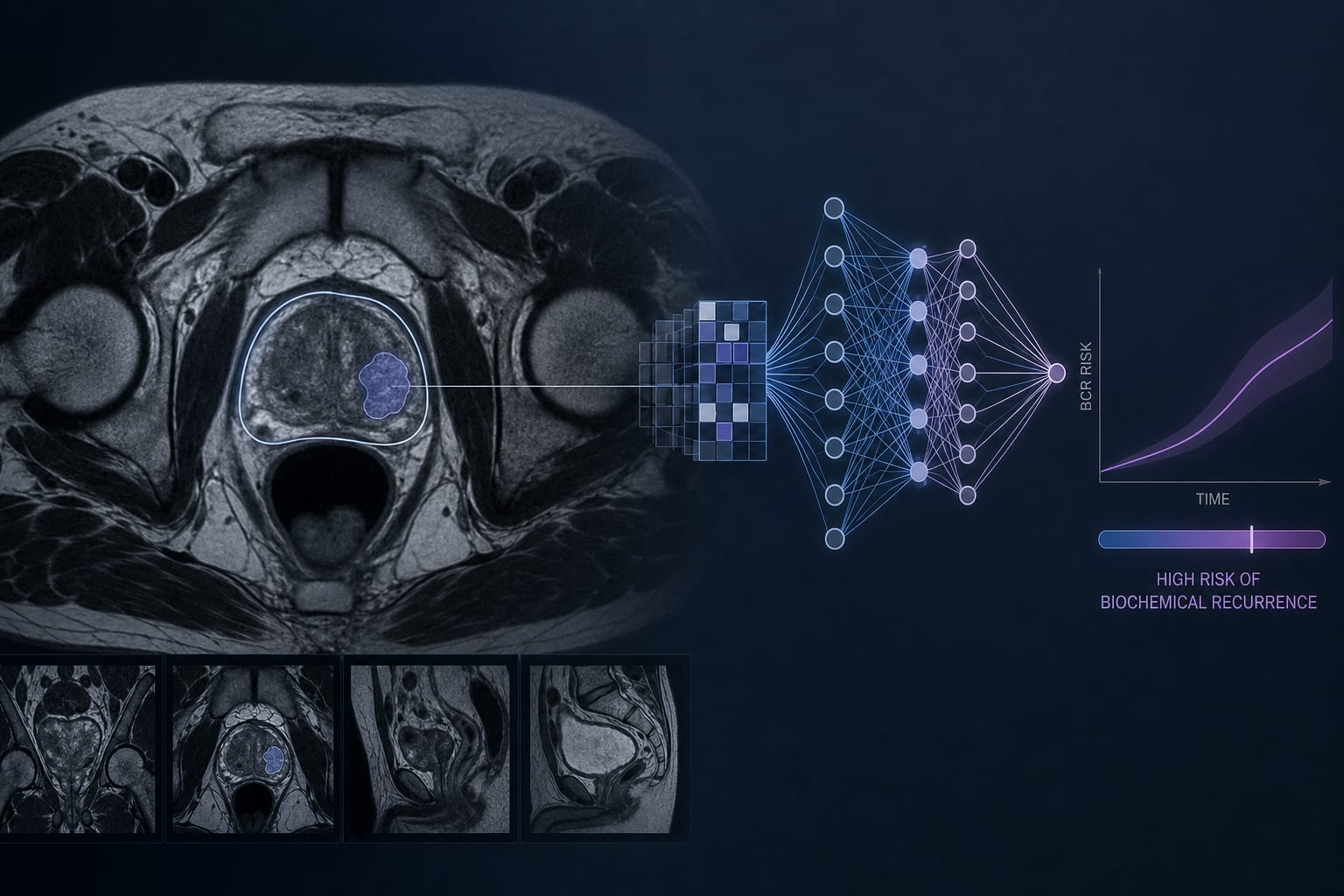
Utilization of AI in MRI for predicting biochemical recurrence post-treatment.
Target Population
Men diagnosed with prostate cancer, particularly those at intermediate and high risk of biochemical recurrence.
Care Setting
Clinical oncology and radiology
Key Highlights
Prostate cancer represents 14.1% of all cancer cases globally.
Biochemical recurrence is defined by a sustained increase in prostate-specific antigen (PSA) levels.
AI models show promise in improving predictive accuracy for biochemical recurrence.
Current studies are mostly retrospective with limitations in sample size and validation.
MRI-based AI models are intended for risk stratification and post-treatment surveillance.
Guideline-Based Recommendations
Diagnosis
Utilize PSA testing, multiparametric MRI, and AI models for improved detection.
Management
Implement AI-based MRI models for risk stratification and decision support in treatment.
Monitoring & Follow-up
Conduct post-treatment surveillance using AI-enhanced imaging techniques.
Risks
Consider limitations of current studies including intermodel variability and overfitting.
Patient & Prescribing Data
Men with prostate cancer at risk of biochemical recurrence.
AI models may enhance the precision of treatment decisions and monitoring.
Clinical Best Practices
Incorporate AI-driven MRI assessments in clinical workflows for prostate cancer management.
Ensure ongoing validation of AI models in diverse clinical settings.