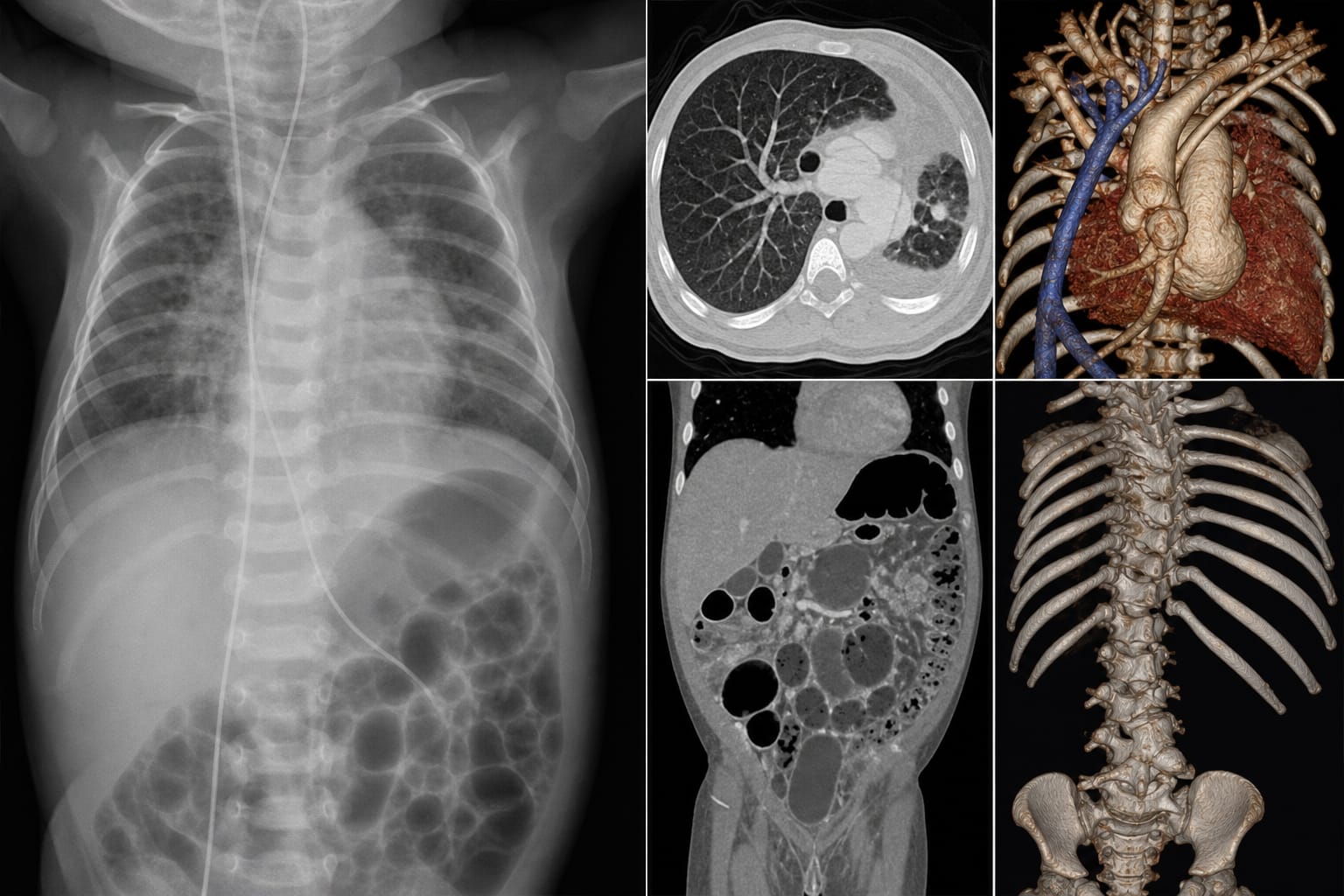
Case Report: Imaging findings of neonatal horseshoe lung with multiple system malformations
-
By
-
Weixiu Wang
-
Haiyan Sun
-
Yalan Wu
-
Rongpin Li
-
June 25, 2026
-
Clinical Scorecard: Imaging Characteristics of Neonatal Horseshoe Lung Accompanied by Multiple Systemic Anomalies: A Case Study
At a Glance
| Category | Detail |
|---|
| Condition | Horseshoe Lung (HL) |
| Key Mechanisms | Congenital fusion of bilateral lower lung tissues, associated with multisystem malformations. |
| Target Population | Neonates, particularly those with congenital malformations. |
| Care Setting | Neonatal intensive care unit (NICU) |
Key Highlights
- HL is a rare congenital pulmonary malformation with fewer than 100 reported cases.
- Associated with scimitar syndrome and VACTERL-spectrum anomalies.
- Imaging modalities provided comprehensive evaluation for diagnosis and management.
- Surgical intervention was required to relieve gastrointestinal obstruction.
- Multiple systemic anomalies were present, complicating the clinical picture.
Guideline-Based Recommendations
Diagnosis
- Utilize imaging modalities such as ultrasound, X-ray, and CT for comprehensive evaluation.
Management
- Endotracheal intubation and mechanical ventilation for respiratory distress.
- Surgical intervention for gastrointestinal obstruction.
Monitoring & Follow-up
- Monitor for respiratory distress and signs of infection post-surgery.
Risks
- Increased risk of respiratory failure and multisystem complications.
Patient & Prescribing Data
Premature neonates with congenital malformations.
Use of pulmonary surfactant replacement therapy and anti-infective therapy.
Clinical Best Practices
- Early identification of congenital anomalies through prenatal imaging.
- Multidisciplinary approach for management of complex cases.
- Regular monitoring of respiratory and gastrointestinal status in affected neonates.
Related Resources & Content