Cellulitis-like cutaneous cryptococcosis revealing disseminated infection in a kidney transplant recipient: a case report and systematic review - Scorecard - MDSpire
Conexiant’s news site is now MDSpire News. Learn more
Advertisement
Cutaneous cryptococcosis mimicking cellulitis as a manifestation of disseminated infection in a kidney transplant patient: a case study and literature review
Clinical Scorecard: Cutaneous cryptococcosis mimicking cellulitis as a manifestation of disseminated infection in a kidney transplant patient: a case study and literature review
At a Glance
Category
Detail
Condition
Cryptococcosis
Key Mechanisms
Opportunistic infection caused by Cryptococcus neoformans in immunocompromised hosts, including kidney transplant recipients.
Target Population
Kidney transplant recipients with cutaneous cryptococcosis, including patients with disseminated infection.
Care Setting
Nephrology and Infectious Diseases Units.
Key Highlights
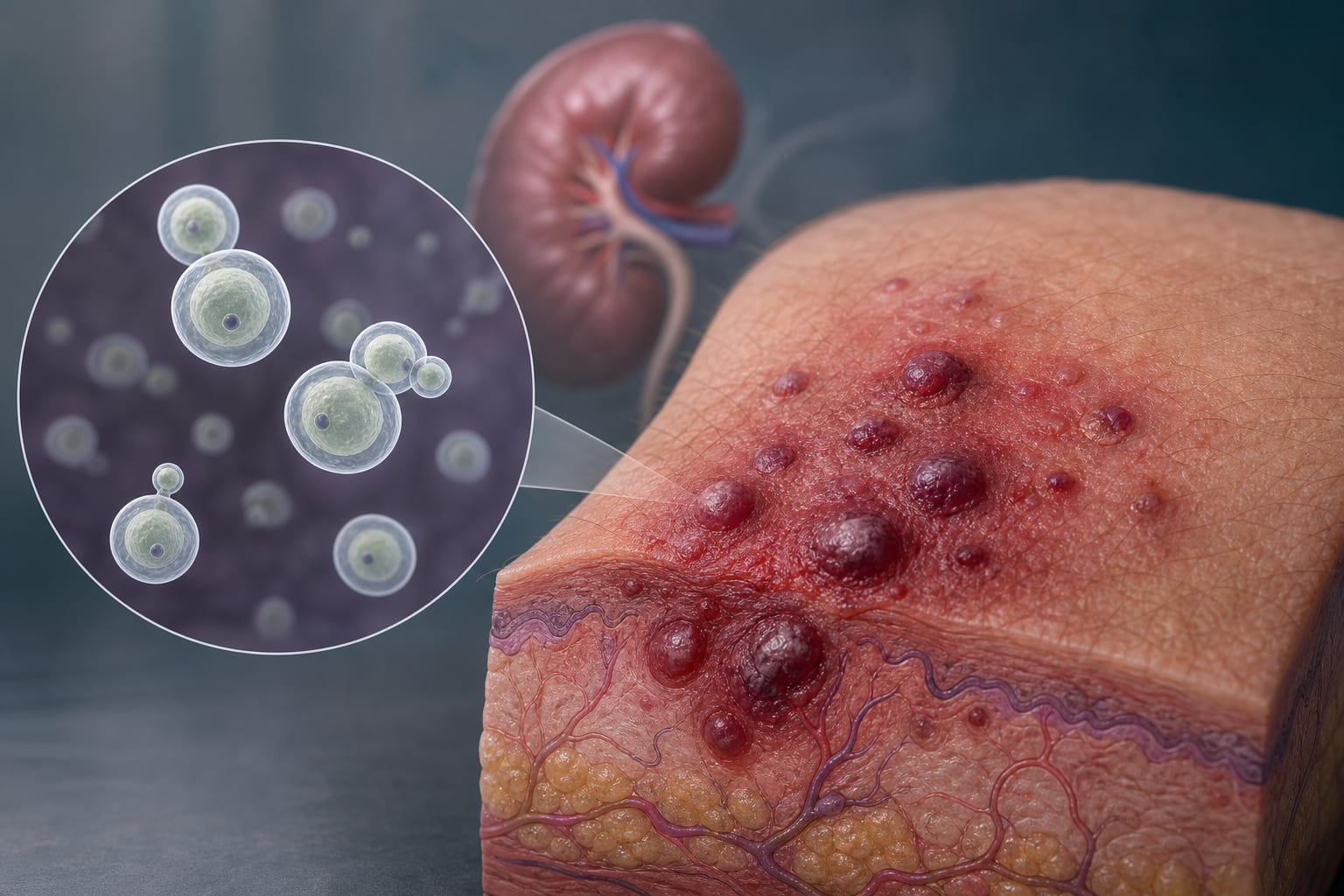
Cutaneous cryptococcosis is uncommon in kidney transplant recipients but may represent an early sign of disseminated infection.
Cellulitis-like lesions were the most common cutaneous presentation in the review and frequently mimicked bacterial skin infections.
Disseminated disease occurred in 49 of 73 patients (67.1%), with cutaneous involvement as the initial manifestation in 34 of 49 disseminated cases (69.4%).
The reported case involved early-onset disseminated C. neoformans infection within 2 months of ABO-incompatible kidney transplantation.
Guideline-Based Recommendations
Diagnosis
In kidney transplant recipients with atypical or antibiotic-unresponsive cellulitis-like lesions, cryptococcosis should be considered and prompt diagnostic evaluation pursued.
Skin biopsy, histopathology, culture, and cryptococcal antigen testing are important for diagnosis and disease staging.
Management
Treatment in the reviewed cases most commonly involved amphotericin B-based induction therapy, often with flucytosine, followed by azole consolidation therapy.
Antifungal treatment should be integrated with careful, individualized adjustment of immunosuppression.
Monitoring & Follow-up
Because cutaneous cryptococcosis was frequently associated with disseminated disease, identification of skin involvement should prompt evaluation for central nervous system and bloodstream involvement.
During prolonged amphotericin B treatment, kidney graft function and tubular toxicity, including electrolyte disturbances, should be closely monitored.
Risks
ABO-incompatible kidney transplantation involves intensified immunosuppression and is associated with increased infection risk; however, the specific risk of cryptococcosis in these recipients remains poorly defined.
Rituximab-associated B-cell depletion has been hypothesized to increase susceptibility to opportunistic infection, but evidence specific to cryptococcosis remains limited.
Patient & Prescribing Data
The review included 73 kidney transplant recipients with microbiologically and/or histopathologically confirmed cryptococcosis and documented cutaneous involvement.
Most patients received amphotericin B-based induction therapy, often combined with flucytosine, followed by fluconazole maintenance or consolidation therapy. Isavuconazole was used in the reported case after voriconazole toxicity and in one additional published case.
Clinical Best Practices
Maintain a high index of suspicion for cryptococcosis in transplant recipients with atypical, nonhealing, or antibiotic-refractory skin lesions.
Obtain skin biopsy and appropriate microbiological testing when cutaneous cryptococcosis is suspected.
Evaluate patients with confirmed cutaneous cryptococcosis for disseminated disease, including CNS and bloodstream involvement.
Coordinate antifungal treatment with individualized management of immunosuppression.
Related Resources & Content
Meena P, Bhargava V, Singh K, Sethi J, Prabhakar A, Panda S. “Cryptococcosis in kidney transplant recipients: current understanding and practices.” World Journal of Nephrology. 2023;12(5):120–131.
Perfect JR, Dismukes WE, Dromer F, Goldman DL, Graybill JR, Hamill RJ, et al. “Clinical practice guidelines for the management of cryptococcal disease: 2010 update by the Infectious Diseases Society of America.” Clinical Infectious Diseases. 2010;50(3):291–322.
Chang CC, Harrison TS, Bicanic TA, Chayakulkeeree M, Sorrell TC, Warris A, et al. “Global guideline for the diagnosis and management of cryptococcosis: an initiative of the ECMM and ISHAM in cooperation with the ASM.” The Lancet Infectious Diseases. 2024;24(8):e495–e512.
by Vincenzo Scaglione, Simone Melchiorri, Marco Cola, Alberto Chinellato, Silvia Cancian, Lisa Doria, Stefano Piaserico, Francesco Fortarezza, Lucrezia Furian, Federico Nalesso, Ignazio Castagliuolo, Annamaria Cattelan