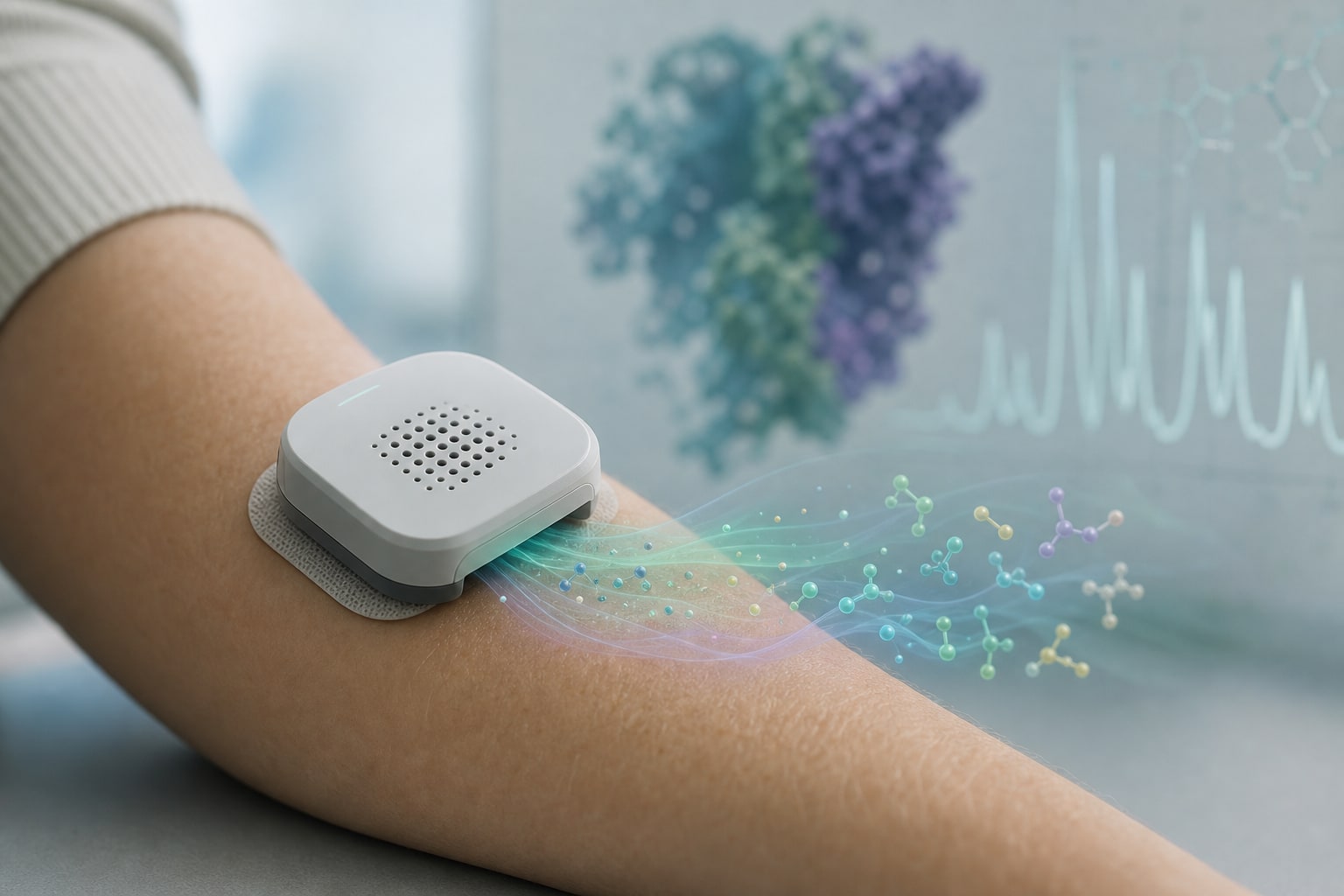
Advanced Olfactory Cancer Detection: When E-Noses Sniff the Skin
-
By
-
Liam Critchley
-
July 16, 2026
Clinical Scorecard: Innovative Cancer Detection Using Electronic Noses: Analyzing Skin Emissions
At a Glance
| Category | Detail |
|---|
| Condition | Cancer Detection |
| Key Mechanisms | Detection of volatile organic compounds (VOCs) emitted from skin using electronic noses (e-noses). |
| Target Population | Patients diagnosed with cancer and healthy volunteers. |
| Care Setting | Clinical settings for non-invasive cancer diagnosis. |
Key Highlights
- E-noses can detect gaseous cancer biomarkers from skin emissions with high accuracy.
- Recent advancements include quantum-dot-based e-noses for improved sensitivity.
- E-noses provide non-invasive, rapid results suitable for continuous monitoring.
Guideline-Based Recommendations
Diagnosis
- Use e-noses to identify VOCs associated with cancer from skin emissions.
Management
- Implement e-nose technology for ongoing assessment of cancer progression.
Monitoring & Follow-up
- Utilize e-noses for continuous monitoring of VOC changes in patients.
Risks
- Consider variability in VOC profiles influenced by diet, smoking, and other factors.
Patient & Prescribing Data
Individuals undergoing cancer diagnosis and monitoring.
E-noses can assist in identifying cancer presence and monitoring treatment effects.
Clinical Best Practices
- Incorporate e-nose technology in routine cancer screening protocols.
- Use advanced algorithms for accurate interpretation of sensor data.
Related Resources & Content