Hypoxia-driven tumor immune escape: mechanisms and therapeutic opportunities
-
By
-
Hongran Qin
-
Shuqiang Yang
-
Jiawei He
-
Meijia Zhao
-
Luqian Zhao
-
Jingjing Wang
-
Xiulin Jiang
-
Xiaowen Chen
-
Xin Xu
-
July 1, 2026
-
Clinical Scorecard: Mechanisms of Tumor Immune Evasion Induced by Hypoxia and Potential Therapeutic Strategies
At a Glance
| Category | Detail |
|---|
| Condition | Tumor Immune Evasion |
| Key Mechanisms | Hypoxia-induced changes in immune cell composition and function, metabolic reprogramming, and immune checkpoint regulation. |
| Target Population | Patients with solid tumors exhibiting hypoxia. |
| Care Setting | Oncology and immunotherapy. |
Key Highlights
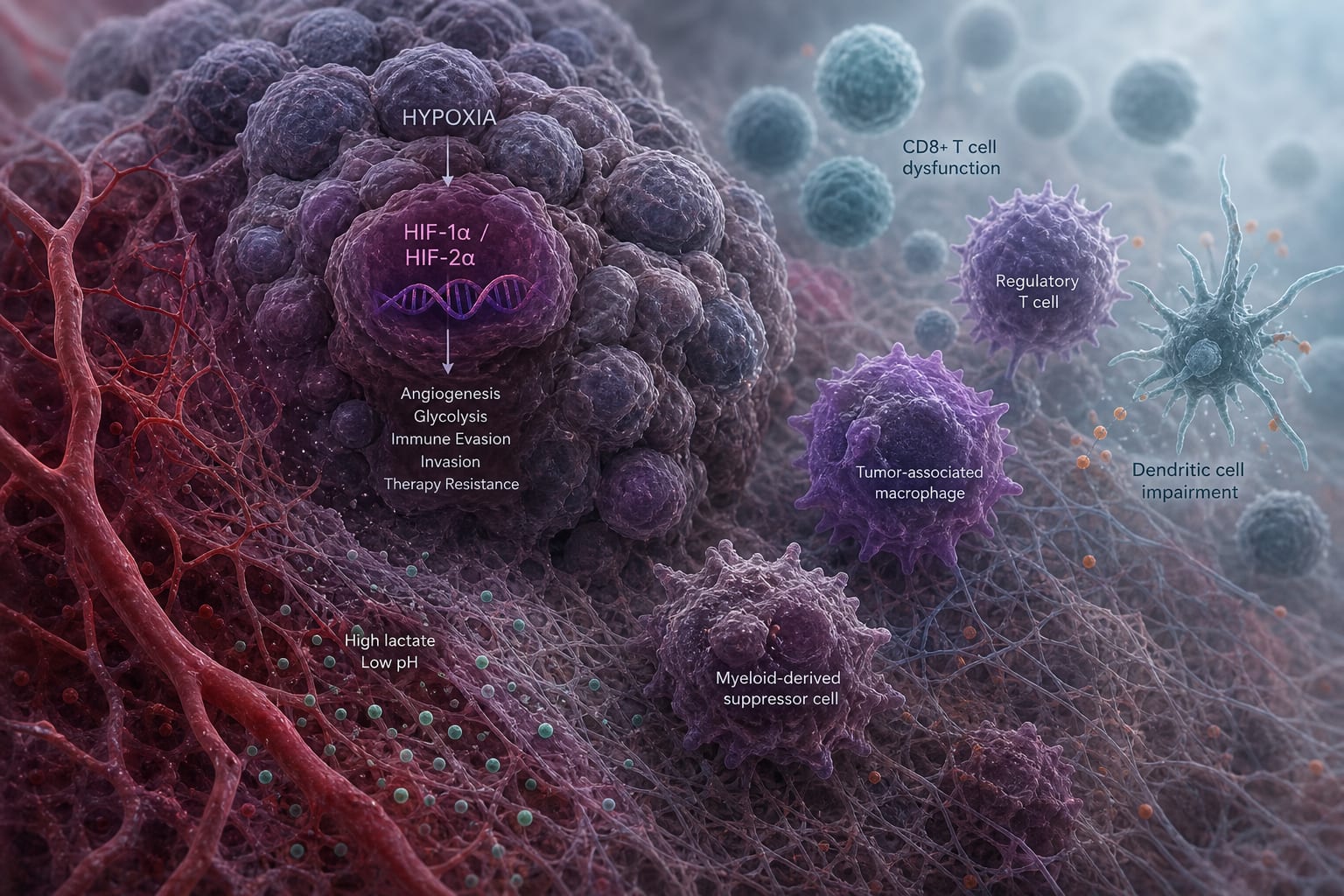
- Hypoxia drives tumor immune escape by suppressing CD8+ T cells and promoting regulatory T cells.
- HIF-1α and HIF-2α are key regulators of hypoxia-induced transcriptional programs.
- Hypoxia alters the tumor microenvironment, enhancing immunosuppressive cell types.
- Targeting hypoxia-related pathways may improve antitumor immunity.
- Combination therapies are necessary due to overlapping immune escape mechanisms.
Guideline-Based Recommendations
Diagnosis
- Assess tumor hypoxia levels to understand immune evasion mechanisms.
Management
- Consider combination therapies targeting hypoxia, metabolism, and immune checkpoints.
Monitoring & Follow-up
- Monitor changes in immune cell populations and metabolic markers in response to therapies.
Risks
- Single-agent therapies may be insufficient due to complex immune escape mechanisms.
Patient & Prescribing Data
Patients with solid tumors characterized by hypoxic microenvironments.
Combination therapies targeting HIF signaling and metabolic pathways may enhance treatment efficacy.
Clinical Best Practices
- Integrate hypoxia modulation with immunotherapy for improved outcomes.
- Evaluate the role of RNA modifications in hypoxia-driven immune escape.
Related Resources & Content