Dynamic inflammatory markers as predictors of 90-day outcomes in spontaneous intracerebral hemorrhage
-
By
-
Huiying Huang
-
Weijun Wang
-
Qing Ma
-
Kun Cao
-
June 18, 2026
-
Clinical Scorecard: Temporal Changes in Inflammatory Biomarkers as Indicators of 90-Day Outcomes Following Spontaneous Intracerebral Hemorrhage
At a Glance
| Category | Detail |
|---|
| Condition | |
| Key Mechanisms | |
| Target Population | Patients with spontaneous ICH, preferably aged 18-80. |
| Care Setting | |
Key Highlights
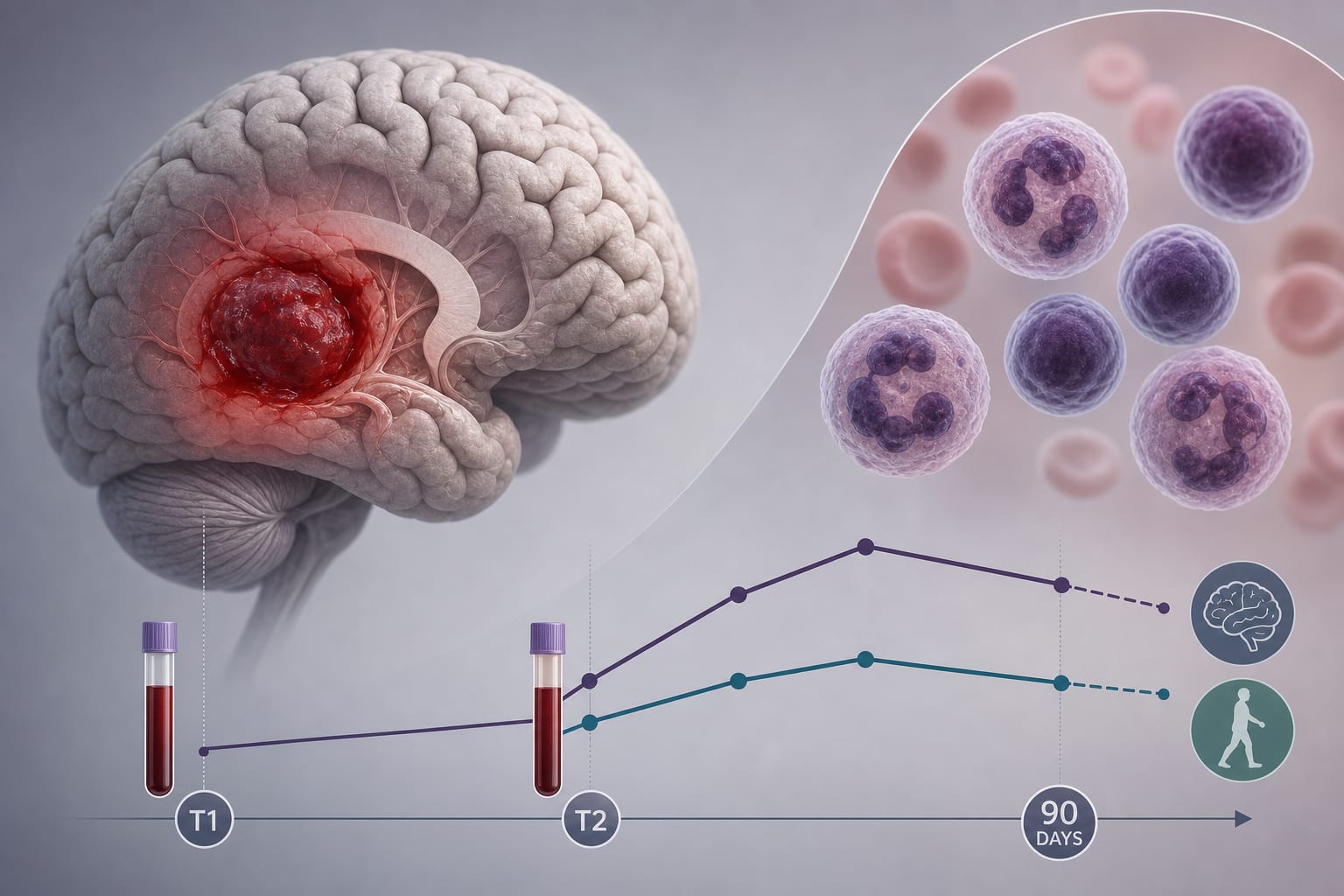
- Dynamic changes in inflammatory biomarkers correlate with 90-day outcomes.
- Higher levels of NLR, SII, SIRI, and IPI at day 7 are associated with unfavorable outcomes.
- Day-7 inflammatory levels provide better prognostic information than baseline measurements.
- Dynamic changes in inflammatory biomarkers may guide clinical decision-making.
Guideline-Based Recommendations
Diagnosis
Management
- Monitor inflammatory biomarkers to evaluate prognosis.
- Consider potential therapeutic interventions based on inflammatory biomarker levels.
Monitoring & Follow-up
Risks
Patient & Prescribing Data
No specific treatments significantly improve long-term prognosis despite advances in management; further research is needed.
Clinical Best Practices
- Utilize composite inflammatory indices (e.g., NLR, SII) for risk stratification in ICH patients.
- Incorporate dynamic monitoring of inflammatory biomarkers in clinical assessments.
Related Resources & Content