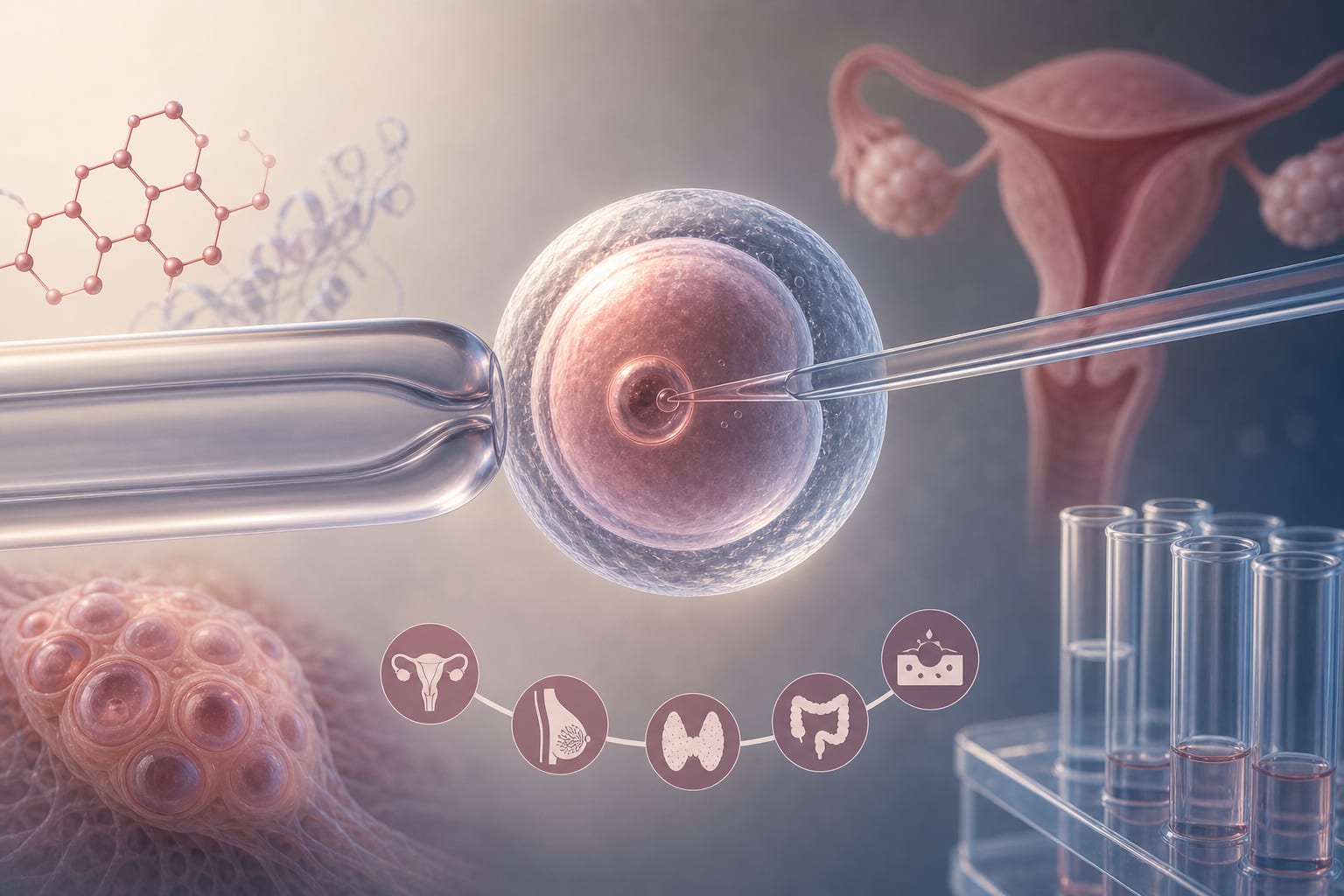
Assisted Reproductive Technologies and Their Association with Hormone-Dependent Cancers
By
Adrian Raymond Walker
Christos Venetis
Signe Opdahl
Antoinette C. Anazodo
Neville F. Hacker
Michael Chapman
Louisa Jorm
Robert J. Norman
Catharyn Stern
Ursula M. Sansom-Daly
Georgina Mary Chambers
Claire Melissa Vajdic
July 13, 2026
Clinical Scorecard: Assisted Reproductive Technologies and Their Association with Hormone-Dependent Cancers
At a Glance
Category Detail
Condition Assisted Reproductive Technologies (ART) Key Mechanisms Involves hormonal medications and procedures to assist in achieving pregnancy, with potential implications for hormone-related cancer risk. Target Population Individuals assigned female at birth undergoing medically assisted reproduction treatments. Care Setting Clinical settings providing assisted reproductive technologies and fertility treatments.
Key Highlights
Approximately 3 million ART cycles performed annually worldwide. Limited strong evidence linking ART medications to hormone-related cancer risk. Recent meta-analyses suggest few to no associations between ART and breast, ovarian, or uterine cancers. Variability in study designs and confounder adjustments contributes to heterogeneous results. Study leverages an emulated target trial framework to analyze associations. Guideline-Based Recommendations
Diagnosis
Assess cancer risk in individuals undergoing ART, considering confounding factors. Management
Monitor patients receiving ART for potential hormone-related cancer risks. Monitoring & Follow-up
Evaluate long-term health outcomes in patients post-ART treatment. Risks
Consider the potential increased risk of specific cancers such as ovarian and uterine cancer associated with certain ART medications. Patient & Prescribing Data
Women and individuals assigned female at birth receiving ART treatments.
ART involves hormonal medications that may influence cancer risk; careful monitoring is advised.
Clinical Best Practices
Utilize comprehensive patient history and confounder adjustment in ART studies. Implement ongoing risk assessment for hormone-related cancers in ART patients. Adhere to ethical guidelines in research involving ART and cancer risk. Related Resources & Content