Immunosuppression after pediatric liver transplantation may lead to early and prolonged acute thymic involution: findings from a pilot longitudinal study - Scorecard - MDSpire
Advertisement
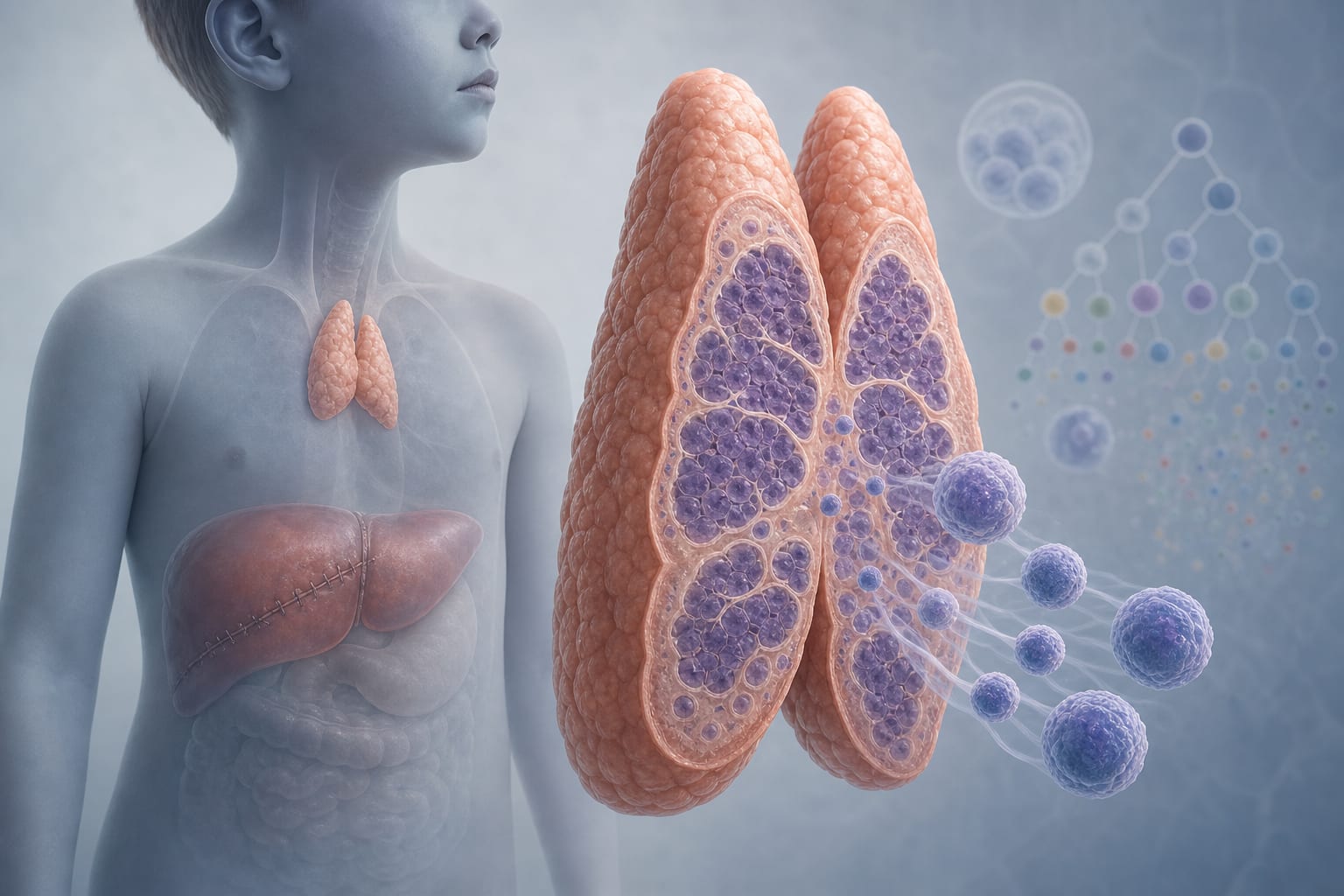
Immunosuppression after pediatric liver transplantation may lead to early and prolonged acute thymic involution: findings from a pilot longitudinal study
Clinical Scorecard: Impact of Immunosuppressive Therapy on Thymic Function and Morphology in Pediatric Liver Transplant Recipients: Insights from a Pilot Longitudinal Study
At a Glance
Category
Detail
Condition
Thymic function and morphology post-liver transplantation
Key Mechanisms
Immunosuppressive therapy affecting thymopoiesis and T-cell repertoire development
Target Population
Pediatric liver transplant recipients
Care Setting
Pediatric transplantation and immunology
Key Highlights
Thymic output measured by sjTRECs declined significantly over 12 months post-transplant.
Intrathymic proliferation (sj/βTREC ratio) showed significant reduction after 3 months.
Thymic size decreased significantly at 3 months, with partial recovery thereafter.
Recent thymic emigrants (RTEs) showed a decreasing trend correlating with sjTREC levels.
Study emphasizes the need for further controlled studies on thymic recovery post-transplant.
Guideline-Based Recommendations
Diagnosis
Assess thymic function using sjTRECs and sj/βTREC ratios.
Management
Consider immunosuppressive protocols that minimize impact on thymic activity.
Monitoring & Follow-up
Monitor thymic output and morphology over time in pediatric transplant recipients.
Risks
Increased risk of opportunistic infections and immune complications due to immunosuppression.
by Guillermo Costaguta, Brenda Dinatale, Itauá Leston Araujo, Wilson Savino, Fernando Alvarez, Oscar Bottasso, Ana Rosa Perez, Florencia Belén González, Alejandro Costaguta
Updated 2025-2026 vaccination was linked to added protection in a CDC-funded analysis that became part of a broader debate over routine vaccine monitoring.