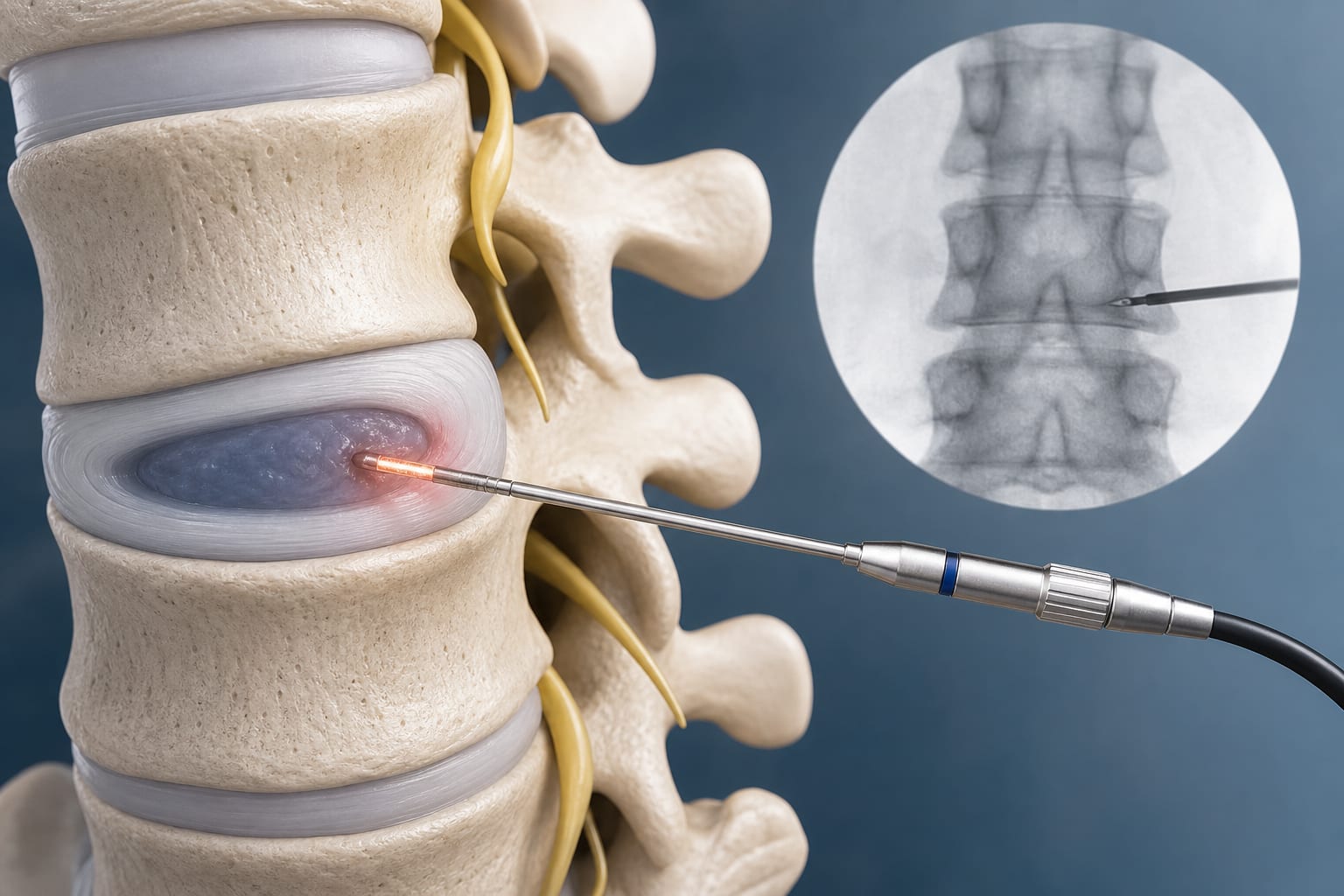
Real-world 24-month pain outcomes of disk percutaneous ablation and extraction versus Disc-FX nucleoplasty for lumbar discogenic pain and contained lumbar disk herniation: a single-center retrospective cohort study - Scorecard - MDSpire
Advertisement
Real-world 24-month pain outcomes of disk percutaneous ablation and extraction versus Disc-FX nucleoplasty for lumbar discogenic pain and contained lumbar disk herniation: a single-center retrospective cohort study
Clinical Scorecard: Long-term Pain Outcomes at 24 Months for Disk Percutaneous Ablation and Extraction Compared to Disc-FX Nucleoplasty in Patients with Lumbar Discogenic Pain and Contained Herniation: A Retrospective Cohort Analysis from a Single Center
At a Glance
Category
Detail
Condition
Lumbar Discogenic Pain and Contained Herniation
Key Mechanisms
Multi-mechanistic strategies addressing pressure, fissures, nerve ingrowth, and inflammation.
Target Population
Patients with chronic lumbar discogenic pain and contained herniations.
Care Setting
Single-center retrospective cohort study.
Key Highlights
DPAE group showed a mean VAS reduction of 5.29 compared to 4.17 in the Disc-FX group (p < 0.001).
Higher composite success rate in DPAE group (70.0% vs. 51.1%, p < 0.05).
Reintervention rate was lower in DPAE group (7.3% vs. 14.8%, p = 0.047).
DPAE demonstrated better improvement in ODI and PGIC scores.
Complication rates were not significantly different between groups (6.4% vs. 9.1%).
Guideline-Based Recommendations
Diagnosis
Management
Management recommendations should be rephrased to remove unsupported language.
Monitoring & Follow-up
Risks
Patient & Prescribing Data
["Remove unsupported language regarding DPAE's long-term outcomes."]
Clinical Best Practices
Utilize a multi-mechanistic approach for intradiscal interventions.
Perform procedures by an experienced surgical team to minimize variability.