Feasibility of studying respiratory infection transmission in a Swiss household cohort: Findings from the BEready (“Bern, get ready”) study - Scorecard - MDSpire
Clinical Scorecard: Exploring the Viability of Investigating Respiratory Infection Spread in a Swiss Household Cohort: Insights from the BEready Study
At a Glance
Category
Detail
Condition
Respiratory virus infections
Key Mechanisms
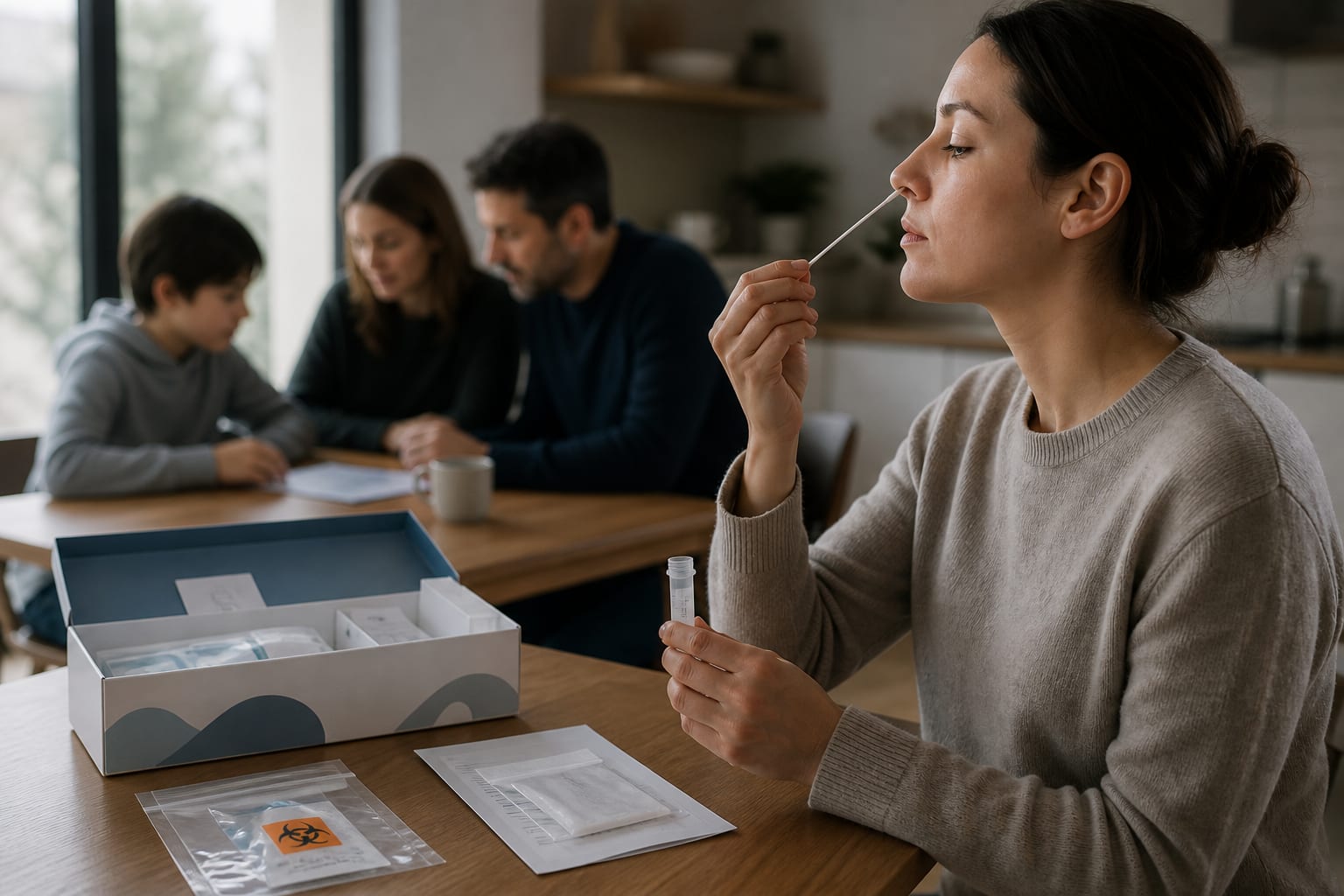
Symptom-triggered self-collection of human and pet swabs, online reporting, centralized multiplex PCR testing, and telemedicine
Target Population
Households in the canton of Bern, including adults, children, cats, and dogs
Care Setting
Pilot household cohort evaluating decentralized respiratory virus surveillance
Key Highlights
The pilot study enrolled 108 households, including 161 adults, 32 children, 29 cats, and 15 dogs.
During 152 respiratory illness events, 336 of 387 expected swabs (87%) were received.
Valid results were obtained from 70% of requested index-case samples, 69% of household-contact samples, and 51% of pet samples.
A respiratory virus was detected in 63% of index-case samples and 23% of human household-contact samples.
Viral positivity was 60% among symptomatic participants and 6% among asymptomatic participants.
None of the 24 analyzed pet swabs was PCR-positive.
Among responding households, 70% agreed that nasal sampling was not unpleasant.
Guideline-Based Recommendations
This pilot feasibility study did not establish clinical guidelines for respiratory infection diagnosis, treatment, or surveillance.
Diagnosis
A respiratory illness event was defined as new onset of sore throat, runny or stuffy nose, cough, or shortness of breath lasting at least 24 hours.
Symptomatic index cases collected nasal swabs, and other household members were asked to collect samples 7 days later.
Samples were tested for 13 respiratory viruses using a CE-IVD multiplex PCR panel.
Self-reported symptoms were associated with substantially higher viral detection, but the study did not evaluate symptom reporting as a clinical diagnostic test.
Management
The study evaluated decentralized surveillance procedures rather than treatment or patient-management strategies.
Participants mailed samples directly to a centralized biobank and recorded sample identification numbers online.
Telemedicine was evaluated in only 10 households that experienced an illness event during the first month.
The study did not assess antiviral treatment, antibiotic prescribing, or effects on clinical outcomes.
Monitoring & Follow-up
Household contacts were asked to collect samples 7 days after an index case reported symptoms.
A follow-up questionnaire was sent 11 months after enrollment to assess participant experiences.
Potential household transmission was defined as detection of the same viral species within a household during the same illness event.
Potential transmission events were observed for rhinovirus, SARS-CoV-2, and parainfluenza virus.
Risks
Seventy-six received samples were excluded because of participant protocol breaches.
Procedural uncertainty, limited motivation, and difficulty recording sample identification numbers contributed to incorrect submissions.
The panel did not test for bacterial respiratory pathogens such as pneumococci or Mycoplasma pneumoniae.
Most viruses in the panel were human pathogens, limiting interpretation of the negative pet results.
Missing samples and protocol breaches resulted in suboptimal sample yield.
Patient & Prescribing Data
The cohort comprised 108 households with 193 human participants and 44 pets. During the study, 188 participants reported respiratory illness across 152 disease events in 78 households.
The study evaluated sample collection and respiratory virus detection. It did not assess medications, prescribing practices, treatment adherence, or clinical outcomes.
Clinical Best Practices
Provide participants with clear demonstrations and instructions for collecting and submitting samples.
Simplify sample-identification procedures to reduce allocation errors and protocol breaches.
Interpret symptom-triggered self-sampling as a surveillance strategy rather than a validated clinical diagnostic pathway.
Distinguish received samples from those producing valid laboratory results when assessing feasibility.
Interpret pet findings cautiously because only 24 pet swabs were analyzed and the panel primarily targeted human viruses.
Apply the telemedicine findings cautiously because they were based on responses from only 10 households.
Related Resources & Content
Feasibility of Studying Respiratory Infection Transmission in a Swiss Household Cohort: Findings From the BEready (“Bern, Get Ready”) Study — Grimm K, Hodel EM, Gasser L, et al. International Journal of Infectious Diseases. 2026;171:109019. doi:10.1016/j.ijid.2026.109019.