Cutaneous laser treatment of port-wine stains and its impact on ocular manifestations in Sturge–Weber syndrome - Scorecard - MDSpire

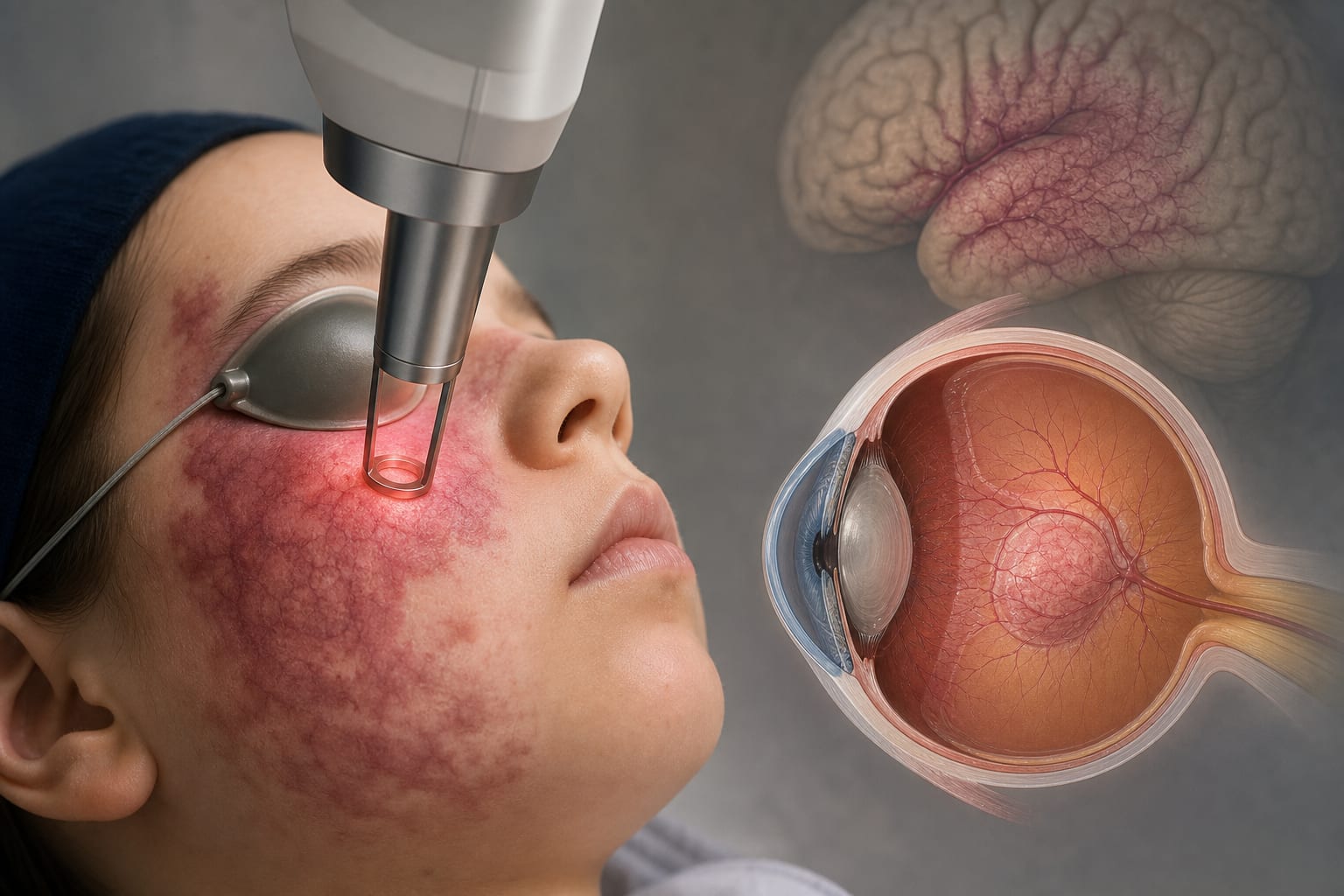
Cutaneous laser treatment of port-wine stains and its impact on ocular manifestations in Sturge–Weber syndrome

  • By

  • Susan Darby Keith

  • Grace Herrick

  • Ashton Arlen

  • Halrleen K. Multani

  • Kelly Frasier

  • Kathryn Dempsey

  • Paul McDaniel

  • June 30, 2026

  • 0 min

Share

Clinical Scorecard: Laser Therapy for Port-Wine Stains and Its Effects on Ocular Complications in Sturge-Weber Syndrome

At a Glance

CategoryDetail
ConditionSturge-Weber Syndrome
Key MechanismsSomatic mutations in the GNAQ gene lead to vascular malformations affecting skin and ocular tissues.
Target PopulationPatients with Sturge-Weber Syndrome presenting with port-wine stains and ocular complications.
Care SettingMultidisciplinary dermatologic and ophthalmologic care.

Key Highlights

  • Laser treatment may improve ocular outcomes by modulating vascular dynamics.

Guideline-Based Recommendations

Diagnosis

  • Diagnosis of Sturge-Weber syndrome is based on clinical manifestations including port-wine stains and ocular abnormalities.

Management

  • Pulsed dye laser therapy is the standard treatment for port-wine stains.

Monitoring & Follow-up

  • Monitor intraocular pressure and assess for glaucoma in patients with SWS.

Risks

  • Risks associated with laser therapy include variable efficacy and potential adverse effects depending on the modality used.

Patient & Prescribing Data

Clinical Best Practices

  • Utilize a multidisciplinary approach for managing Sturge-Weber syndrome.
  • Standardize treatment protocols to minimize risks associated with laser therapy.

Related Resources & Content

Original Source(s)

Related Content