Integrated Evaluation of Peak and Submaximal Exercise Metrics Reveals Mechanisms Behind Reduced Exercise Capacity in Fontan Patients
-
By
-
Takeshi Tsuda
-
Daphney Kernizan
-
Md Jobayer Hossain
-
June 18, 2026
Clinical Scorecard: Integrated Evaluation of Peak and Submaximal Exercise Metrics Reveals Mechanisms Behind Reduced Exercise Capacity in Fontan Patients
At a Glance
| Category | Detail |
|---|
| Condition | Fontan operation patients with single ventricle physiology |
| Key Mechanisms | Reduced exercise capacity due to limited ventricular filling and altered pulmonary mechanics |
| Target Population | Children and adolescents post-Fontan operation |
| Care Setting | Cardiac rehabilitation and exercise testing centers |
Key Highlights
- Fontan patients exhibit 60-70% peak exercise capacity compared to age-matched controls
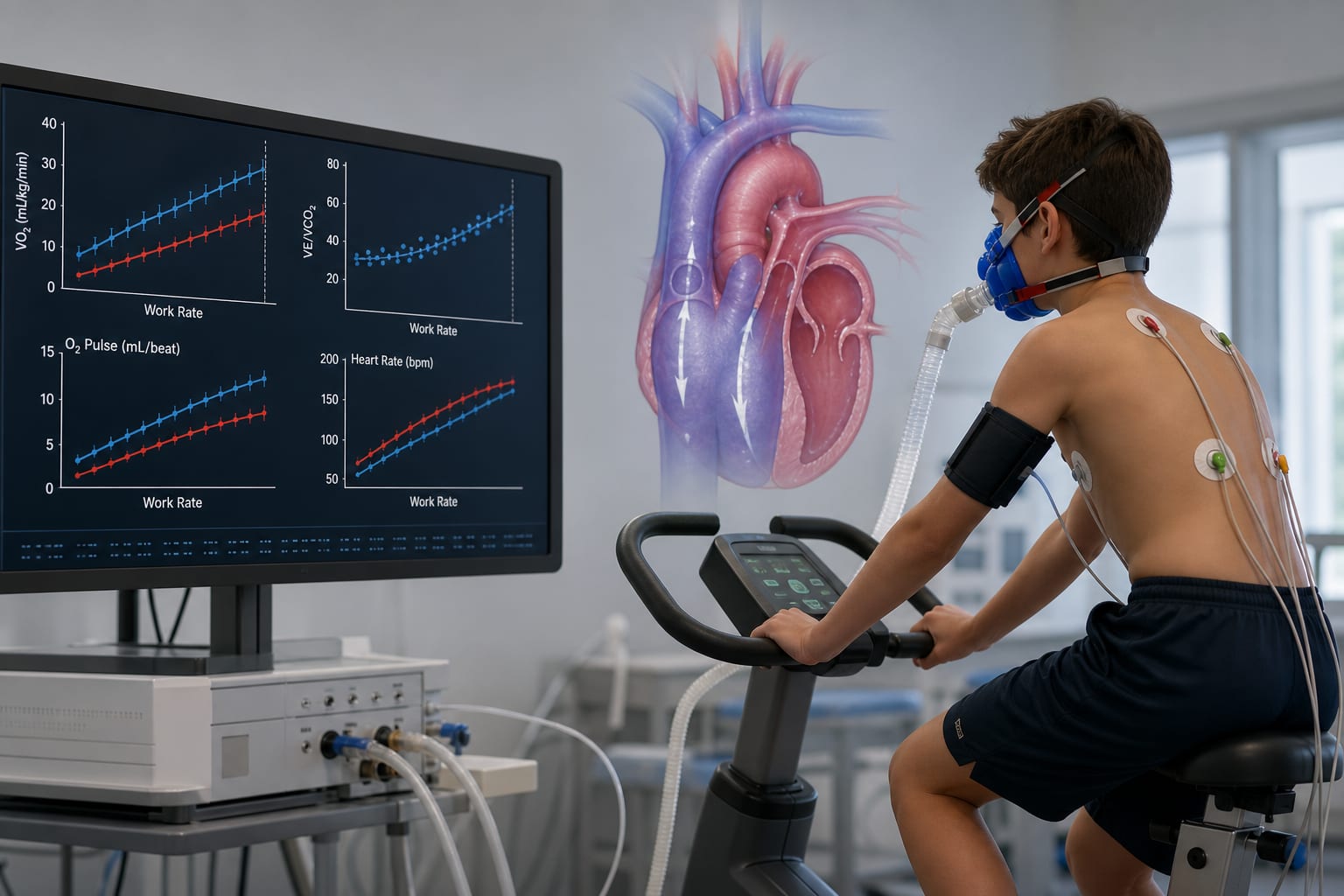
- Cardiopulmonary exercise testing (CPET) is essential for assessing exercise capacity
- Submaximal exercise metrics provide insights into exercise performance limitations
- Physical deconditioning and loss of skeletal muscle mass contribute to reduced exercise performance
- Identifying mechanisms of exercise performance can inform exercise prescriptions
Guideline-Based Recommendations
Diagnosis
- Use CPET to evaluate exercise capacity in Fontan patients
Management
- Implement appropriate exercise prescriptions to improve physical fitness
Monitoring & Follow-up
- Regular assessment of exercise performance through CPET
Risks
- Monitor for long-term cardiovascular health impacts due to poor physical conditioning
Patient & Prescribing Data
Asymptomatic Fontan patients aged 9 years and older
Exercise prescriptions should consider individual exercise capacity and physiological responses
Clinical Best Practices
- Incorporate both peak and submaximal CPET parameters in evaluations
- Encourage maintenance of physical fitness to enhance quality of life
- Regularly monitor exercise capacity to prevent cardiovascular complications
Related Resources & Content