Therapeutic effect of modified meridian-guided acupoint pressing on lumbar facet joint osteoarthritis: an integrated microbiomics and metabolomics analysis - Scorecard - MDSpire
Advertisement
Therapeutic effect of modified meridian-guided acupoint pressing on lumbar facet joint osteoarthritis: an integrated microbiomics and metabolomics analysis
Clinical Scorecard: Efficacy of Modified Meridian-Guided Acupoint Pressing in Treating Lumbar Facet Joint Osteoarthritis: Insights from Microbiomics and Metabolomics Approaches
At a Glance
Category
Detail
Condition
Lumbar Facet Joint Osteoarthritis (LFJ OA)
Key Mechanisms
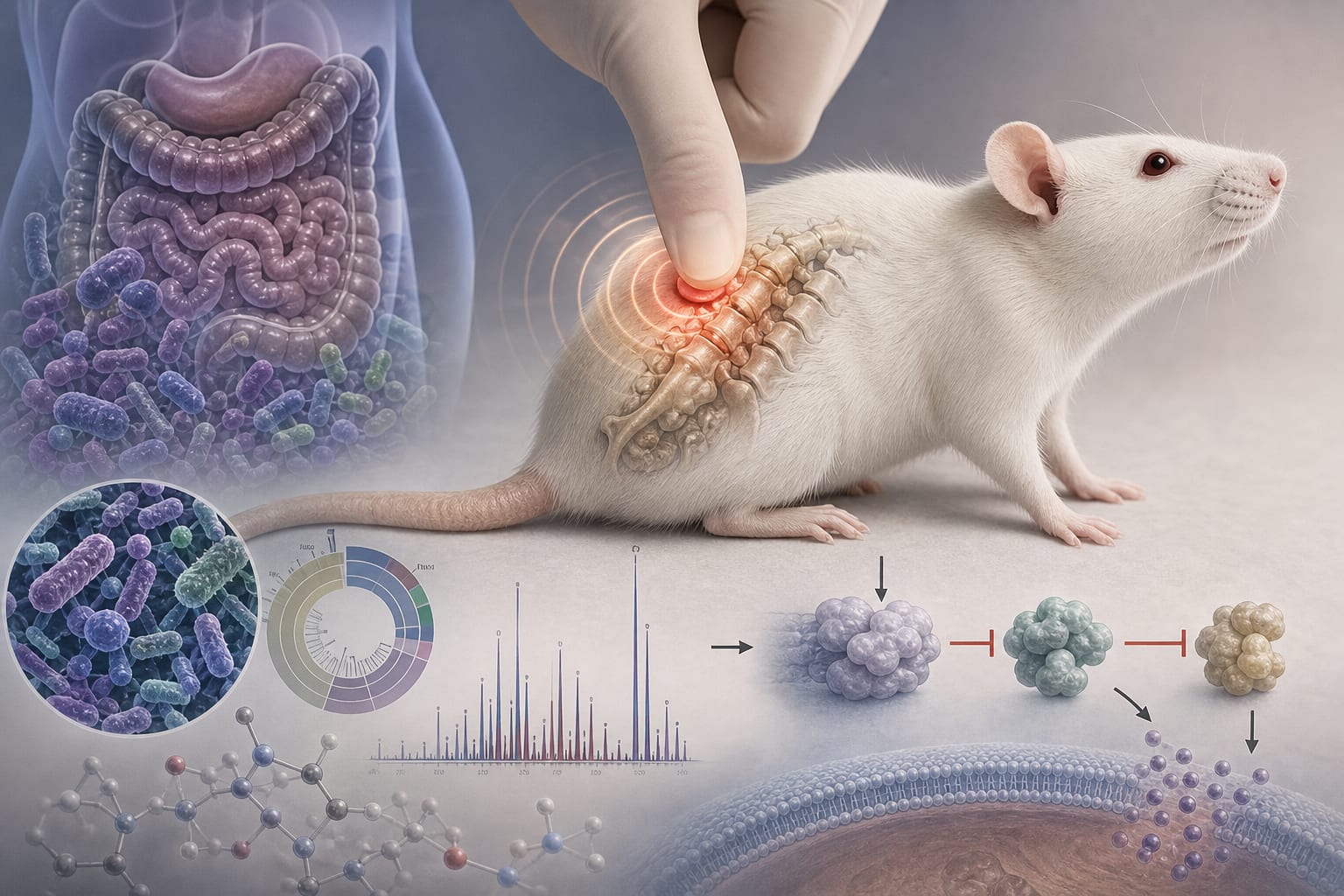
Gut microbiota reshaping, serum metabolomic reprogramming, mTORC1 pathway inhibition
Target Population
Individuals with lumbar facet joint osteoarthritis, particularly those over 50 years old
Care Setting
Preclinical animal model study
Key Highlights
MMGAP significantly reduced inflammatory cell infiltration in lumbar muscles/facet joints.
Downregulated serum IL-1β and TNF-α levels by more than 40%.
Reshaped gut microbiota and enriched mTOR signaling pathway.
FMT from MMGAP-treated rats recapitulated therapeutic effects.
Rapamycin mimicked MMGAP's anti-inflammatory and analgesic actions.
Guideline-Based Recommendations
Diagnosis
Utilize animal models to study LFJ OA and its mechanisms.
Management
Consider MMGAP as a non-invasive intervention for LFJ OA.
Monitoring & Follow-up
Assess inflammatory markers and gut microbiota composition.
Risks
Current pharmacological interventions may have adverse effects.
Patient & Prescribing Data
Patients with lumbar facet joint osteoarthritis, particularly older adults.
MMGAP may provide a non-invasive alternative to traditional pharmacological treatments.
Clinical Best Practices
Incorporate MMGAP in treatment plans for LFJ OA.
Monitor patient responses to MMGAP and adjust as necessary.