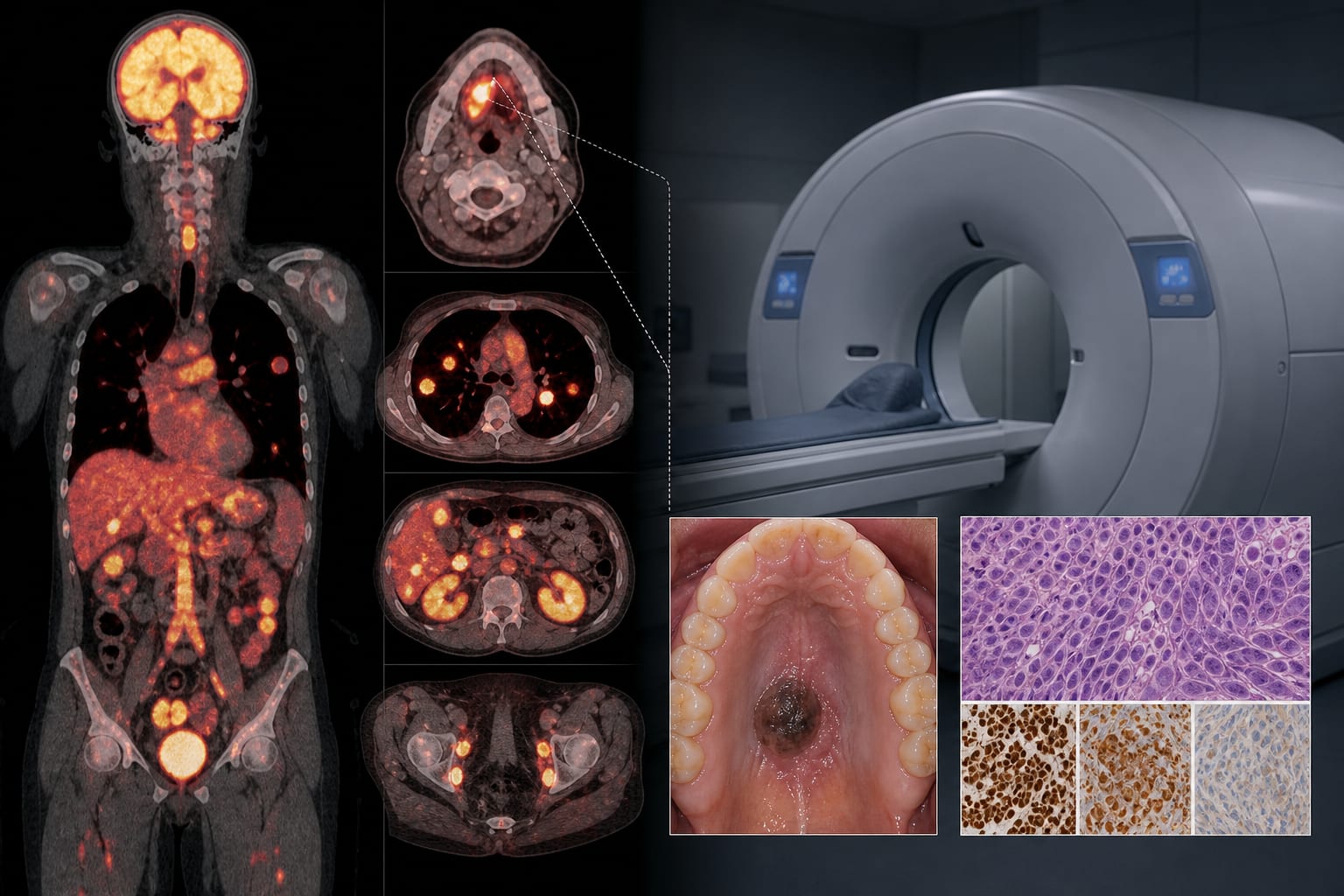
Case Study: Initial Gastrointestinal Symptoms in Hard Palate Melanoma Highlighting the Critical Diagnostic Role of 18F-FDG PET/CT
By
Guangyao Yang
Ya Li
Yin Zhao
Xianwen Hu
Dongfeng Pan
July 2, 2026
Clinical Scorecard: Case Study: Initial Gastrointestinal Symptoms in Hard Palate Melanoma Highlighting the Critical Diagnostic Role of 18F-FDG PET/CT
At a Glance
Category Detail
Condition Mucosal Melanoma of the Hard Palate Key Mechanisms High sensitivity of 18F-FDG PET/CT in detecting occult primary lesions and metastases. Target Population Patients with oral mucosal melanoma, particularly those presenting with gastrointestinal symptoms. Care Setting Oncology and gastroenterology departments.
Key Highlights
Mucosal melanoma is rare, accounting for approximately 2% of all melanoma cases. Initial symptoms can be non-specific, leading to diagnostic delays. 18F-FDG PET/CT is critical for early diagnosis and staging of mucosal melanoma. The prognosis for mucosal melanoma is poor, with a five-year survival rate often less than 20%. Comprehensive oral examinations are essential for early detection. Guideline-Based Recommendations
Diagnosis
Utilize 18F-FDG PET/CT for detecting primary lesions and metastases in suspected cases. Management
Consider referral to oncology for further management after diagnosis. Monitoring & Follow-up
Regular follow-up for symptom management and assessment of disease progression. Risks
High propensity for metastasis and poor prognosis associated with mucosal melanoma. Patient & Prescribing Data
Elderly patients with mucosal melanoma presenting with gastrointestinal symptoms.
Patients may not tolerate standard antitumor therapies due to poor general condition.
Clinical Best Practices
Conduct thorough physical examinations for patients with gastrointestinal symptoms. Maintain a high index of suspicion for mucosal melanoma in atypical presentations. Related Resources & Content