Fetal sex shapes maternal immune adaptation: placental extracellular vesicles differentially reprogram the phenotype, metabolism, and function of circulating monocytes - Scorecard - MDSpire
Advertisement
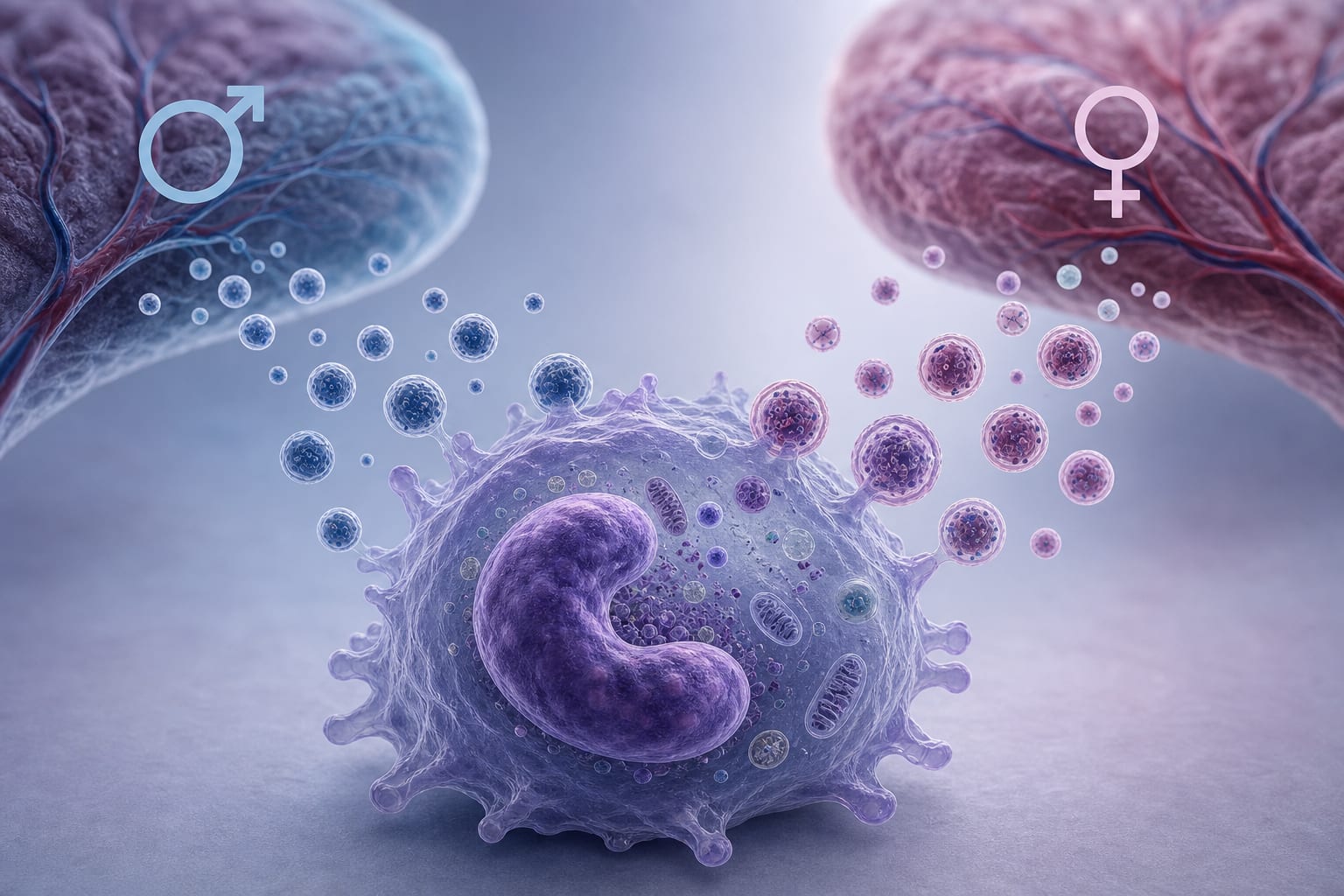
Maternal Immune Response Influenced by Fetal Sex: Distinct Effects of Placental Extracellular Vesicles on the Phenotype, Metabolism, and Function of Circulating Monocytes
Clinical Scorecard: Maternal Immune Response Influenced by Fetal Sex: Distinct Effects of Placental Extracellular Vesicles on the Phenotype, Metabolism, and Function of Circulating Monocytes
At a Glance
Category
Detail
Condition
Maternal immune adaptation during pregnancy
Key Mechanisms
Influence of placental extracellular vesicles (pEVs) on monocyte phenotype and metabolism
Target Population
Pregnant women with term uncomplicated pregnancies
Care Setting
Clinical research setting
Key Highlights
pEVs induce distinct activation profiles in monocytes based on fetal sex.
F-pEVs enhance IL-10 production and reduce pro-inflammatory markers.
M-pEVs promote lactate production and increase IL-1β secretion.
Both pEV populations shift monocyte subsets towards classical monocytes.
Differential immunometabolic responses are observed based on fetal sex.
by Julieta Avalos, Florencia Sabbione, Daiana Rios, Daniel H. Grasso, M. Noe Garcia, Franco Aguilera, Fatima Merech, Horacio Aiello, Cesar Meller, Rosanna Ramhorst, Vanesa Hauk, Soledad Gori, Claudia Pérez Leirós, Daiana M. Vota, Daniel E. Paparini