Comparative analysis of the postoperative effectiveness of different splenic artery aneurysm embolization techniques
-
By
-
Biao Wu
-
Liang Chen
-
Xiaonan Wang
-
Hao Zhang
-
Jiang Zhu
-
Kangjie Chai
-
Liangxi Yuan
-
June 17, 2026
-
Clinical Scorecard: Evaluation of Postoperative Outcomes for Various Embolization Techniques in Splenic Artery Aneurysms
At a Glance
| Category | Detail |
|---|
| Condition | |
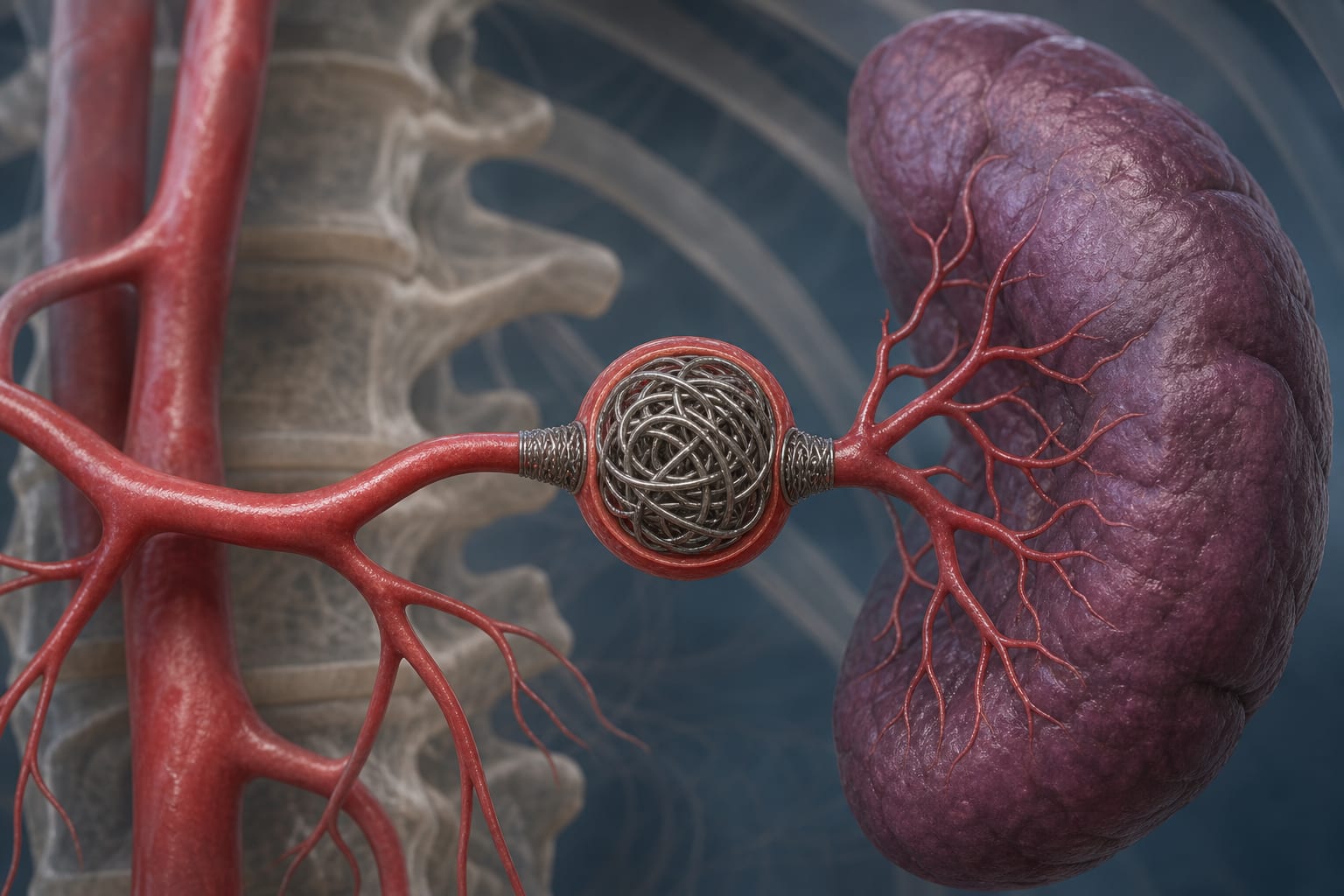
| Key Mechanisms | Embolization techniques: sandwich technique and mushroom technique. |
| Target Population | |
| Care Setting | |
Key Highlights
- Technical success rate of both techniques was 100%.
- 30-day mortality, splenic infarction rate, and aneurysm recanalization rate were all 0.
- Mushroom technique associated with shorter procedure time and lower incidence of post-embolization syndrome (PES).
- Number of aneurysms and embolization method were independent risk factors for PES.
Guideline-Based Recommendations
Diagnosis
- Diagnosis via computed tomography angiography (CTA) or digital subtraction angiography (DSA).
Management
- Endovascular embolization preferred for SAAs.
Monitoring & Follow-up
- Follow-up CTA performed one year post-procedure.
Risks
- Post-embolization syndrome (PES) defined as fever, abdominal pain, distension, or elevated white blood cell counts.
Patient & Prescribing Data
220 patients with SAAs treated between January 2019 and December 2023.
Mushroom technique shows favorable outcomes compared to sandwich technique.
Clinical Best Practices
Related Resources & Content