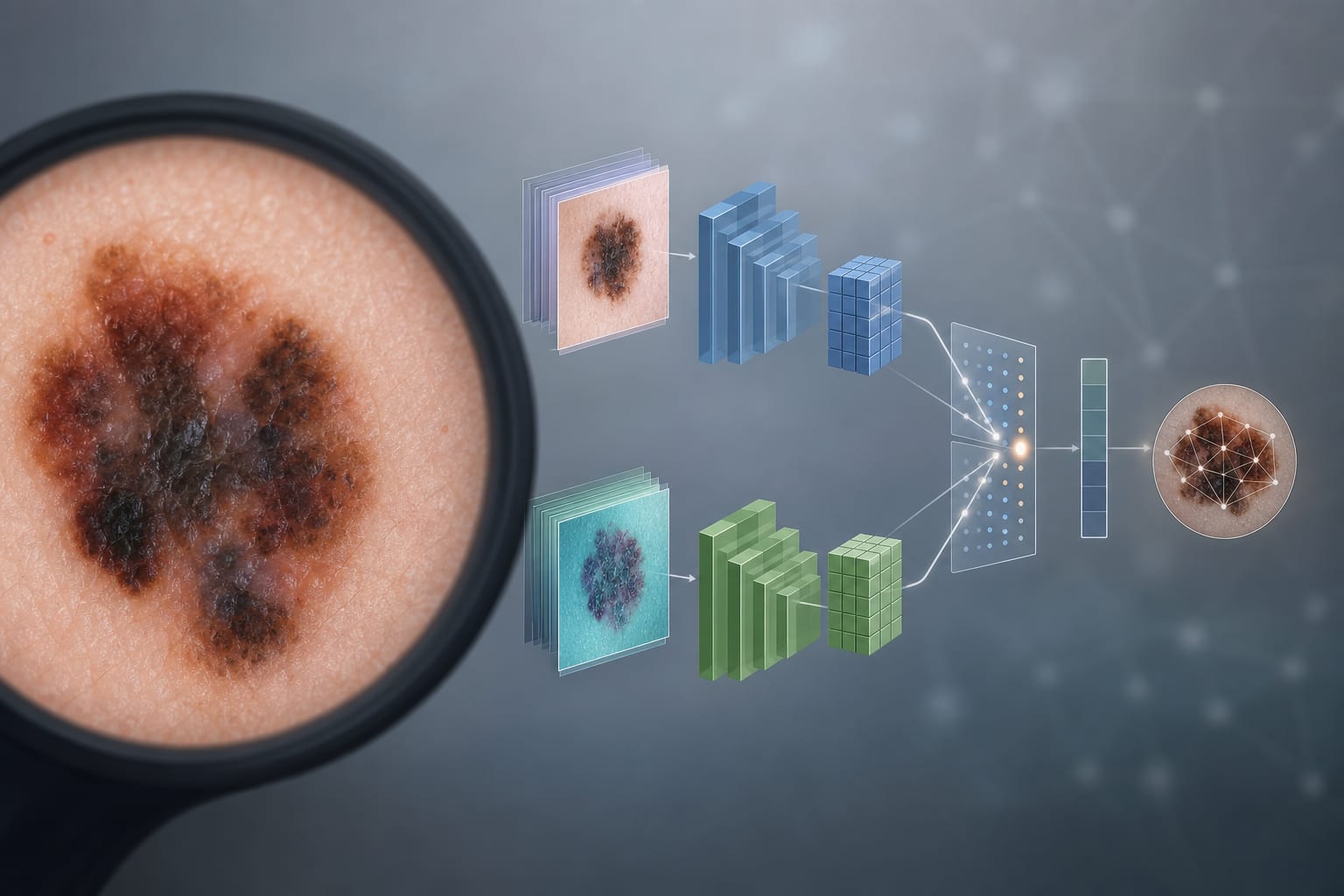
SCC-Net: A streamlined deep learning model with attention mechanisms for the automated detection of squamous cell carcinoma
-
By
-
Yi Wu
-
Xianwei Li
-
Muxin Zhao
-
July 2, 2026
Clinical Scorecard: SCC-Net: A streamlined deep learning model with attention mechanisms for the automated detection of squamous cell carcinoma
At a Glance
| Category | Detail |
|---|
| Condition | Cutaneous squamous cell carcinoma (cSCC) |
| Key Mechanisms | Prolonged ultraviolet radiation exposure, immunosuppression, chronic inflammation |
| Target Population | Individuals at risk for skin malignancies, particularly the elderly |
| Care Setting | Dermatology clinics and teledermatology applications |
Key Highlights
- cSCC is the second most common non-melanoma skin cancer, accounting for 20-50% of skin malignancies.
- Early detection is crucial for prognosis, with a 5-year survival rate of >95% for early-stage cSCC.
- Deep learning models can match or exceed dermatologists' diagnostic accuracy.
- The model developed aims to focus on fine-grained morphological details of cSCC lesions.
- Deep learning can optimize medical resources and reduce diagnostic time and costs.
Guideline-Based Recommendations
Diagnosis
- Standard diagnosis relies on clinical examination and histopathological confirmation.
Management
- Surgical excision is the primary treatment with a high cure rate.
Monitoring & Follow-up
- Regular follow-up for early detection of recurrence or metastasis.
Risks
- Delayed diagnosis can lead to deep tissue invasion and metastasis.
Patient & Prescribing Data
Patients with suspected cutaneous squamous cell carcinoma.
Early-stage cSCC treatment is effective with surgical excision.
Clinical Best Practices
- Utilize dermoscopy for enhanced visualization during clinical examination.
- Incorporate deep learning tools to assist in the diagnostic process.
- Ensure timely referrals for patients in remote areas to improve access to care.
Related Resources & Content