What’s that noise—tackling sound pollution in the NICU: a systematic review
Clinical Scorecard: Addressing Noise Pollution in the Neonatal Intensive Care Unit: A Comprehensive Review
At a Glance
Category Detail
Condition Noise Pollution in Neonatal Intensive Care Units (NICUs) Key Mechanisms High-intensity soundscapes from alarms, respiratory devices, and staff activity affecting auditory and neurodevelopmental maturation. Target Population Preterm infants in NICUs Care Setting Neonatal Intensive Care Units (NICUs)
Key Highlights
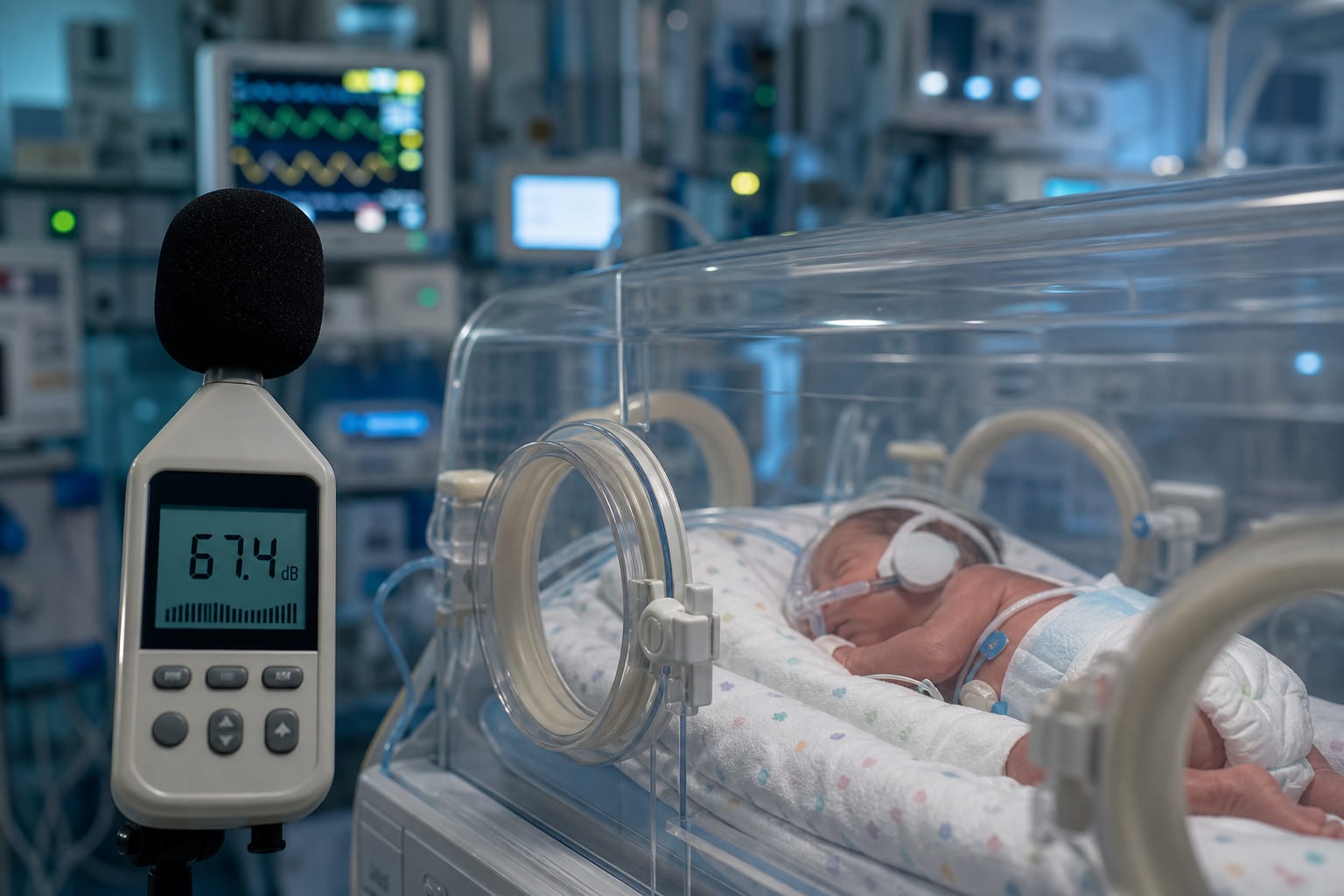
Noise levels in NICUs often exceed recommended limits set by the AAP. Major noise contributors include alarms, staff conversations, and incubator-associated equipment. Respiratory support devices produce the highest internal noise levels. Short-term interventions have been implemented but rarely lead to sustained noise reduction. Excessive shielding may risk auditory deprivation in preterm infants. Guideline-Based Recommendations
Diagnosis
Monitor ambient noise levels in NICUs to assess compliance with AAP recommendations. Management
Implement staff training and behavioral adjustments to reduce noise. Monitoring & Follow-up
Regularly assess noise levels and their impact on preterm infants' physiological responses. Risks
Sustained exposure to high noise levels can lead to acute physiological responses and long-term developmental concerns. Patient & Prescribing Data
Preterm infants exposed to high noise levels in NICUs.
Environmental modifications and technological innovations are needed to create safer acoustic conditions.
Clinical Best Practices
Maintain sound levels below 45 dB during the day and 35 dB at night as per AAP guidelines. Integrate infant-focused interventions at the incubator-device interface. Related Resources & Content