Conexiant’s news site is now MDSpire News. Learn more
Advertisement
Case Study: The Development of Paradoxical Psoriasis During TNF-α Inhibition May Indicate Generalized Abscessing Staphyloderma – GASD Syndrome Associated with TNF Blockers
Clinical Scorecard: Case Study: The Development of Paradoxical Psoriasis During TNF-α Inhibition May Indicate Generalized Abscessing Staphyloderma – GASD Syndrome Associated with TNF Blockers
At a Glance
Category
Detail
Condition
Key Mechanisms
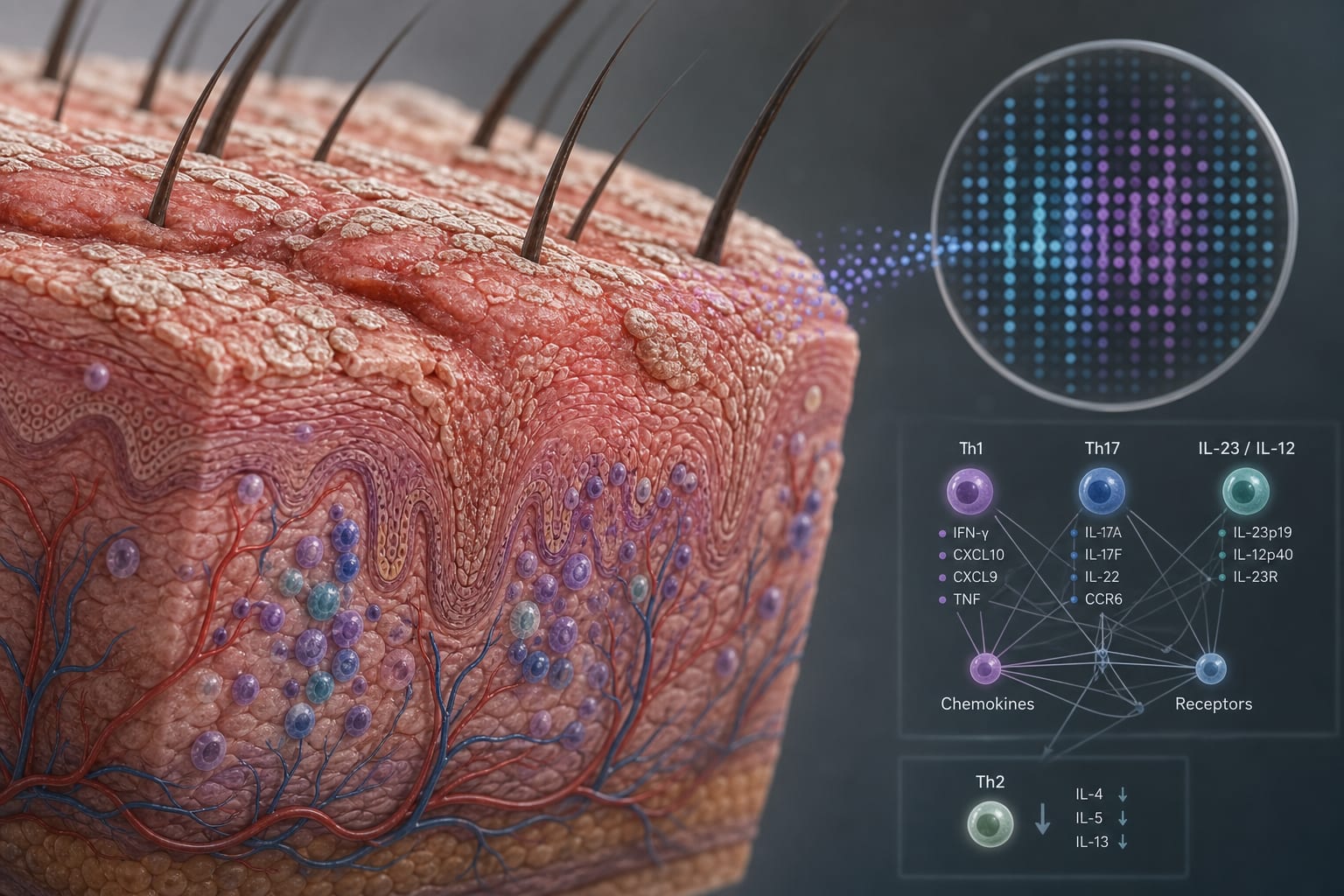
Impaired maturation of plasmacytoid dendritic cells leading to overproduction of type I interferons (source needed).
Target Population
Care Setting
Key Highlights
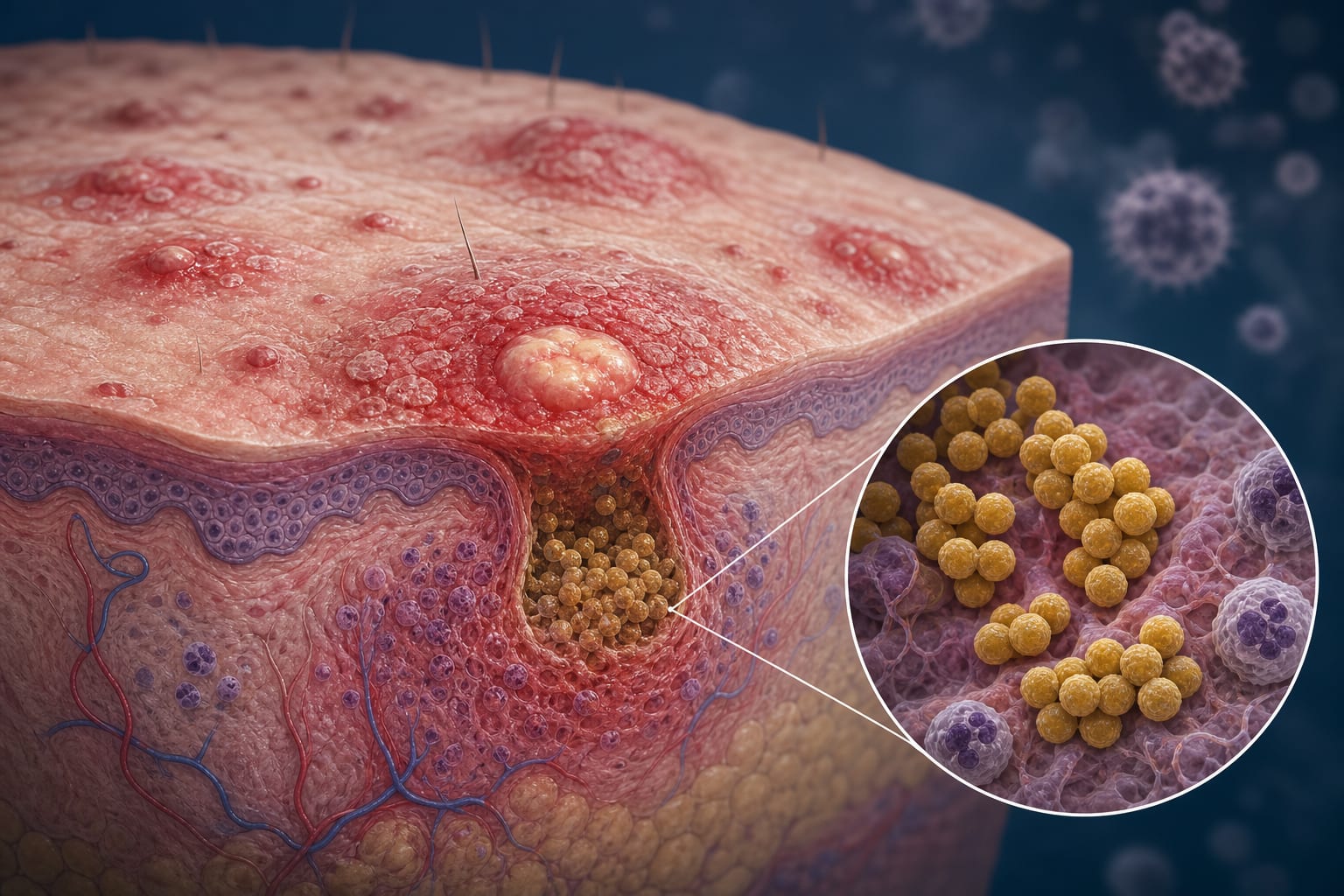
Paradoxical psoriasis may represent generalized abscessing staphyloderma (GASD) (source needed).
Skin lesions often caused by Staphylococcus aureus from nasal colonization (source needed).
Incidence of paradoxical psoriasis can be up to 10% among treated patients (source needed).
Clinical presentation includes a variety of skin lesions and inflammatory nodules (source needed).
Guideline-Based Recommendations
Diagnosis
Management
Discontinue TNF-α antagonists if severe manifestations occur (source needed).
Use topical antimicrobial therapy and systemic antibiotics for skin lesions (source needed).
Monitoring & Follow-up
Risks
Patient & Prescribing Data
Paradoxical psoriasis-like manifestations may arise within the first 1.5 years of TNF-α therapy (source needed).
Clinical Best Practices
Conduct bacteriological cultures from skin lesions and nasal vestibules (source needed).
Perform histopathological analysis of lesional skin samples (source needed).