Quantifying cerebral autoregulation following endovascular thrombectomy using wavelet transformation
-
By
-
Lars Tveit
-
Maria Skytioti
-
Thor Håkon Skattør
-
Brian Anthony Enriquez
-
Anne Hege Aamodt
-
Karolina Skagen
-
Markus Wiedmann
-
Mona Skjelland
-
June 16, 2026
-
Clinical Scorecard: Assessing Cerebral Autoregulation Post-Endovascular Thrombectomy Through Wavelet Analysis
At a Glance
| Category | Detail |
|---|
| Condition | Acute Ischemic Stroke (AIS) |
| Key Mechanisms | Cerebral autoregulation (CA) and cerebral blood flow (CBF) dynamics |
| Target Population | Patients with anterior circulation AIS treated with endovascular thrombectomy (EVT) |
| Care Setting | Tertiary stroke center |
Key Highlights
- Cerebral autoregulation is crucial for protecting the brain from fluctuations in cerebral blood flow.
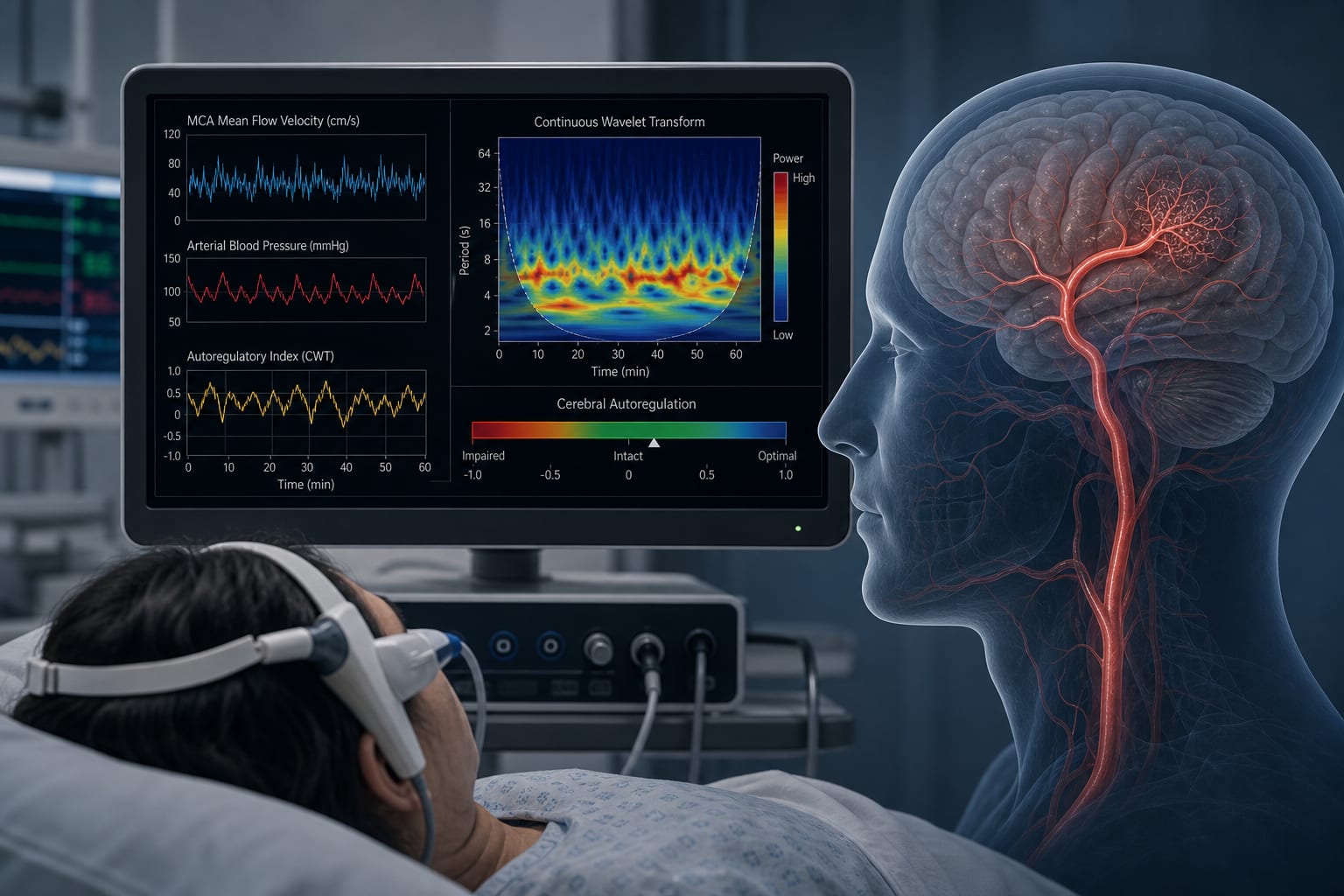
- Continuous wavelet transform (CWT) is used to quantify cerebral autoregulation post-EVT.
- Impaired CA is linked to poor functional outcomes and increased infarct size in stroke patients.
- The study found no significant difference in Synchronization index gamma (SI) between favorable and unfavorable outcomes.
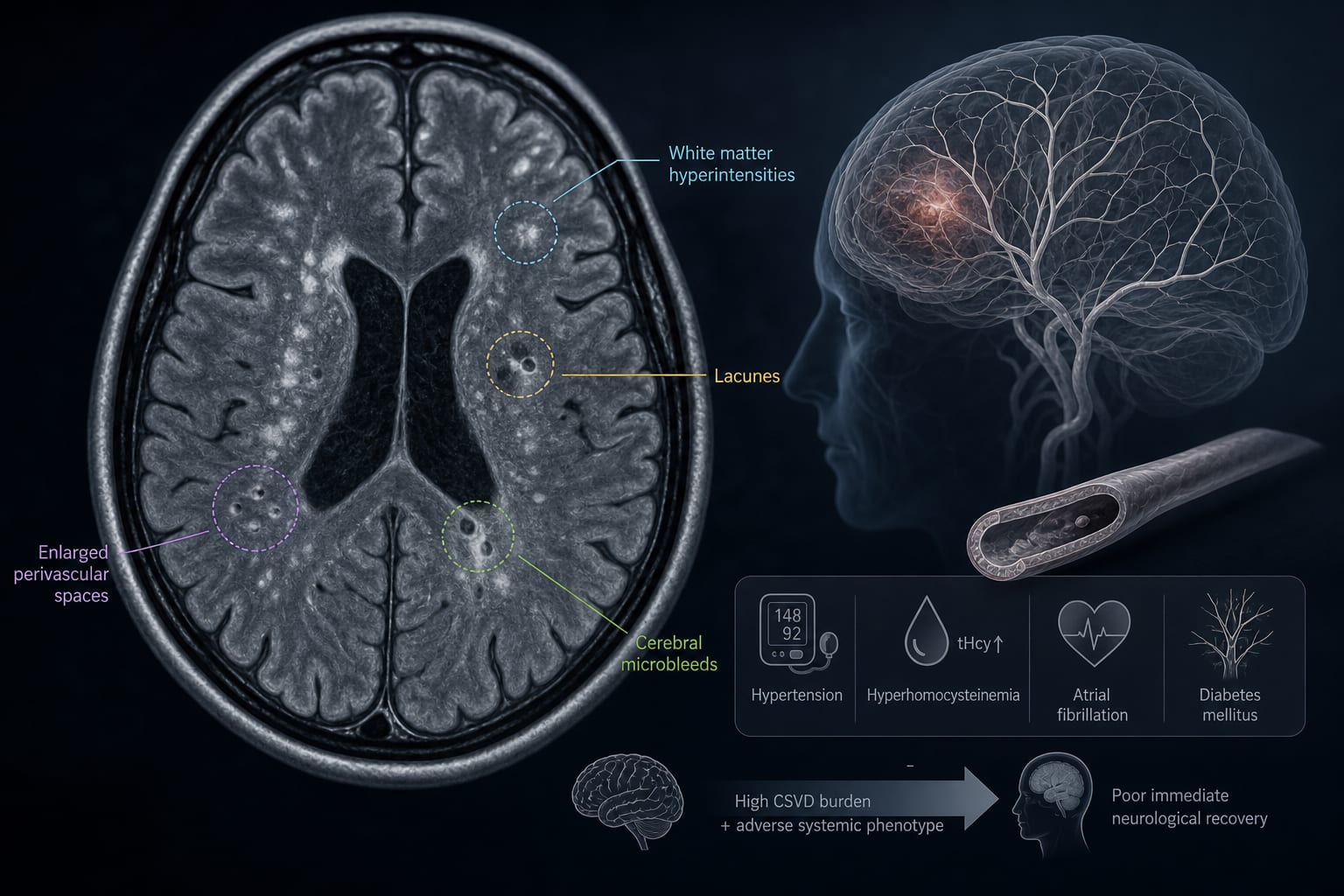
- Higher SI was associated with failure to achieve early neurological recovery.
Guideline-Based Recommendations
Diagnosis
- Use transcranial doppler ultrasound (TCD) to assess CBF velocities.
Management
- Endovascular thrombectomy (EVT) is indicated for occlusions of the internal carotid artery and middle cerebral artery.
Monitoring & Follow-up
- Continuous monitoring of cerebral blood flow and arterial blood pressure is recommended post-EVT.
Risks
- Impaired CA may lead to dysregulation of cerebral perfusion and increased risk of hemorrhagic transformation.
Patient & Prescribing Data
Patients with anterior circulation AIS treated with EVT at Oslo University Hospital.
CWT-derived metrics provide insights into early cerebral hemodynamics following arterial recanalization.
Clinical Best Practices
- Ensure adequate signal-to-noise ratio during TCD examinations.
- Synchronize invasive arterial blood pressure measurements with CBF assessments.
Related Resources & Content