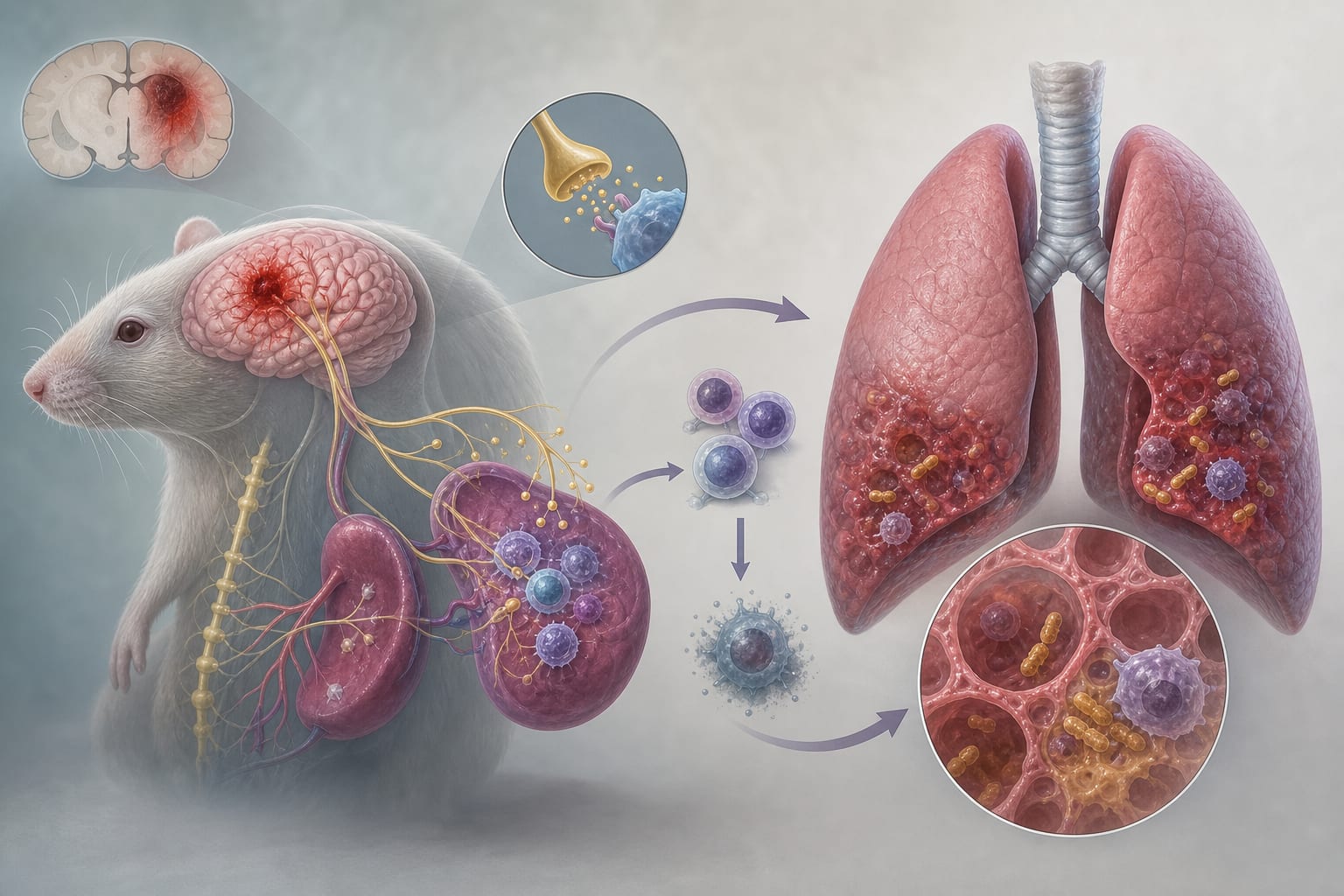
Immunomodulation for stroke-associated pneumonia: a systematic review of mechanistic insight and emerging therapeutic strategies in animal models - Scorecard - MDSpire
Clinical Scorecard: Immunomodulatory Approaches for Pneumonia Related to Stroke: A Comprehensive Review of Mechanisms and Novel Treatment Strategies in Animal Research
At a Glance
Category
Detail
Condition
Stroke-associated pneumonia (SAP)
Key Mechanisms
Stroke-induced immunosuppression, sympathetic nervous system overactivation, disruption of the gut-lung axis, and active intercellular suppression.
Target Population
Patients with stroke at risk of pneumonia.
Care Setting
Clinical research and experimental models.
Key Highlights
30% of acute stroke patients develop infections, with pneumonia rates as high as 10%.
Systemic immunosuppression is linked to increased susceptibility to bacterial infections.
Immunomodulatory therapies show promise in preclinical models for preventing or treating SAP.
Current treatment strategies for SAP are limited and face challenges from drug-resistant bacteria.
Emerging mechanisms include the role of the cholinergic anti-inflammatory pathway and gut microbiota dysbiosis.
Guideline-Based Recommendations
Diagnosis
Evaluate immune mechanisms underlying pneumonia in stroke patients.
Management
Consider immunomodulatory therapies targeting immune dysregulation in SAP.
Monitoring & Follow-up
Monitor for signs of pneumonia in stroke patients due to high infection risk.
Risks
Increased mortality associated with pneumonia in stroke patients.
Patient & Prescribing Data
Patients with stroke experiencing pneumonia.
Immunomodulatory approaches are experimental and require further validation for clinical use.
Clinical Best Practices
Adopt a systematic approach to understanding immune dysregulation in stroke.
Integrate findings from preclinical studies into clinical practice cautiously.