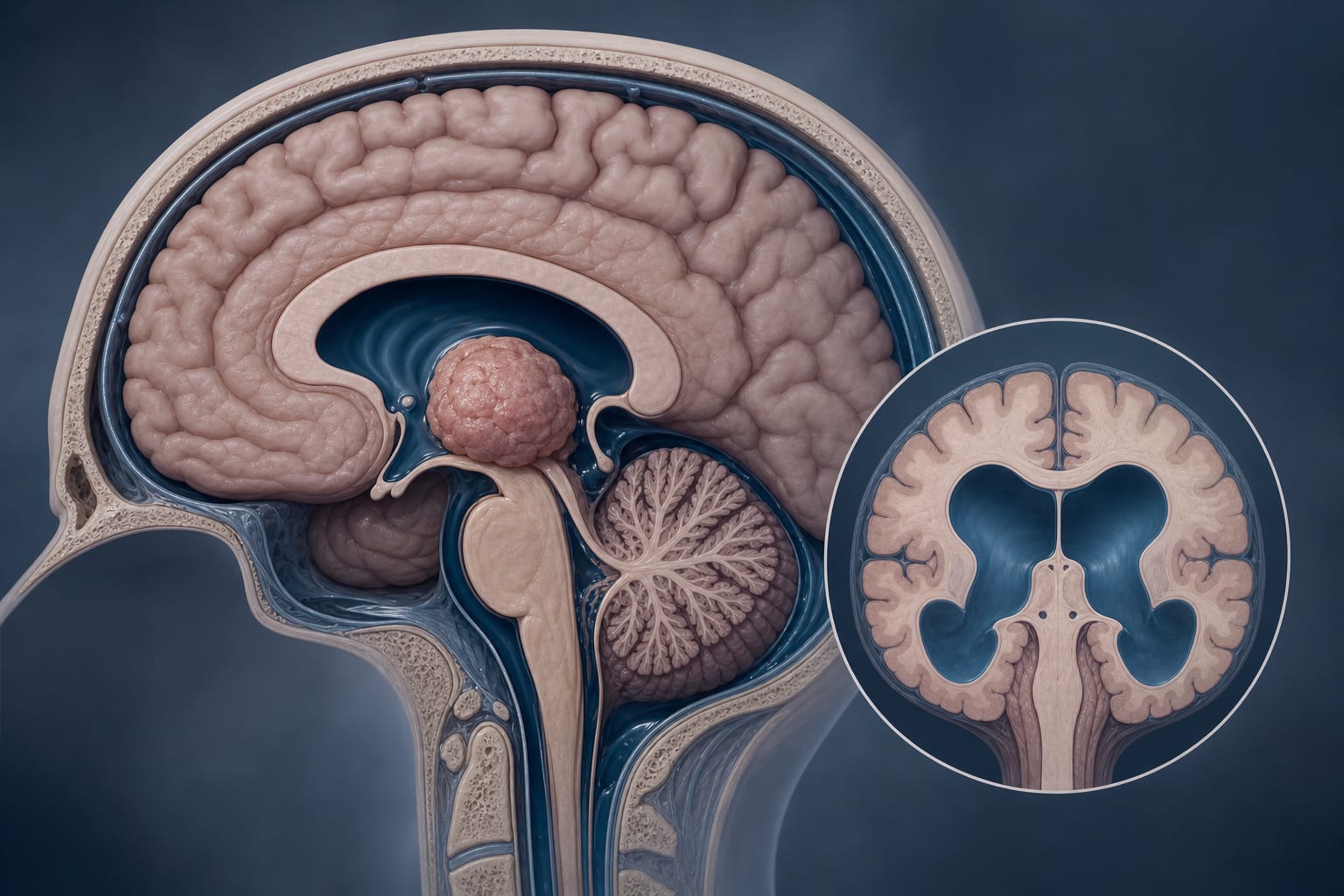
Clinical Scorecard: Reevaluating the Causes and Management of Occipital Headaches Following CSF Shunting
At a Glance
Category
Detail
Condition
Post-shunt headaches with a focus on occipital neuralgia-like pain
Key Mechanisms
Pressure-related mechanisms (over-drainage, shunt malfunction) and peripheral occipital nerve irritation by shunt hardware
Target Population
Adults with ventriculoperitoneal (VP) shunts experiencing chronic headaches
Care Setting
Neurosurgical and integrated chronic pain service in an academic center
Key Highlights
Headaches after CSF shunting are often attributed to pressure abnormalities but can persist despite shunt optimization.
A distinct subset of post-shunt headaches resembles occipital neuralgia, characterized by lancinating occipital pain and scalp tenderness along C2-C3 dermatomes.
Occipital nerve irritation by rigid shunt hardware may cause neuropathic pain independent of intracranial pressure status.
Guideline-Based Recommendations
Diagnosis
Exclude shunt malfunction, over-drainage, under-drainage, and infection through clinical and imaging evaluation.
Identify occipital neuralgia-like features: unilateral occipital lancinating pain, scalp tenderness over shunt hardware, and pain radiation in greater/lesser occipital nerve distribution.
Use response to occipital nerve blocks as a diagnostic and therapeutic tool.
Management
Optimize shunt function to address pressure-related causes before considering neuropathic mechanisms.
Consider occipital nerve blocks, nerve ablation, or neuromodulation for occipital neuralgia-like headaches.
Avoid unnecessary shunt revisions when headaches persist despite shunt optimization and neuropathic pain is suspected.
Monitoring & Follow-up
Monitor headache characteristics and response to nerve-targeted treatments.
Assess for changes in headache pattern or neurological status that may indicate shunt malfunction.
Follow-up to evaluate long-term efficacy of nerve blocks or ablation procedures.
Risks
Misdiagnosis leading to unnecessary shunt revisions and associated morbidity.
Potential for chronic neuropathic pain if occipital nerve irritation is unrecognized.
Risks related to invasive nerve-targeted interventions should be weighed against benefits.
Patient & Prescribing Data
Adults with VP shunts experiencing chronic post-shunt headaches not attributable to pressure abnormalities
Nerve-targeted therapies such as occipital nerve blocks can provide significant relief and may reduce the need for surgical shunt revisions.
Clinical Best Practices
Thoroughly evaluate post-shunt headaches to differentiate pressure-related from neuropathic causes.
Use a multidisciplinary approach involving neurosurgery and pain specialists for diagnosis and management.
Apply retrospective-adapted diagnostic criteria for occipital neuralgia when standard ICHD-3 criteria are not fully documented.
Prioritize non-surgical interventions for occipital neuralgia-like headaches before considering shunt revision.
Educate patients about the possibility of neuropathic headache mechanisms post-shunting.
Spontaneous posterior capsular rupture affected both eyes years following uncomplicated cataract surgery, but intraocular lens dislocation required surgery in only 1 eye.