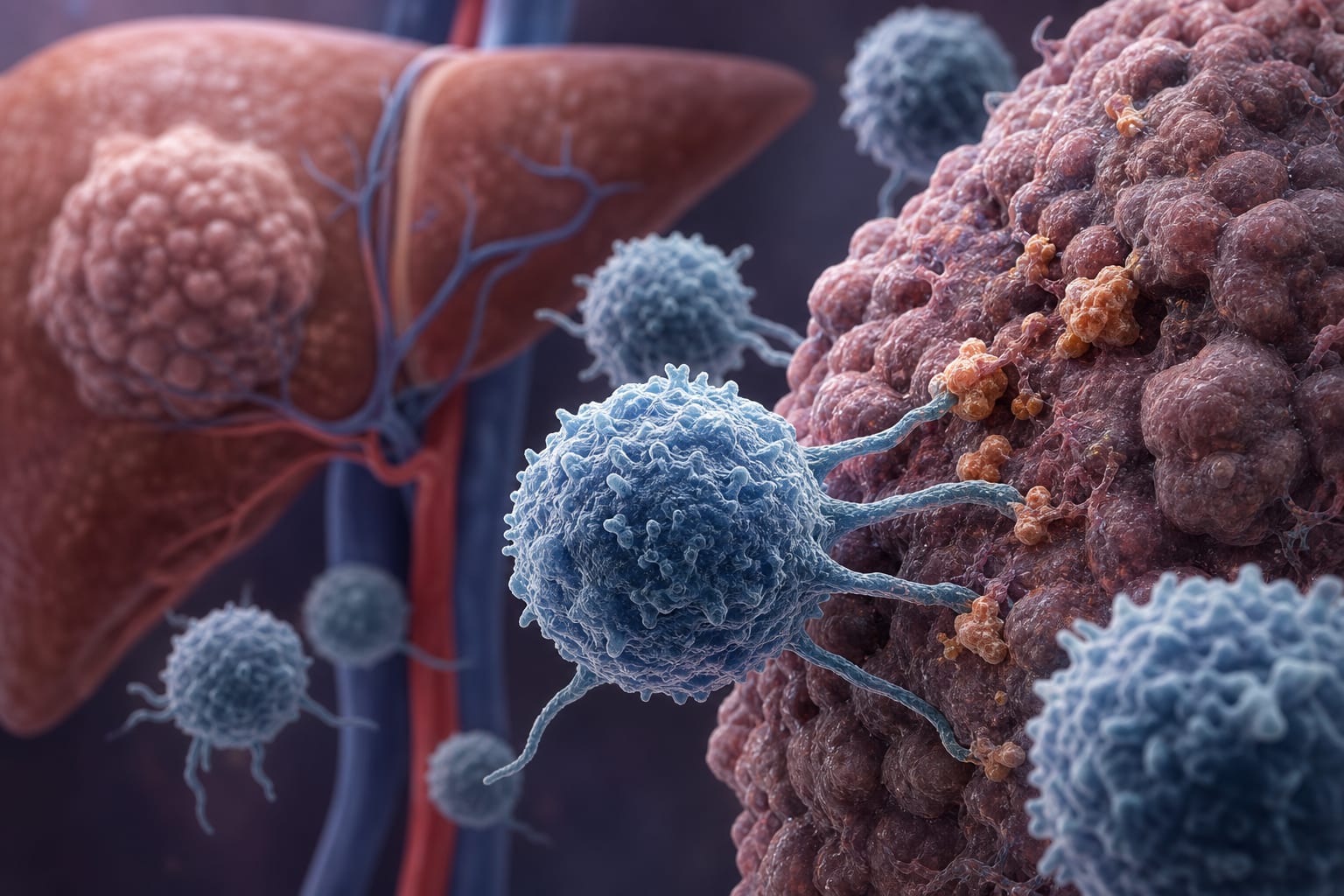
Clinical Scorecard: Understanding the Role, Clinical Importance, and Research Developments of Tumor Antigen-Specific T Cells in Hepatocellular Carcinoma Treatment
At a Glance
Category
Detail
Condition
Hepatocellular carcinoma (HCC)
Key Mechanisms
Tumor antigen-specific T cells (TASCs) are crucial for tumor clearance but face suppression from the immune microenvironment.
Target Population
Patients with hepatocellular carcinoma, particularly in regions with high HBV and HCV prevalence.
Care Setting
Oncology and immunotherapy clinics.
Key Highlights
HCC has high incidence and mortality rates, especially in China.
TASCs play a critical role in recognizing and targeting antigens in HCC.
Immunotherapy has introduced new treatment options, but only 20-30% of patients benefit from ICIs.
The HCC immune microenvironment systematically suppresses TASC function.
Combination therapies targeting TASCs are proposed for improved treatment outcomes.
Guideline-Based Recommendations
Diagnosis
Diagnosis of HCC should consider the patient's viral infection status, particularly HBV and HCV.
Management
Atezolizumab plus bevacizumab is recommended as first-line treatment for advanced HCC.
Monitoring & Follow-up
Monitor TASC function and immune responses to assess treatment efficacy.
Risks
Patients may experience primary or acquired resistance to immunotherapy.
Patient & Prescribing Data
Patients diagnosed with hepatocellular carcinoma, particularly those with chronic HBV infection.
Immunotherapy targeting TASCs may enhance treatment efficacy in HCC.
Clinical Best Practices
Understand the hierarchical suppression of TASC function in the HCC immune microenvironment.
Consider the role of viral antigens in HCC immunotherapy responses.
Explore combination therapies to enhance TASC activation and function.
The goal of this clinical trial is to learn if Adaptive Radiation Therapy (ART) is safe and effective in treating patients with locally advanced pancreatic cancer.