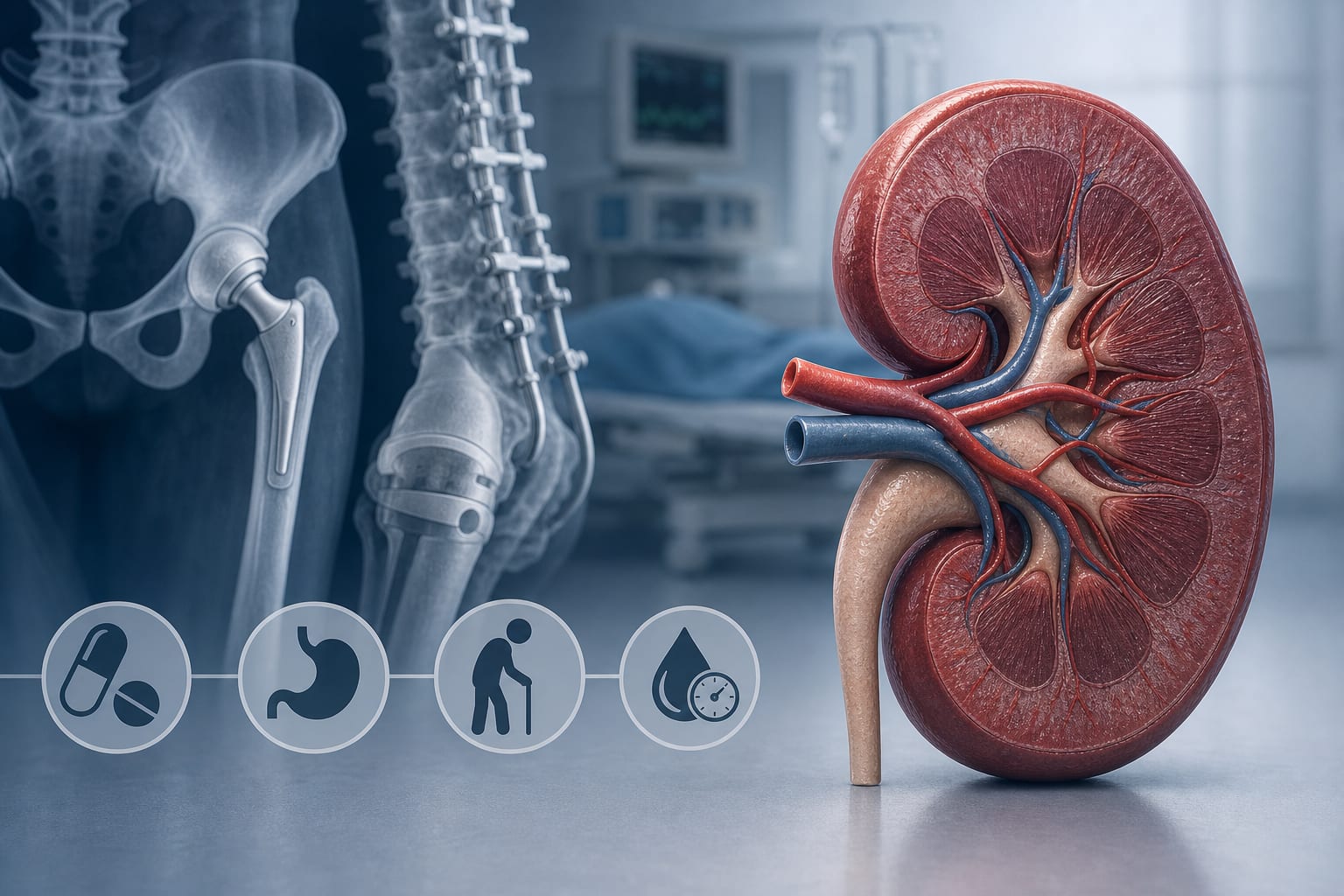
Clinical Scorecard: Investigating the Incidence and Contributing Factors of Acute Kidney Injury in Patients Following Orthopedic Surgery
At a Glance
Category
Detail
Condition
Acute Kidney Injury (AKI)
Key Mechanisms
Intraoperative blood loss, fluid imbalance, inflammatory responses, drug nephrotoxicity.
Target Population
Patients undergoing orthopedic surgery for bone tumors, bone injuries, and spinal diseases.
Care Setting
Orthopedic ward
Key Highlights
Overall prevalence of AKI was 3.47% among 2,796 patients studied.
Highest incidence of AKI (11.36%) observed in patients undergoing bone tumor surgery.
Independent risk factors for AKI include bone tumor surgery, preoperative proteinuria, elevated urea, decreased hemoglobin, and use of PPIs and NSAIDs.
AKI stage 3 patients had longer hospital stays compared to other groups.
AKI affects 5%-20% of patients after orthopedic surgery.
Guideline-Based Recommendations
Diagnosis
AKI diagnosed and classified according to KDIGO criteria.
Management
Monitor renal function and manage modifiable risk factors such as medication use.
Monitoring & Follow-up
Assess renal function using estimated glomerular filtration rate (eGFR) preoperatively and postoperatively.
Risks
Increased risk of prolonged hospital stays and long-term adverse renal outcomes.
Patient & Prescribing Data
Patients aged 18 years and older undergoing orthopedic surgery.
Consider avoiding PPIs and NSAIDs in patients with preoperative risk factors for AKI.
Clinical Best Practices
Identify and manage preoperative conditions such as proteinuria and anemia.
Implement strategies to minimize intraoperative blood loss and fluid imbalance.