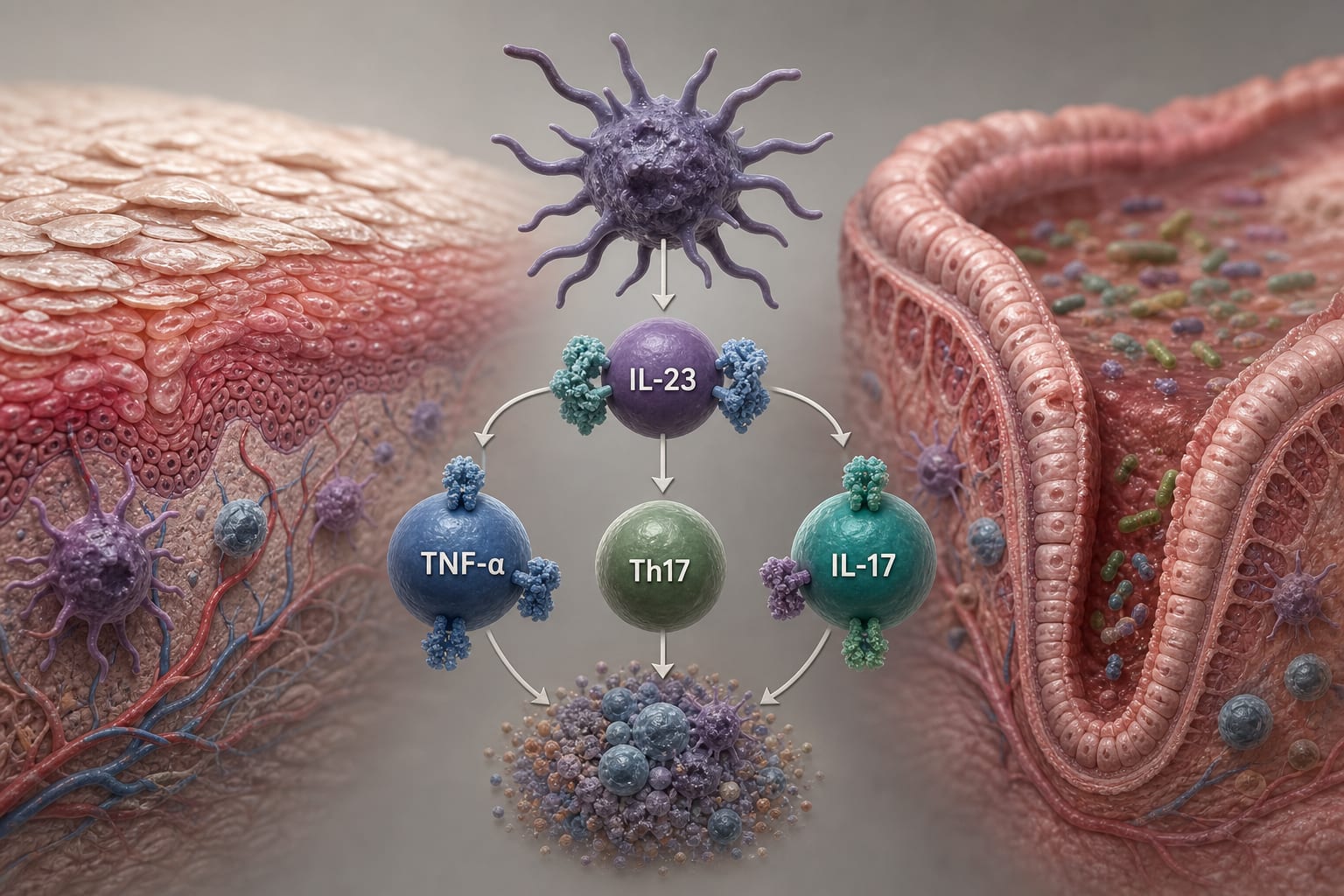
IL-17, IL-23 Therapies Lead Psoriasis Care
Network meta-analysis suggests higher PASI 90 response rates with biologics vs oral systemic therapies
By
Andrea Surnit
April 12, 2026
Clinical Scorecard: IL-17, IL-23 Therapies Lead Psoriasis Care
At a Glance
Category Detail
Condition Moderate to severe plaque psoriasis Key Mechanisms Biologic therapies targeting IL-17 and IL-23 pathways Target Population Patients with moderate to severe plaque psoriasis Care Setting Clinical settings involving systemic pharmacologic treatments
Key Highlights
IL-17 inhibitors ranked highest for efficacy in achieving PASI 90. All systemic therapies outperformed placebo in PASI 90 response. Serious adverse events were similar across treatments and infrequent. Bimekizumab showed the highest certainty of evidence for efficacy. Oral therapies had lower PASI 90 response rates compared to biologics. Guideline-Based Recommendations
Diagnosis
Assess severity of psoriasis using the Psoriasis Area and Severity Index (PASI). Management
Consider IL-17 and IL-23 inhibitors as first-line biologic therapies. Monitoring & Follow-up
Monitor for serious adverse events during treatment. Risks
Infusion requirements may limit the use of some biologics like infliximab. Patient & Prescribing Data
Patients with moderate to severe plaque psoriasis, including those with comorbidities or access barriers.
Biologics are preferred for short-term skin clearance; oral therapies remain options for certain patients.
Clinical Best Practices
Utilize IL-17 and IL-23 inhibitors for effective short-term management. Evaluate patient preferences and comorbidities when selecting treatment. Related Resources & Content