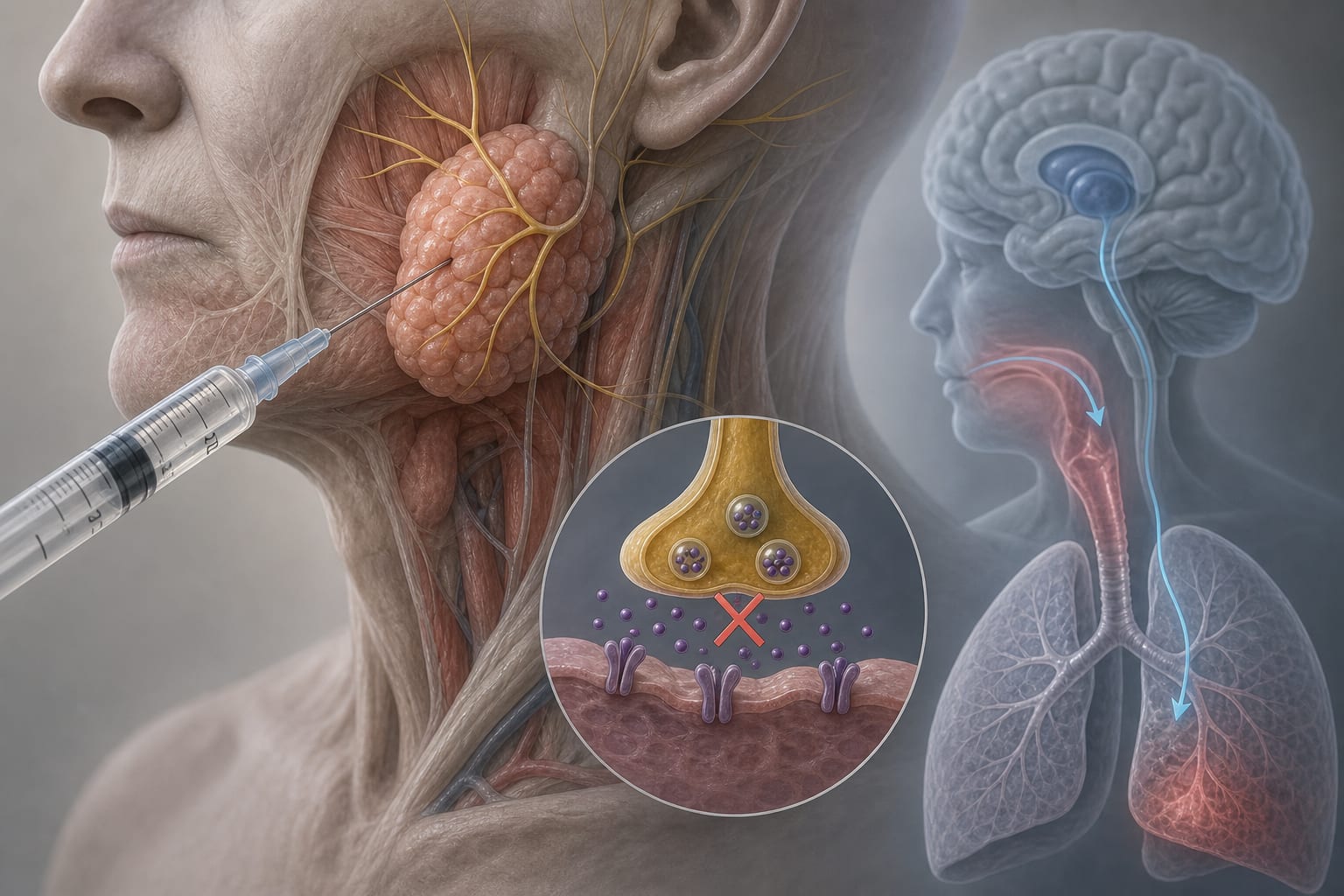
Clinical Scorecard: Botulinum Toxin Type A for Managing Sialorrhea in Adults with Neurological Conditions: A Review of the Associated Aspiration Pneumonia Risk
At a Glance
Category
Detail
Condition
Sialorrhea in adults with neurological conditions
Key Mechanisms
BoNT-A inhibits the release of acetylcholine at the neuromuscular junction, reducing salivary gland stimulation and saliva production.
Target Population
Adults with neurological disorders such as Parkinson's disease, stroke, and traumatic brain injury.
Care Setting
Clinical management of sialorrhea and aspiration pneumonia risk.
Key Highlights
Sialorrhea is a common complication in patients with neurological disorders.
BoNT-A has shown efficacy in reducing sialorrhea in both pediatric and adult populations.
Evidence linking BoNT-A to reduced aspiration pneumonia risk is limited.
Sialorrhea can lead to significant psychosocial distress and oral health issues.
Aspiration pneumonia is a major clinical consequence of dysphagia and sialorrhea.
Guideline-Based Recommendations
Diagnosis
Assess sialorrhea in patients with neurological conditions.
Management
Consider BoNT-A for managing sialorrhea in adults with neurological disorders.
Monitoring & Follow-up
Monitor for complications related to sialorrhea, including aspiration pneumonia.
Risks
Aspiration pneumonia is associated with significant morbidity and mortality in this population.
Patient & Prescribing Data
Adults with neurological conditions experiencing sialorrhea.
BoNT-A may help manage sialorrhea but lacks direct evidence for reducing aspiration pneumonia risk.
Clinical Best Practices
Evaluate swallowing function in patients with sialorrhea.
Implement oral hygiene measures to mitigate aspiration risk.
Engage caregivers in the management plan to address emotional and practical care demands.