Machine learning-based prediction of difficult laryngoscopy in infants with Pierre Robin sequence using quantitative 3D computed tomography parameters - Scorecard - MDSpire
Advertisement
Machine learning-based prediction of difficult laryngoscopy in infants with Pierre Robin sequence using quantitative 3D computed tomography parameters
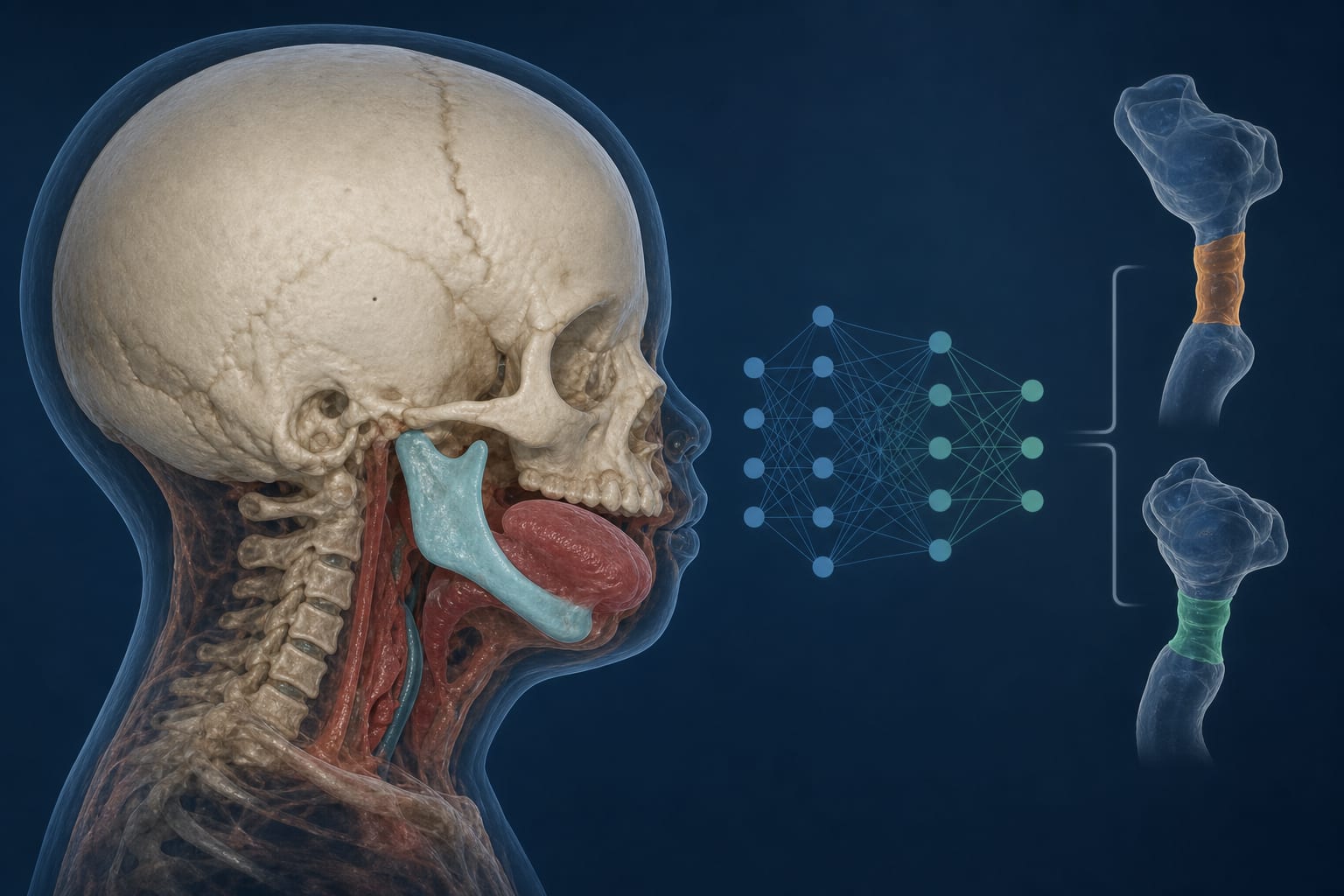
Clinical Scorecard: Utilizing Machine Learning to Forecast Challenging Laryngoscopy in Infants with Pierre Robin Sequence Through Quantitative 3D CT Metrics
At a Glance
Category
Detail
Condition
Pierre Robin Sequence
Key Mechanisms
Mandibular hypoplasia, glossoptosis, and upper airway narrowing leading to difficult laryngoscopic exposure.
Target Population
Infants with Pierre Robin Sequence undergoing mandibular distraction osteogenesis.
Care Setting
Preoperative assessment in surgical settings.
Key Highlights
Quantitative 3D-CT parameters are predictors of difficult laryngoscopic exposure.
Four independent predictors identified: tongue length, tongue base-posterior pharyngeal wall distance, sagittal oropharyngeal cross-sectional area, and tongue base-epiglottic angle.
The Extra Trees model showed superior generalizability in predicting difficult laryngoscopy.
Machine learning models, particularly XGBoost and Extra Trees, demonstrated high discrimination and calibration.
Guideline-Based Recommendations
Diagnosis
Use quantitative 3D-CT for preoperative airway assessment in infants with PRS.
Management
Consider machine learning models for predicting difficult laryngoscopy to enhance anesthetic planning.
Monitoring & Follow-up
Monitor airway parameters and laryngoscopic exposure during preoperative evaluations.
Risks
Be aware of potential airway trauma and hypoxemia during intubation in infants with PRS.
Patient & Prescribing Data
Infants diagnosed with Pierre Robin Sequence requiring surgical intervention.
Mandibular distraction osteogenesis is preferred for severe airway obstruction.
Clinical Best Practices
Utilize machine learning models for enhanced predictive accuracy in airway management.
Incorporate 3D-CT imaging in preoperative assessments for infants with PRS.