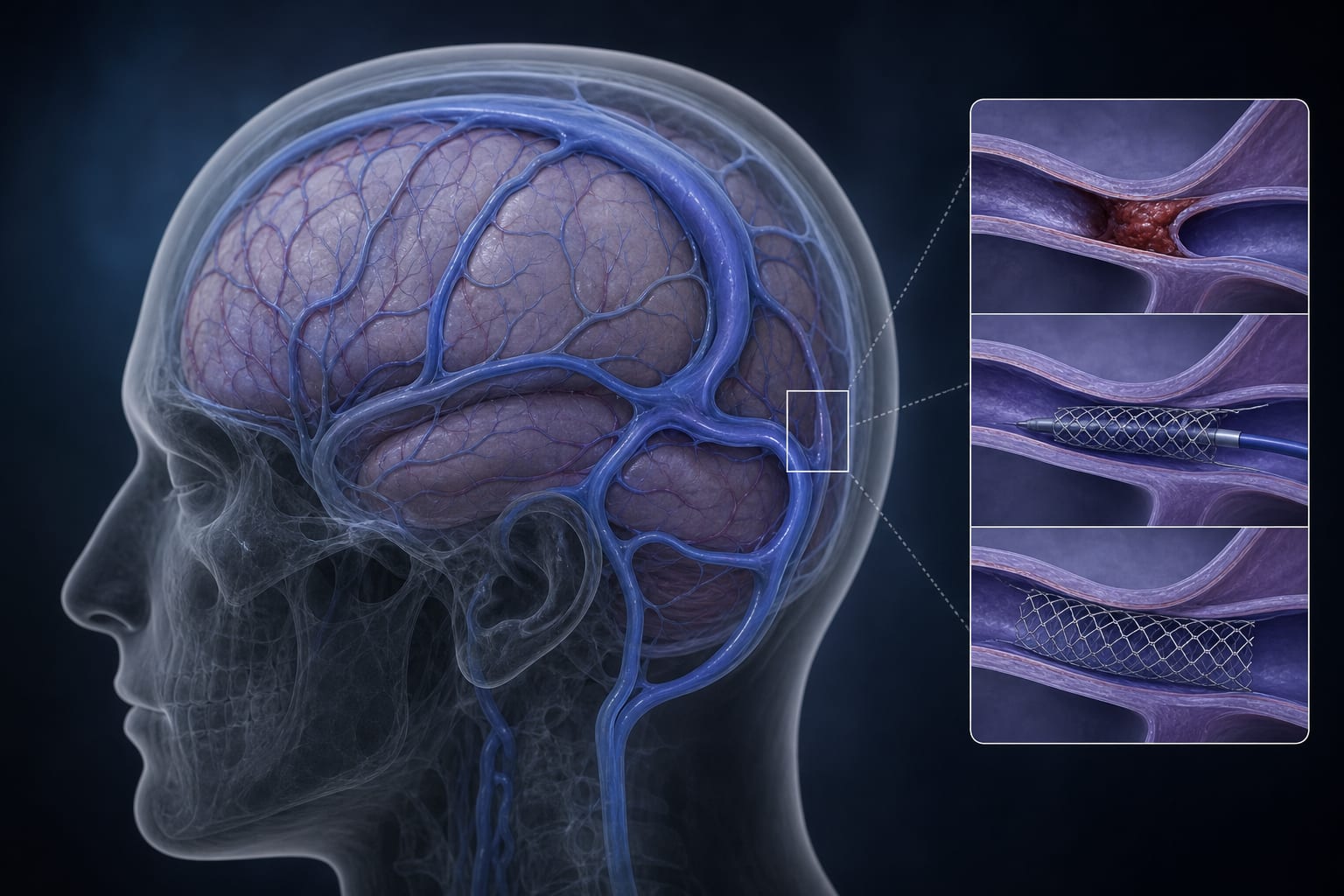
Cerebral Venous Disorders: Clinical Presentation, Diagnostic Strategy, and Contemporary Management
-
By
-
Terraciano, Anthony
-
Gupta, Khushal
-
Altschul, David J
-
June 3, 2026
-
Clinical Scorecard: Clinical Features, Diagnostic Approaches, and Modern Treatment of Cerebral Venous Disorders
At a Glance
| Category | Detail |
|---|
| Condition | Cerebral Venous Disorders |
| Key Mechanisms | Acute cerebral venous thrombosis, chronic intracranial venous hypertension, stenotic outflow states |
| Target Population | Patients with elevated intracranial venous pressure and medically refractory symptoms |
| Care Setting | Multidisciplinary clinical settings with advanced imaging and endovascular therapy capabilities |
Key Highlights
- Increasing recognition of cerebral venous disorders due to improved imaging techniques
- Emphasis on noninvasive and invasive imaging modalities for diagnosis
- Discussion of medical therapy including anticoagulation and intracranial pressure management
- Focus on endovascular techniques such as venous sinus stenting
- Identification of ongoing investigations and knowledge gaps in the field
Guideline-Based Recommendations
Diagnosis
- Utilize CT and MR venography for noninvasive assessment
- Consider catheter venography for invasive evaluation
Management
- Indications for anticoagulation therapy
- Intracranial pressure management strategies
Monitoring & Follow-up
- Physiologic pressure measurements to guide treatment
Risks
- Complication profiles associated with endovascular interventions
Patient & Prescribing Data
Patients with cerebral venous disorders experiencing elevated intracranial pressure
Emerging criteria for patient selection for endovascular intervention
Clinical Best Practices
- Adopt a multidisciplinary approach for optimal patient outcomes
- Utilize physiology-guided strategies for intervention selection
Related Resources & Content