Case Report: Treating obstructive sleep apnea with maxillomandibular advancement surgery in a case with a previously reconstructed mandible - Scorecard - MDSpire
Clinical Scorecard: Case Study: Maxillomandibular Advancement Surgery for Obstructive Sleep Apnea in a Patient with Prior Mandibular Reconstruction
At a Glance
Category
Detail
Condition
Obstructive Sleep Apnea (OSA)
Key Mechanisms
Maxillomandibular advancement enlarges the pharyngeal space and increases upper airway soft tissue tension by advancing the maxilla and mandible, thereby reducing airway collapse during sleep.
Target Population
Patients with severe OSA, including those with prior mandibular reconstruction
Care Setting
Oral and Maxillofacial Surgery department with multidisciplinary collaboration
Key Highlights
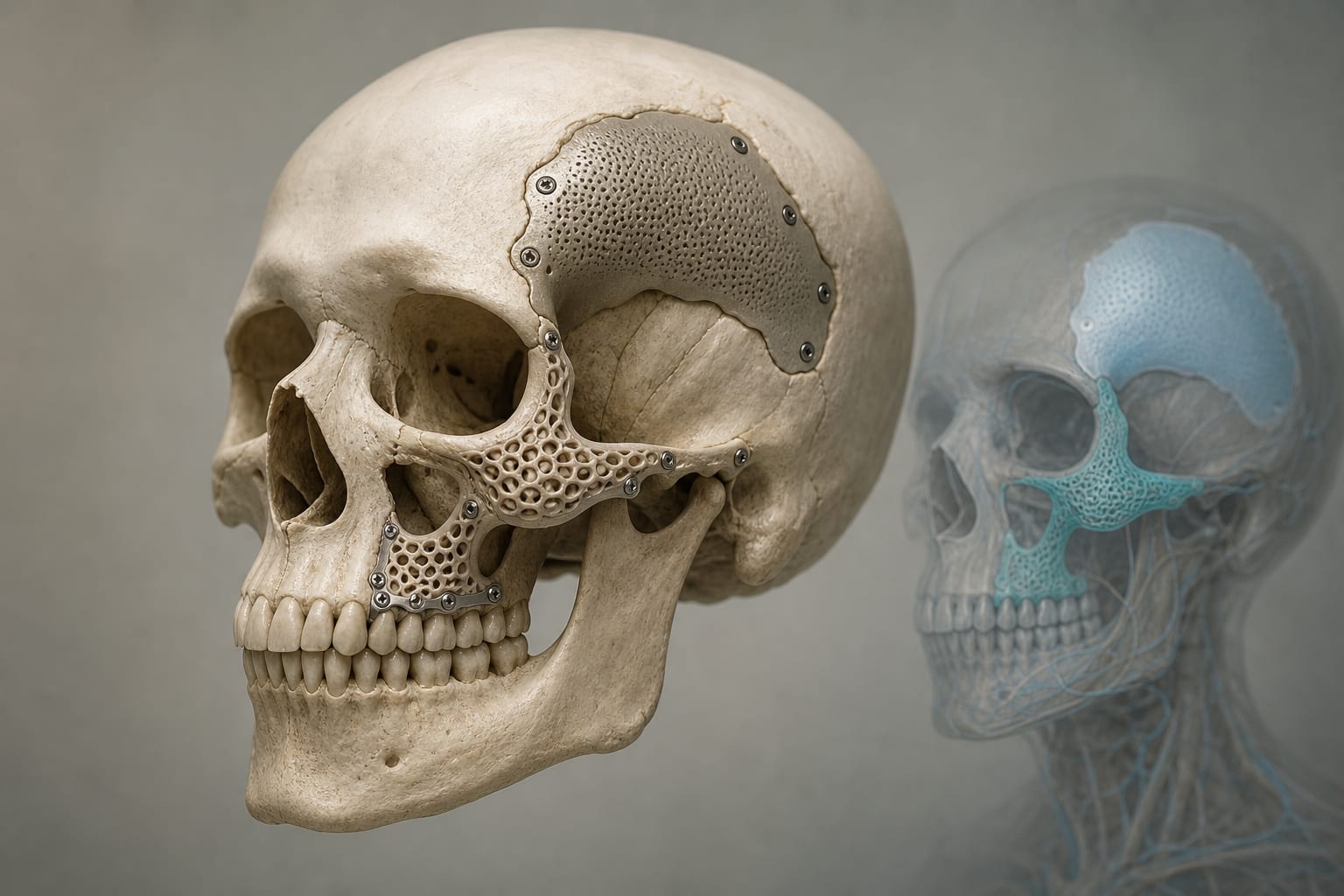
MMA surgery can be effectively performed in patients with previously reconstructed mandibles using patient-specific osteotomy guides and customized osteosynthesis plates.
Virtual surgical planning with 3D-printed guides enables precise maxillary and mandibular advancement despite complex anatomy.
Postoperative outcomes showed significant reduction in apnea hypopnea index and improvement in daytime sleepiness with minimal complications.
Guideline-Based Recommendations
Diagnosis
Confirm OSA diagnosis with overnight polysomnography measuring apnea hypopnea index (AHI).
Assess patient history including prior mandibular reconstruction and intolerance to other OSA treatments.
Management
Consider MMA surgery for severe OSA patients intolerant or refractory to CPAP, MAD, or upper airway stimulation.
Use virtual surgical planning and patient-specific osteotomy guides and osteosynthesis plates for surgical accuracy, especially in altered mandibular anatomy.
Plan Le Fort I osteotomy and bilateral sagittal split osteotomy (BSSO) with modifications as needed for reconstructed mandible.
Monitoring & Follow-up
Monitor postoperative AHI and daytime sleepiness (e.g., Epworth Sleepiness Scale) to assess treatment efficacy.
Observe for surgical complications such as transient paraesthesia and need for osteosynthesis material removal.
Risks
Technical challenges due to altered anatomy, vascularity, and muscle attachments in reconstructed mandible.
Potential transient sensory disturbances and hardware-related complications.
Patient & Prescribing Data
A 53-year-old male with severe OSA and prior mandibular reconstruction using fibula flap.
MMA with 10 mm advancement of maxilla and mandible resulted in AHI reduction from 35.2 to 17.6 and improved daytime sleepiness, demonstrating feasibility and safety.
Clinical Best Practices
Employ virtual surgical planning with 3D patient-specific guides and customized plates to enhance surgical precision in complex anatomy.