Clinical efficacy and safety of different video-assisted thoracoscopic surgery approaches for bullous lung resection: a systematic review and meta-analysis - Scorecard - MDSpire
Advertisement
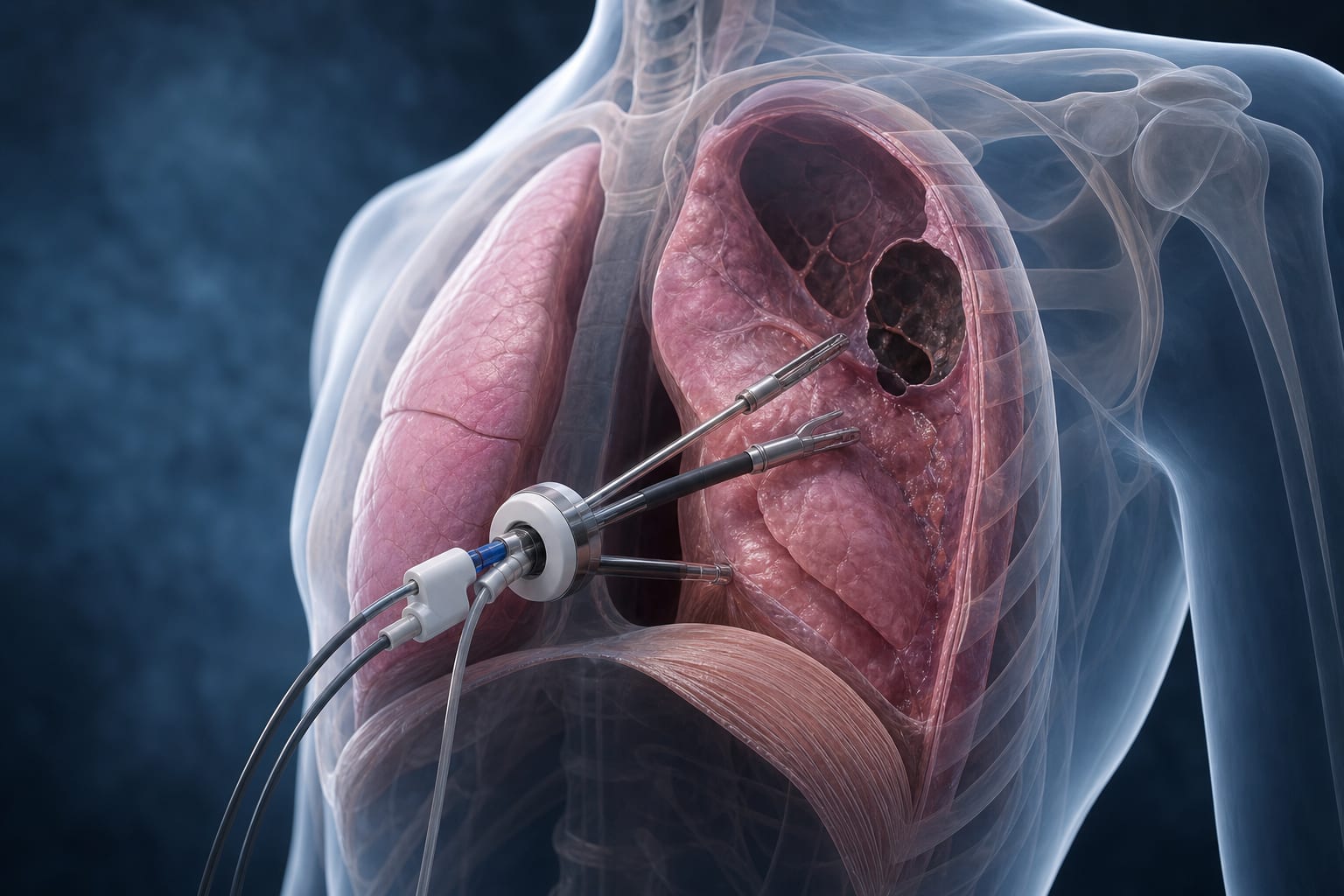
Comparative Analysis of Safety and Effectiveness of Single-Port versus Multi-Port Video-Assisted Thoracoscopic Surgery for Bullous Lung Resection: A Systematic Review and Meta-Analysis
Clinical Scorecard: Comparative Analysis of Safety and Effectiveness of Single-Port versus Multi-Port Video-Assisted Thoracoscopic Surgery for Bullous Lung Resection: A Systematic Review and Meta-Analysis
At a Glance
Category
Detail
Condition
Primary Spontaneous Pneumothorax
Key Mechanisms
Rupture of lung surface bullae/blebs leading to air in the pleural space.
Target Population
Patients aged 14 years and older with CT-confirmed bullous lungs requiring surgical bullectomy.
Care Setting
Surgical intervention in a hospital setting.
Key Highlights
Single-port VATS associated with reduced hospital stay and postoperative pain.
Lower incidence of chest wall paresthesia with single-port VATS.
No significant differences in operative time, chest tube duration, or complications between techniques.