Health-related quality of life, psychological well-being and physical activity in patients with mild-to-moderate ascending aortic dilation - a cross-sectional case-control study - Scorecard - MDSpire
Conexiant’s news site is now MDSpire News. Learn more
Advertisement
Quality of Life, Mental Health, and Exercise Levels in Individuals with Mild to Moderate Ascending Aortic Dilation: A Cross-Sectional Case-Control Analysis
Clinical Scorecard: Quality of Life, Mental Health, and Exercise Levels in Individuals with Mild to Moderate Ascending Aortic Dilation: A Cross-Sectional Case-Control Analysis
At a Glance
Category
Detail
Condition
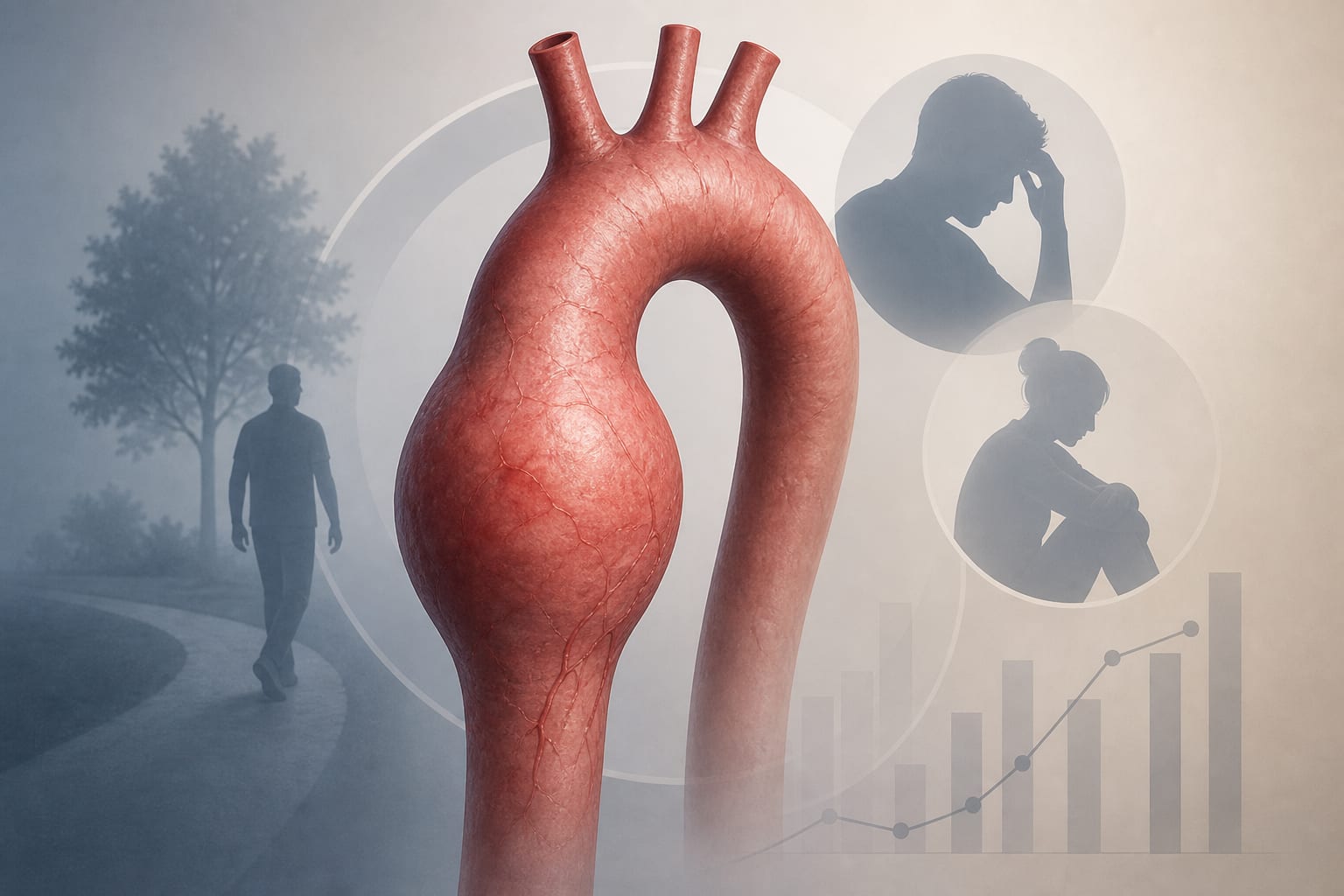
Ascending Aortic Dilation
Key Mechanisms
Abnormal enlargement of the aorta leading to increased risk of aortic dissection and rupture.
Target Population
Individuals with mild to moderate ascending aortic dilation.
Care Setting
Outpatient clinic for thoracic aortic disease.
Key Highlights
Patients with ascending aortic dilation experience negative effects on health-related quality of life (HRQoL).
Psychological well-being is impacted, with potential associations between cardiovascular disease and depression.
Physical activity levels and restrictions may influence psychological distress in patients.
Guideline-Based Recommendations
Diagnosis
Ongoing surveillance for aortic dilation is required, especially when diameters reach specified thresholds.
Management
Prophylactic surgery may be indicated for significant aortic dilation or rapid enlargement.
Monitoring & Follow-up
Regular follow-up imaging to assess aortic diameter and changes over time.
Risks
Increased risk of aortic dissection and rupture in patients with ascending aortic dilation.
Patient & Prescribing Data
Patients diagnosed with mild to moderate ascending aortic dilation.
Limited clarity on exercise restrictions; psychological distress may increase with activity limitations.
Clinical Best Practices
Utilize validated HRQoL assessment tools to evaluate patient well-being.
Consider psychological support for patients with aortic dilation.
by Fredrik Nilsson, Marcus Lindenberger, Sabina Borg, David Kylhammar, Petter Dyverfeldt, Filip Hammaréus, Lena Jonasson, Aleksandra Krzynska-Trzebiatowska, Lennart Nilsson, Chiara Trenti, Jan Engvall, Eva Swahn
Surveys captured nearly 7 times as many menopause observations as structured clinical records, with high agreement when both sources identified menopause.