Portable automated rapid testing for auditory assessment: repeated at-home testing in older adults
Clinical Scorecard: Mobile Automated Quick Testing for Hearing Evaluation: Repeated Home Assessments in Elderly Individuals
At a Glance
Category Detail
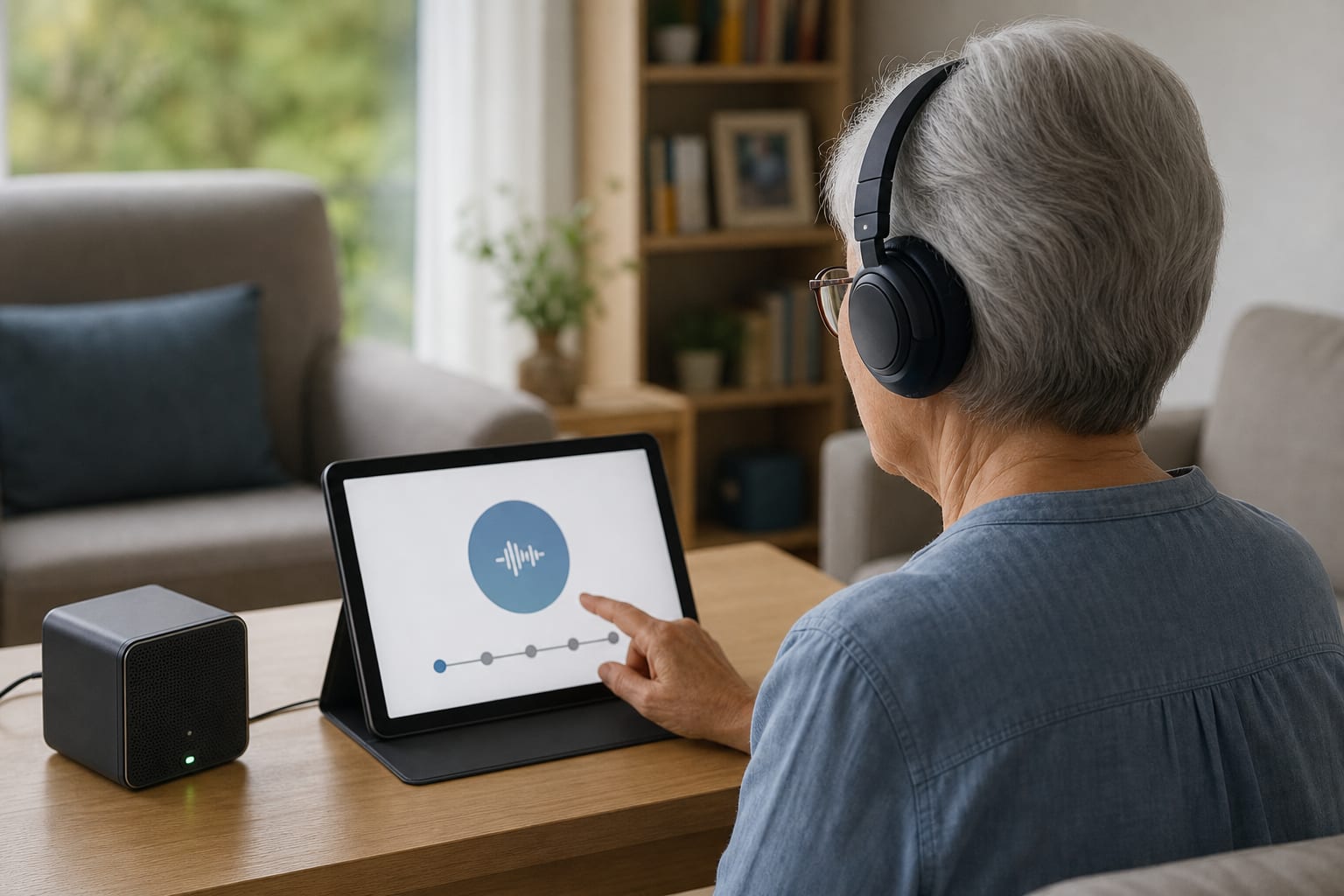
Condition Hearing impairment in elderly individuals Key Mechanisms Assessment of both peripheral hearing and central auditory functions Target Population Elderly individuals, particularly those aged 70 and older Care Setting Home-based remote evaluations
Key Highlights
PART system shows moderate-to-high test-retest reliability. Approximately two-thirds of individuals aged 70 and older experience hearing impairment. Hearing impairment is linked to cognitive deterioration and dementia risk. Digital platforms like PART enhance accessibility and scalability of auditory assessments. PART allows for comprehensive evaluation of auditory processing remotely. Guideline-Based Recommendations
Diagnosis
Utilize the PART system for remote auditory evaluations. Management
Implement early and precise evaluation of hearing impairments. Monitoring & Follow-up
Conduct repeated assessments using the PART system to track auditory capabilities. Risks
Undetected hearing issues can hinder communication and daily functioning. Patient & Prescribing Data
Elderly individuals with potential hearing impairments.
PART provides a scalable solution for auditory assessment in home settings.
Clinical Best Practices
Encourage the use of digital assessment tools for hearing evaluations. Integrate auditory assessments with cognitive evaluations to identify risks for dementia. Promote accessibility of hearing assessments for underprivileged populations. Related Resources & Content