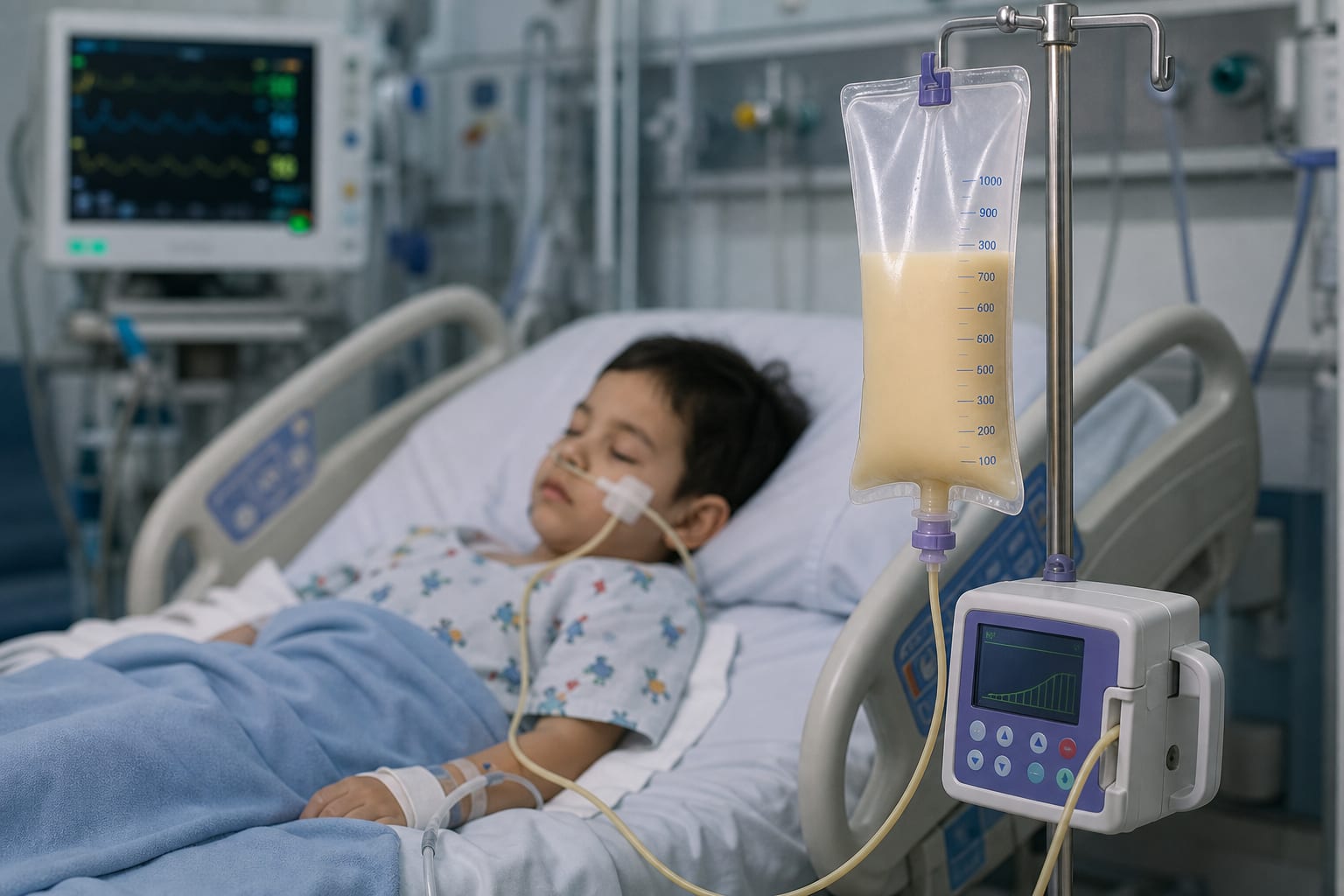
Nutrition protocols improve caloric adequacy in critically Ill children: a systematic review and meta-analysis
-
By
-
Yan Wang
-
Jia Wang
-
Xiao Sun
-
Baolian Yao
-
Fang Guo
-
Yan Shi
-
Nida Naeem
-
July 14, 2026
Clinical Scorecard: Nutritional Strategies Enhance Caloric Intake in Critically Ill Pediatric Patients: A Systematic Review and Meta-Analysis
At a Glance
| Category | Detail |
|---|
| Condition | Malnutrition in critically ill pediatric patients |
| Key Mechanisms | Structured nutritional protocols improve caloric delivery |
| Target Population | Critically ill children (≤18 years) in the Pediatric Intensive Care Unit (PICU) |
| Care Setting | Pediatric Intensive Care Unit (PICU) |
Key Highlights
- Nutritional protocols associated with +21.98% improvement in caloric adequacy (p < 0.001)
- Both nurse-led and non-nurse-led protocols showed significant improvements
- High prevalence of malnutrition linked to adverse outcomes in PICU
- Real-world caloric delivery averages 34 kcal/kg/day, falling short of targets
- Structured protocols address barriers to adequate caloric provision
Guideline-Based Recommendations
Diagnosis
- Assess malnutrition risk upon PICU admission
- Monitor caloric intake and adequacy regularly
Management
- Implement structured nutritional feeding protocols
- Initiate early enteral nutrition within 24–48 hours
Monitoring & Follow-up
- Regularly evaluate caloric delivery against targets
- Adjust feeding protocols based on individual patient needs
Risks
- Inadequate caloric provision associated with prolonged mechanical ventilation
- Higher mortality rates linked to caloric deficits
Patient & Prescribing Data
Critically ill children admitted to PICU
Structured protocols improve caloric adequacy regardless of leadership
Clinical Best Practices
- Utilize nurse-led and pharmacist-involved protocols for nutritional support
- Standardize feeding practices to minimize clinician-level variability
- Address barriers to enteral nutrition proactively
Related Resources & Content