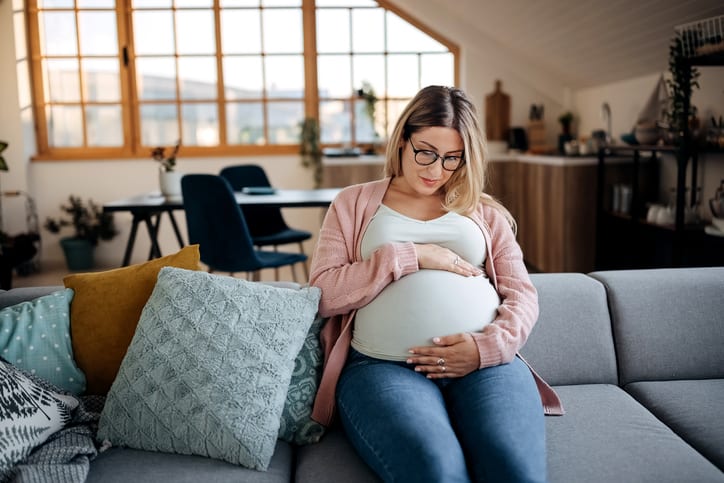
Persistent anxiety linked to cognitive lapses
-
By
-
Andrea Surnit
-
October 28, 2026
-
4 min
Clinical Scorecard: Persistent anxiety linked to cognitive lapses
At a Glance
| Category | Detail |
|---|---|
| Condition | Self-reported cognitive difficulties during pregnancy and early postpartum in relation to anxiety, depressive symptoms, and physical activity |
| Key Mechanisms | Higher anxiety and depressive symptoms were associated with greater self-reported cognitive failures; exploratory analyses found that prenatal physical activity modified the association between depressive symptoms and cognitive failures. |
| Target Population | Pregnant and early postpartum women; the study included 56 participants, with 46 completing postpartum follow-up. |
| Care Setting | Prenatal and postpartum care; participants were recruited through an obstetrics and gynecology practice. |
Key Highlights
- Women with consistently higher anxiety symptoms reported greater cognitive difficulties during pregnancy and approximately 6 weeks postpartum.
- Higher depressive symptoms were associated with greater cognitive difficulties; the association with total cognitive failures was statistically significant postpartum but not during pregnancy.
- Meeting physical activity guidelines was not independently associated with statistically significant differences in cognitive functioning.
- Prenatal physical activity modified the association between depressive symptoms and cognitive failures in exploratory analyses; this does not establish a protective effect.
- The observational study used self-reported measures and a small, predominantly White, relatively well-educated sample, limiting causal conclusions and generalizability.
Guideline-Based Recommendations
Diagnosis
- The study assessed cognitive failures with the 25-item Cognitive Functioning Questionnaire, anxiety with the State-Trait Anxiety Inventory, and depressive symptoms with the Center for Epidemiologic Studies Depression Scale.
- Symptom groups were defined using sample-based median thresholds, not clinical diagnostic cutoffs.
Management
- The article identifies no treatment recommendations; it reports observational associations and does not establish that physical activity improves cognition.
Monitoring & Follow-up
- The authors state that anxiety and depressive symptoms should be assessed during prenatal and postpartum care, particularly when patients report everyday cognitive difficulties.
Risks
- The observational design does not establish that mood symptoms cause cognitive failures or that physical activity reduces them.
- Potential confounders, including sleep quality, perceived stress, social support, maternal age, and parity, were not adjusted for.
Patient & Prescribing Data
Participants were 56 pregnant women recruited through an obstetrics and gynecology practice in central Pennsylvania; 46 completed follow-up approximately 6 weeks postpartum. Mean age was 30.1 years; 98% were White, 91% married, and 63% college-educated.
Physical activity was classified against a guideline threshold of at least 150 minutes of moderate-to-vigorous activity per week. Meeting this threshold was not independently associated with statistically significant cognitive-function differences; exploratory findings do not establish a treatment effect.
Clinical Best Practices
- Assess anxiety and depressive symptoms during prenatal and postpartum care, particularly when patients report everyday cognitive difficulties.
- Interpret the reported associations cautiously because the study was small, observational, and based on self-reported questionnaires.
- Do not infer a causal or protective effect of physical activity on cognition from these findings.
Related Resources & Content
Based on findings from:
Persistent anxiety linked to cognitive lapses
Andrea Surnit. MDSpire News, 2026.
https://news.mdspire.com/obgyn/articles/persistent-anxiety-linked-to-cognitive-lapses/
This content is an AI-generated, fully rewritten summary based on a published scholarly article. It does not reproduce the original text and is not a substitute for the original publication. Readers are encouraged to consult the source for full context, data, and methodology.