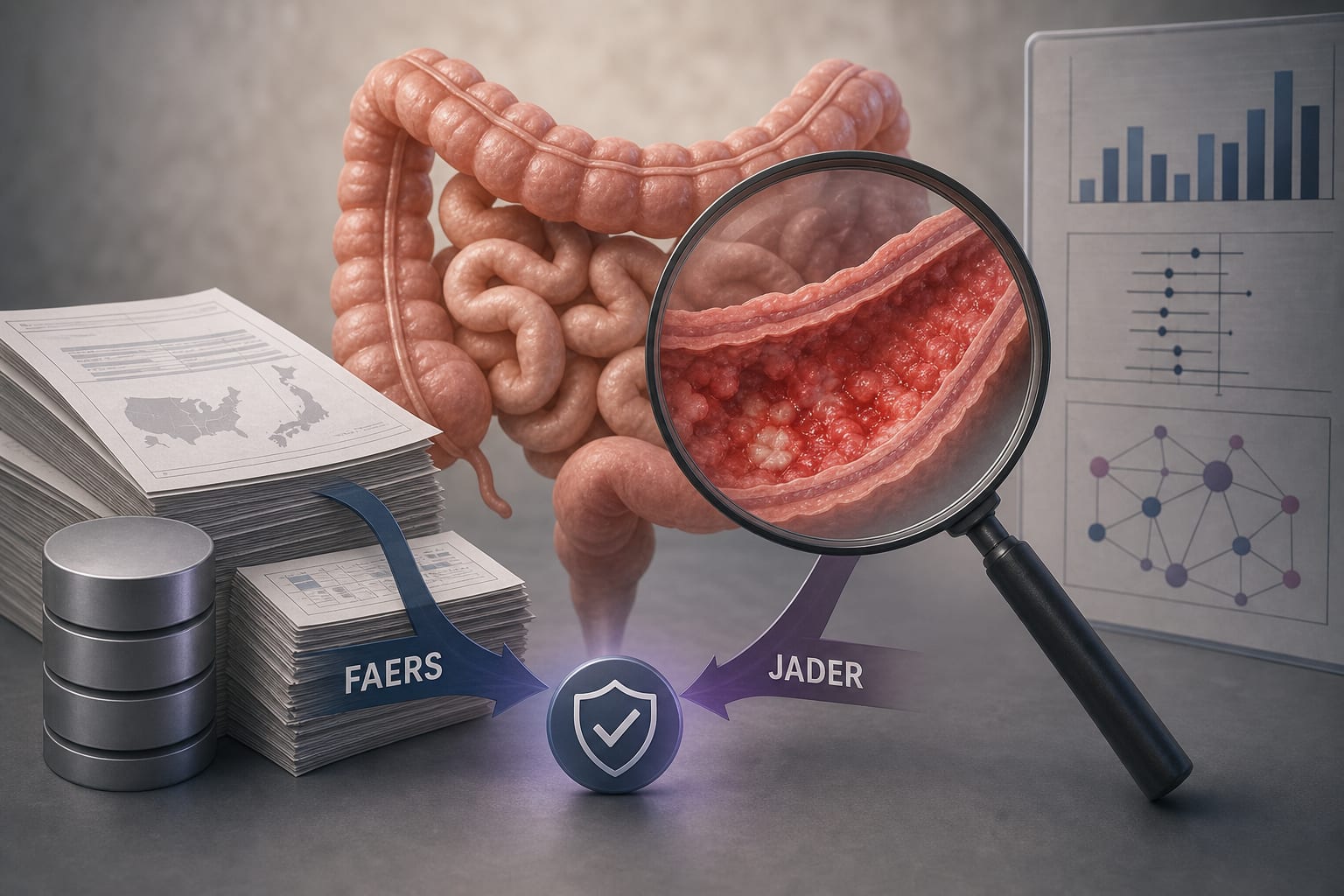
Investigating Drug-Related Inflammatory Bowel Disease: A Comprehensive Analysis of FAERS and JADER Data
-
By
-
Yuou Ying
-
Mengyuan Shen
-
Jinhan Chen
-
Tongfei Feng
-
Zejiong Li
-
Zhekai Ying
-
Dongdong Yang
-
Ruyi Ju
-
Jiannong Wu
-
July 7, 2026
Clinical Scorecard: Investigating Drug-Related Inflammatory Bowel Disease: A Comprehensive Analysis of FAERS and JADER Data
At a Glance
| Category | Detail |
|---|
| Condition | Inflammatory Bowel Disease (IBD) |
| Key Mechanisms | Drug-associated adverse events leading to new-onset IBD. |
| Target Population | Patients reporting drug-associated IBD, primarily aged 18–64 years. |
| Care Setting | Pharmacovigilance analysis using FAERS and JADER databases. |
Key Highlights
- 52,395 reports of drug-associated IBD identified in FAERS.
- Anti-TNF-α inhibitors ranked highest by reporting frequency.
- Isotretinoin demonstrated the strongest signal intensity for IBD.
- Median onset of IBD occurred within one year for most cases.
- External validation confirmed signals for certain biologic agents and immunosuppressants.
Guideline-Based Recommendations
Diagnosis
- Monitor for signs of IBD in patients receiving medications linked to adverse events.
Management
- Implement preventive strategies for patients at risk of drug-associated IBD.
Monitoring & Follow-up
- Conduct vigilant monitoring for drug-associated IBD and associated risks.
Risks
- Certain medications, including NSAIDs and antibiotics, may trigger new-onset IBD.
Patient & Prescribing Data
Individuals aged 18–64 years, with a higher proportion of females.
Awareness of drug-related IBD is essential for therapeutic decision-making.
Clinical Best Practices
- Utilize FAERS and JADER data for signal detection and risk assessment.
- Engage in timely identification of drug-associated IBD to prevent complications.
Related Resources & Content