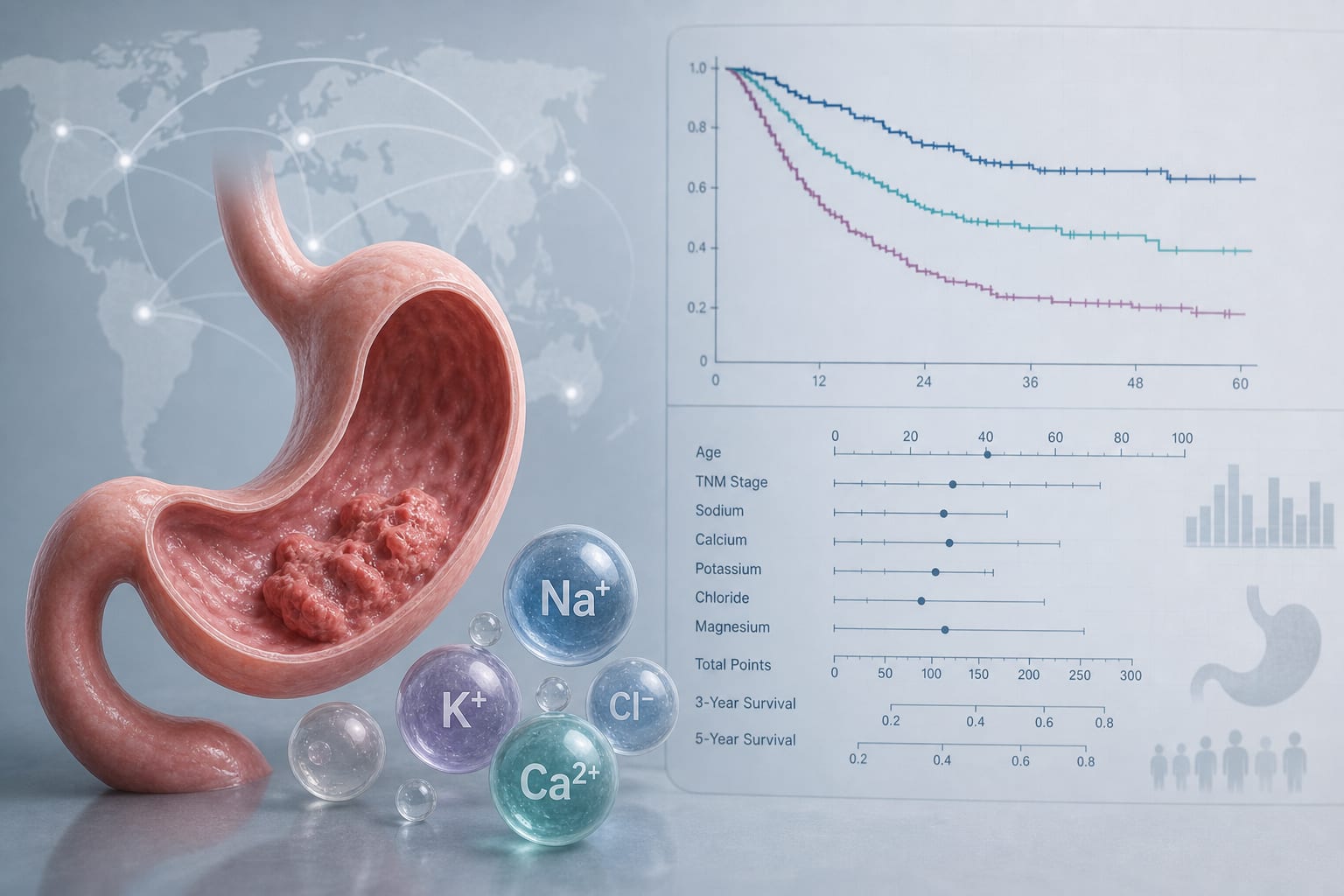
Preoperative electrolyte-based metabolic biomarkers for prognostic assessment in gastric cancer: a multicenter study
-
By
-
Weihao Kong
-
Jiawen Wang
-
Xuqin Wu
-
Kangjie Zhang
-
Xingyu Wang
-
Jianlin Zhang
-
June 11, 2026
-
Clinical Scorecard: Electrolyte Metabolic Biomarkers for Prognostic Evaluation in Gastric Cancer: Findings from a Multicenter Investigation
At a Glance
| Category | Detail |
|---|
| Condition | Gastric Cancer |
| Key Mechanisms | Electrolyte dysregulation affecting tumor metabolism and microenvironment. |
| Target Population | Adults (≥18 years) with histopathologically confirmed gastric cancer. |
| Care Setting | Multicenter hospitals in Anhui Province, China. |
Key Highlights
- Sodium and calcium identified as independent prognostic factors for overall survival.
- Electrolyte Score stratifies patients into high- and low-risk groups.
- Combination of Electrolyte Score with clinicopathological variables enhances prognostic prediction.
Guideline-Based Recommendations
Diagnosis
- Histopathological confirmation of gastric cancer is required.
Management
- Utilize the Electrolyte Score for prognostic assessment in conjunction with TNM staging.
Monitoring & Follow-up
- Regular follow-up of overall survival post-treatment.
Risks
- Exclusion of patients with severe comorbidities that may affect metabolic status.
Patient & Prescribing Data
1,371 patients with gastric cancer across two cohorts.
Electrolyte levels (sodium and calcium) are associated with survival outcomes.
Clinical Best Practices
- Incorporate routine serum electrolyte measurements in gastric cancer management.
- Develop individualized prognostic models using the Electrolyte Score and clinicopathological data.
Related Resources & Content