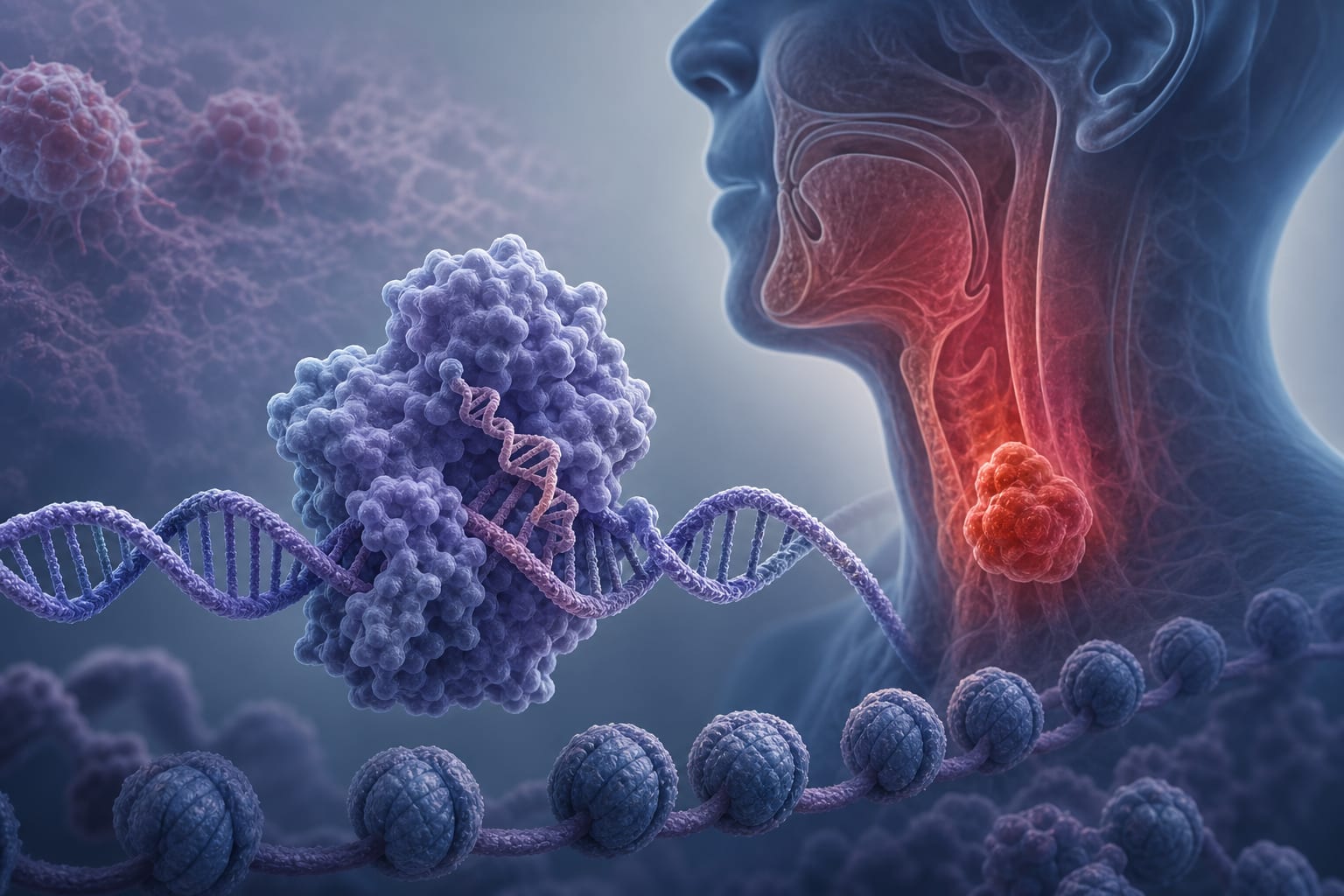
Clinical Scorecard: Dysregulation of HOX Genes in Head and Neck Squamous Cell Carcinoma: Insights into Mechanisms, Clinical Implications, and Future Directions
At a Glance
Category
Detail
Condition
Key Mechanisms
Dysregulation of HOX genes affecting tumor initiation, progression, and therapeutic resistance, with context-dependent roles.
Target Population
Care Setting
Key Highlights
HOX genes are master regulators of embryonic development and are implicated in tumorigenesis.
Dysregulation of HOX genes can lead to altered cellular processes such as proliferation and differentiation.
HOX gene expression patterns vary across different subtypes of HNSCC.
Certain HOX genes may act as oncogenes or tumor suppressors depending on the context.
The clinical relevance of HOX genes as biomarkers and therapeutic targets remains to be fully explored, highlighting the need for further research.
Guideline-Based Recommendations
Diagnosis
Molecular characterization of HOX gene expression may aid in the diagnosis of HNSCC.
Management
Targeted therapeutic strategies should consider the context-dependent roles of HOX genes.
Monitoring & Follow-up
Regular assessment of HOX gene expression may provide insights into tumor progression.
Risks
Late-stage diagnosis and molecular heterogeneity contribute to poor prognosis in HNSCC.
Patient & Prescribing Data
Current treatments may not effectively target the molecular alterations associated with HOX gene dysregulation, indicating a gap in clinical application.
Clinical Best Practices
Integrate genomic and transcriptomic data for comprehensive patient assessment.
Consider the role of HOX genes in personalized treatment approaches.
Encourage research into HOX gene networks to identify novel therapeutic targets, as highlighted in the source.
by Norma Carolina Hernandez-Bautista, Claudia Altamirano-Torres, Jose Manuel Vazquez-Guillen, Reyes S. Tamez-Guerra, Cristina Rodríguez-Padilla, Diana Resendez-Perez