Prognosis and recovery trajectories in prolonged disorders of consciousness: protocol for the PDOCC 5-year prospective cohort study - Scorecard - MDSpire
Advertisement
Prognosis and recovery trajectories in prolonged disorders of consciousness: protocol for the PDOCC 5-year prospective cohort study
Clinical Scorecard: Outcomes and Recovery Patterns in Extended Disorders of Consciousness: A Protocol for the 5-Year PDOCC Prospective Cohort Investigation
At a Glance
Category
Detail
Condition
Prolonged Disorders of Consciousness (pDoC)
Key Mechanisms
Vegetative state (VS) and minimally conscious state (MCS) resulting from severe acquired brain injury.
Target Population
Patients aged 18–80 with pDoC (VS or MCS ≥ 28 days post-brain injury).
Care Setting
Single-center, prospective cohort study in a hospital setting.
Key Highlights
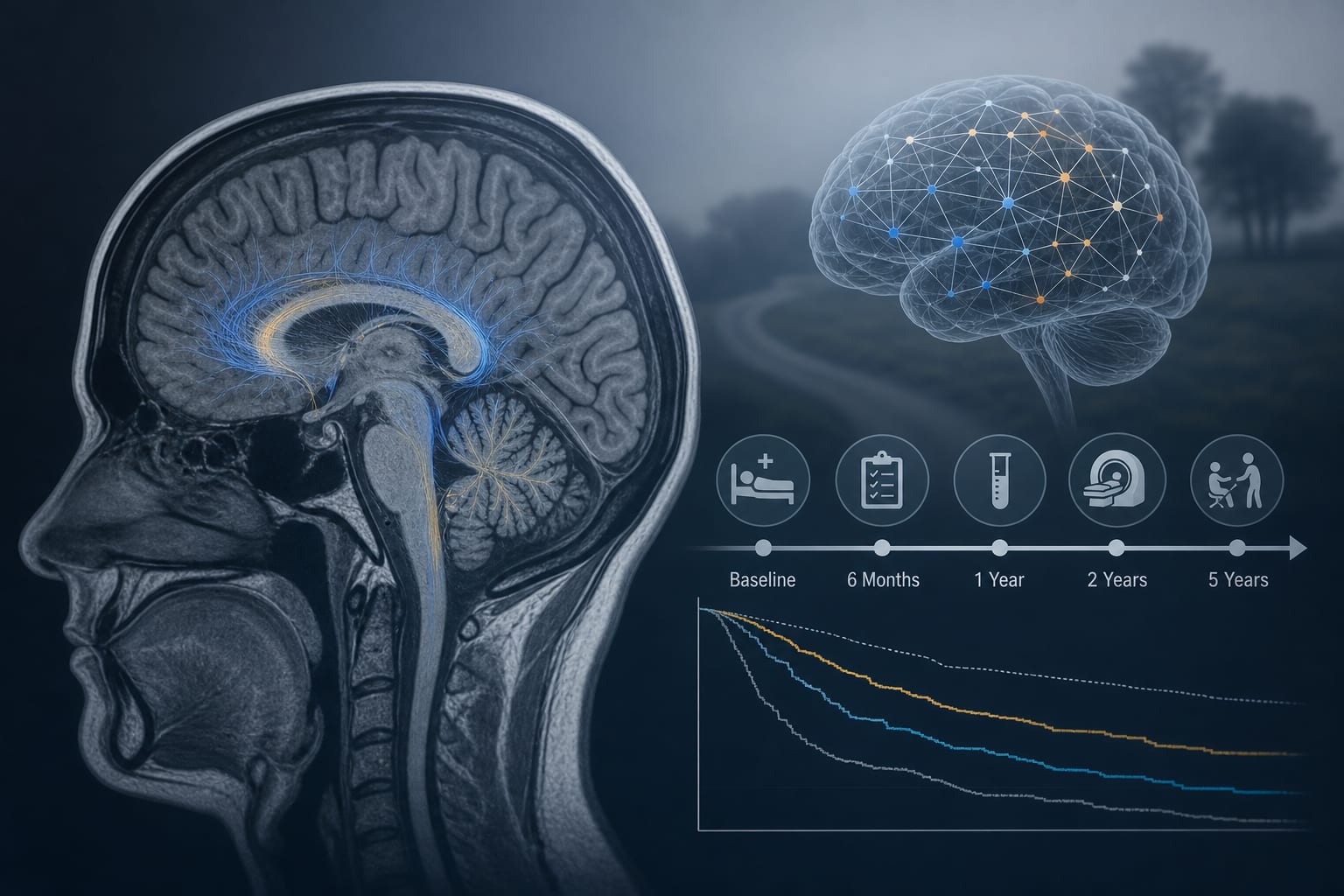
Investigation of 5-year disease trajectories in 1,000 patients.
Incorporation of standardized clinical assessments and neuroimaging.
Focus on consciousness recovery, all-cause mortality, and major cardiovascular events.
Use of competing-risk models to enhance prognostic accuracy.
Development of multimodal prognostic prediction models.
Guideline-Based Recommendations
Diagnosis
Utilize standardized clinical assessments (CRS-R, GOS-E, DRS) for diagnosis.
Management
Implement multimodal assessment strategies for individualized rehabilitation.
Monitoring & Follow-up
Conduct follow-up assessments at multiple time points (3, 6, 12, 24, 36, 48, and 60 months).
Risks
Account for competing risks such as mortality in statistical models.
Patient & Prescribing Data
Patients with prolonged disorders of consciousness due to traumatic and non-traumatic brain injuries.
Focus on rehabilitation decision-making informed by prognostic models.
Clinical Best Practices
Standardize multimodal assessment protocols.
Incorporate neuroimaging and biomarkers in prognostic evaluations.
Utilize competing-risk analysis in outcome assessments.