Natural History and Impact of Thoracic Endovascular Stent-Grafting on Type B Intramural Hematoma: A World of Caution
-
By
-
Charles Laurin
-
Philippe Chassé
-
William Santoire
-
Jean Porterie
-
Rim Abdelli
-
François Dagenais
-
June 28, 2026
-
Clinical Scorecard: The Evolution and Effects of Thoracic Endovascular Stent-Grafting in Type B Intramural Hematoma: A Cautionary Perspective
At a Glance
| Category | Detail |
|---|
| Condition | Type B Intramural Hematoma |
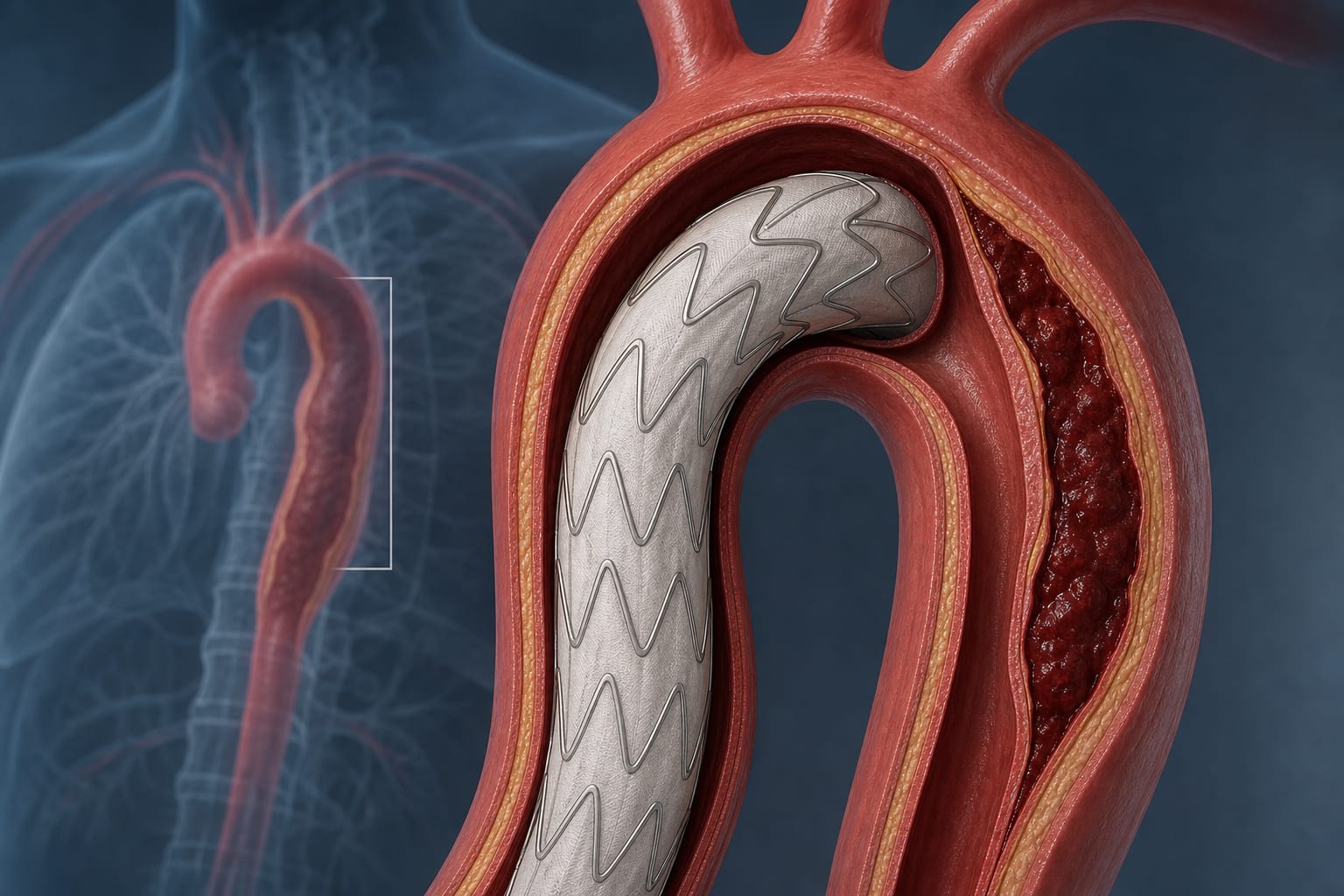
| Key Mechanisms | Bleeding within the medial layer of the aortic wall, potentially due to focal intimal disruption. |
| Target Population | Patients presenting with acute uncomplicated type B intramural hematoma. |
| Care Setting | Retrospective review of institutional experience. |
Key Highlights
- Type B intramural hematoma accounts for 5% to 15% of acute aortic syndrome cases.
- Current standard of care involves optimal medical therapy with strict blood pressure control.
- TEVAR may improve aortic remodeling and reduce aortic-related death compared to medical therapy alone.
- Complications from TEVAR include retrograde aortic dissection and endoleaks.
- Patient selection for TEVAR vs. medical management is under ongoing investigation.
Guideline-Based Recommendations
Diagnosis
- Diagnosis of type B IMH is confirmed via CT imaging.
Management
- Optimal medical therapy is the standard for uncomplicated type B IMH.
- Indications for TEVAR include persistent chest pain, increasing hematoma thickness, and hemodynamic instability.
Monitoring & Follow-up
- Serial imaging is recommended to monitor for progression of IMH.
Risks
- Patients remain at risk for late TEVAR adverse events and aortic reinterventions.
Patient & Prescribing Data
40 patients with acute uncomplicated type B IMH.
Patients with good response to OMT were discharged and followed in a dedicated aortic clinic.
Clinical Best Practices
- Maintain strict blood pressure control in patients with type B IMH.
- Monitor hematoma thickness and symptoms closely to determine need for intervention.
Related Resources & Content