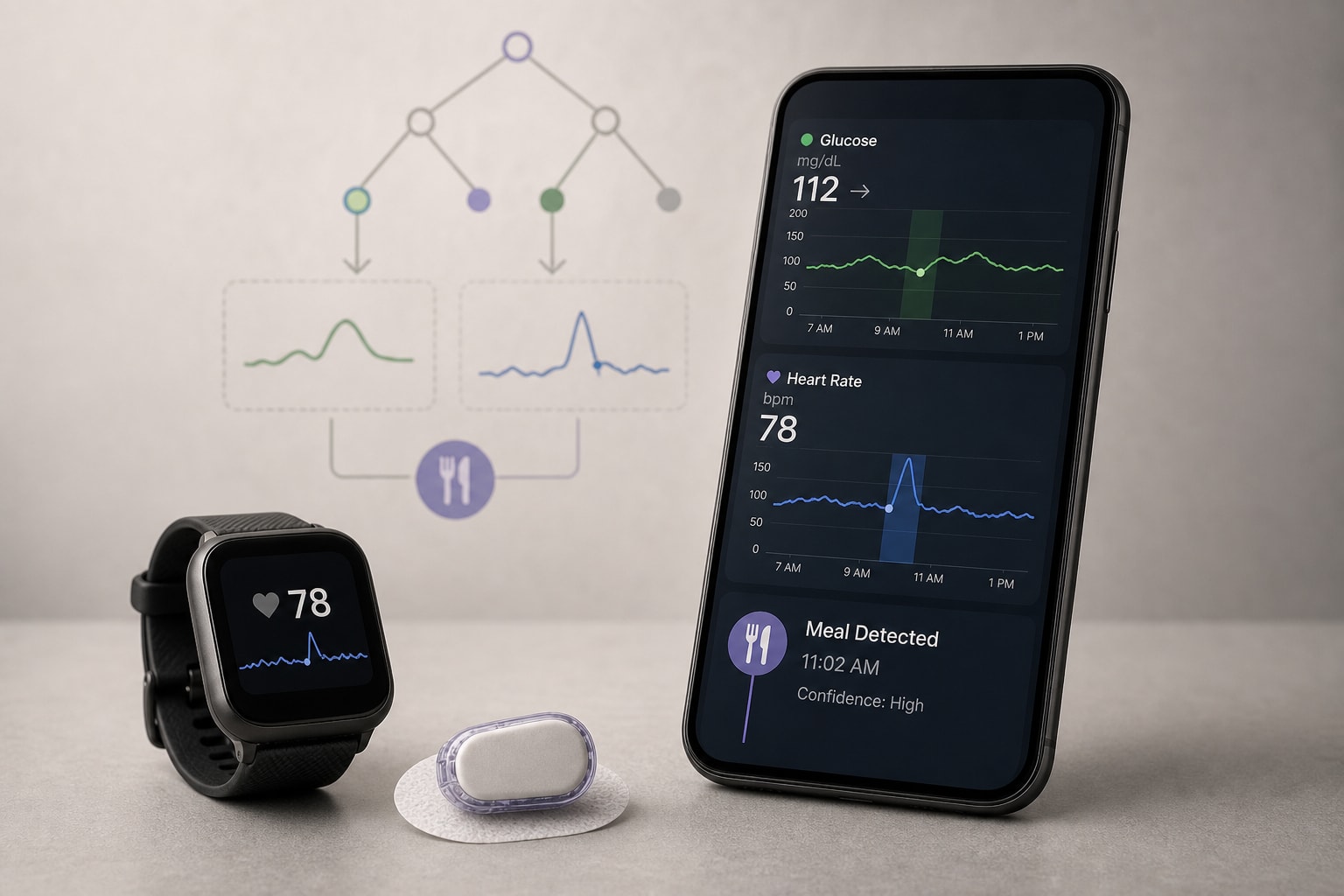
A personalized and automated real-time meal detection algorithm based on continuous glucose monitoring and heart rate data for individuals with post-bariatric hypoglycemia - Scorecard - MDSpire
Advertisement
A personalized and automated real-time meal detection algorithm based on continuous glucose monitoring and heart rate data for individuals with post-bariatric hypoglycemia
Clinical Scorecard: An Automated Real-Time Meal Detection System Utilizing Continuous Glucose Monitoring and Heart Rate Data for Patients Experiencing Post-Bariatric Hypoglycemia
At a Glance
Category
Detail
Condition
Post-Bariatric Hypoglycemia (PBH)
Key Mechanisms
Integration of Continuous Glucose Monitoring (CGM) and heart rate data for meal detection.
Target Population
Patients who have undergone bariatric surgery and experience PBH.
Care Setting
Clinical and free-living environments.
Key Highlights
Algorithm achieved 100% recall in controlled settings and 78% recall in free-living conditions.
Average precision of 85% in free-living conditions.
Reduced false positives compared to CGM-only algorithms.
Utilizes individualized features from CGM and heart rate data.
Addresses the unmet need for automated meal detection in PBH.
Guideline-Based Recommendations
Diagnosis
Monitor glucose fluctuations using CGM in patients with PBH.
Management
Dietary modification, particularly reduction of rapid-acting carbohydrates, is essential.
Monitoring & Follow-up
Continuous monitoring of glucose and heart rate to inform meal detection.
Risks
Potential for hypoglycemia due to exaggerated insulin responses post-meal.
Patient & Prescribing Data
Patients post-bariatric surgery with PBH.
Automated meal detection can reduce patient burden and improve glucose management.
Clinical Best Practices
Integrate CGM and heart rate data for enhanced meal detection accuracy.
Utilize real-time data to inform decision support systems for PBH management.