Clinical Scorecard: Cervical Lymph Nodes Show Increased Levels of Neurodegenerative Fluid Biomarkers in Humans
At a Glance
Category
Detail
Condition
Neurodegenerative diseases including Alzheimer's disease
Key Mechanisms
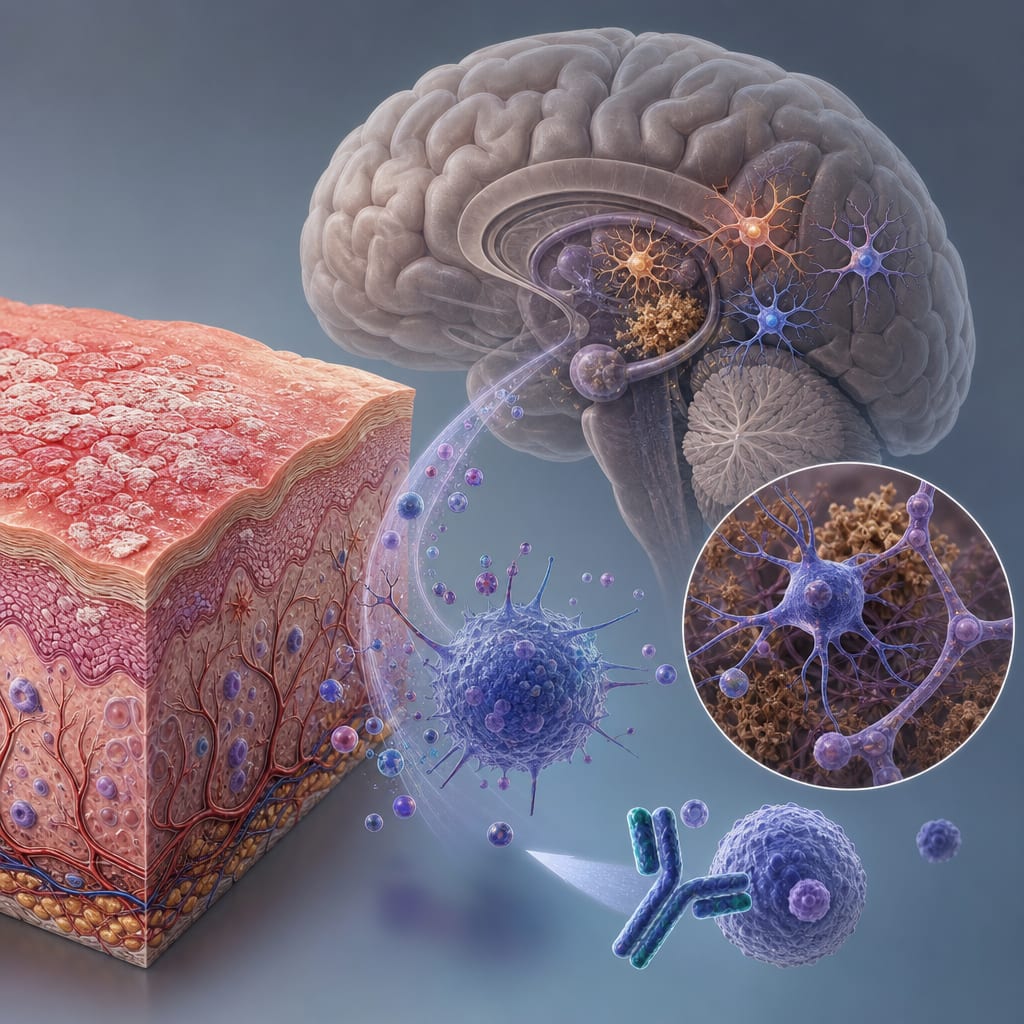
Drainage of neurodegenerative biomarkers from brain to cervical lymph nodes via meningeal lymphatic system
Target Population
Humans including autoimmune neurological patients and healthy adults
Care Setting
Clinical ultrasound suite for minimally invasive fine needle aspiration
Key Highlights
Neurodegenerative biomarkers such as amyloid-beta 40/42, phosphorylated tau 181, GFAP, and neurofilament light are detectable in human cervical lymph nodes (CLNs).
CLN biomarker concentrations are significantly higher than plasma levels, especially phosphorylated tau 181, which decreases with age.
Ultrasound-guided fine needle aspiration of CLNs is safe, well-tolerated, and provides a minimally invasive method to study brain clearance and lymphatic drainage.
Guideline-Based Recommendations
Diagnosis
Consider ultrasound-guided fine needle aspiration of cervical lymph nodes to measure neurodegenerative fluid biomarkers as a proxy for brain clearance.
Management
Use CLN biomarker levels to complement CSF and blood analyses in research and clinical trials targeting neurodegenerative diseases.
Monitoring & Follow-up
Monitor changes in CLN biomarker concentrations, particularly phosphorylated tau 181, as potential indicators of ageing and disease progression.
Risks
Ultrasound-guided fine needle aspiration is minimally invasive and well-tolerated with low risk when performed by experienced clinicians.
Patient & Prescribing Data
Patients with autoimmune neurological diseases and healthy adults without cognitive impairment
Sampling CLNs via fine needle aspiration provides enriched biomarker data reflecting brain protein clearance, potentially guiding therapeutic interventions and monitoring.
Clinical Best Practices
Perform CLN fine needle aspiration under ultrasound guidance by experienced radiologists to ensure safety and sample quality.
Standardize sampling protocols including needle passes and PBS washes to optimize biomarker yield.
Store aspirate supernatants at −80°C promptly after processing to preserve biomarker integrity.
Combine CLN biomarker data with plasma and capillary blood measurements for comprehensive assessment.
by Adam Al-Diwani, Nicholas M Provine, Andrew Murchison, Rhiannon Laban, Owen J Swann, Ivan Koychev, Fintan Sheerin, Sandro Da Mesquita, Amanda Heslegrave, Henrik Zetterberg, Paul Klenerman, Sarosh R Irani