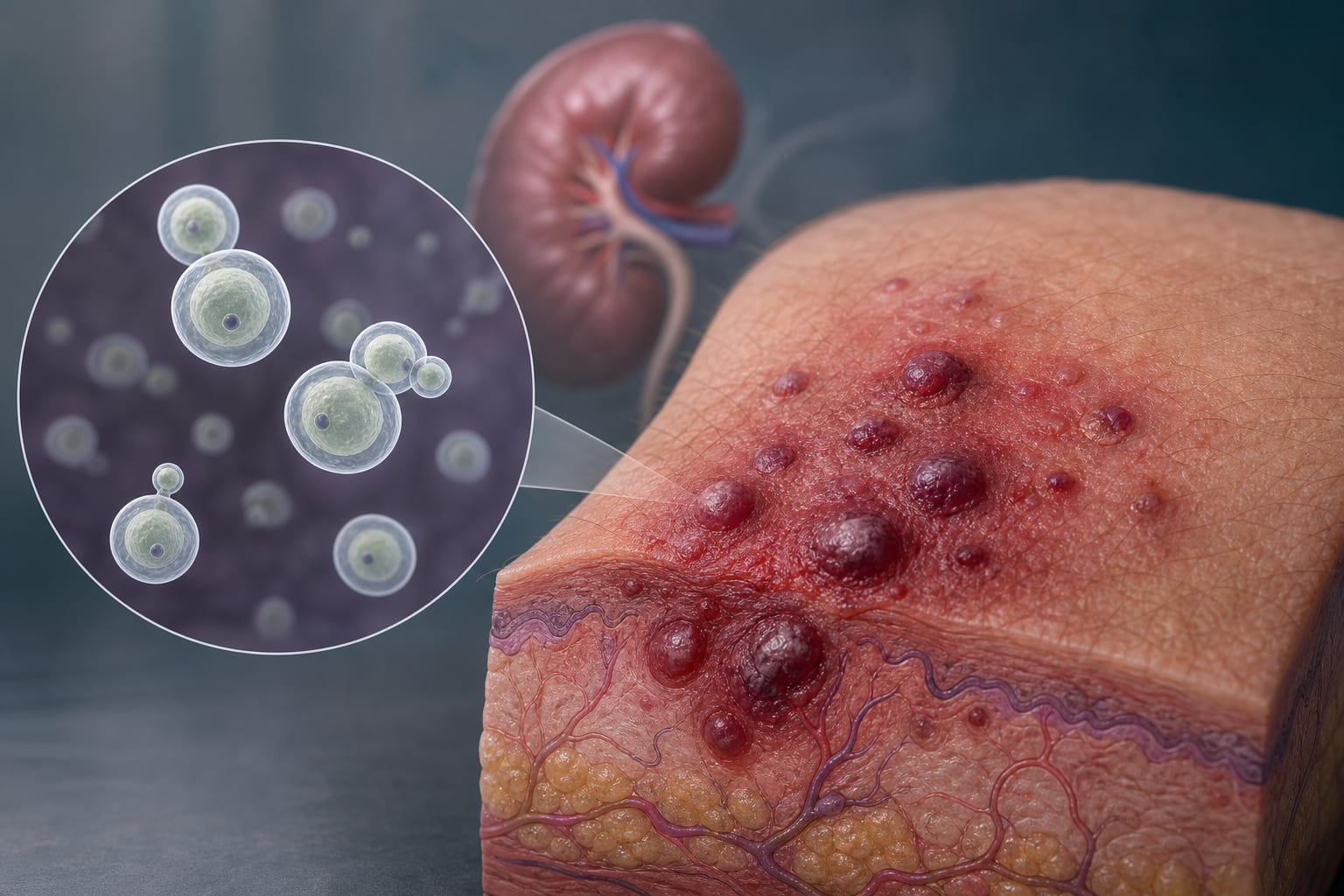
Comparative Analysis of Urban Exposome and Skin Microbiome in Atopic Dermatitis Across Two Brazilian Cities
-
By
-
Heloísa Silva de Avó Freixo
-
Hélio Amante Miot
-
Marília Marufuji Ogawa
-
Ivanka Miranda de Castro Martins
-
Vânia Rodrigues Leite e Silva
-
Newton Andreo Filho
-
Patrícia Santos Lopes
-
Romualdo Morandi Filho
-
Ediléia Bagatin
-
September 17, 2026
Clinical Scorecard: Comparative Analysis of Urban Exposome and Skin Microbiome in Atopic Dermatitis Across Two Brazilian Cities
At a Glance
| Category | Detail |
|---|
| Condition | Atopic Dermatitis |
| Key Mechanisms | Interactions among skin barrier defects, immune dysregulation, and changes in the skin microbiome. |
| Target Population | Patients with Atopic Dermatitis in São Paulo State, Brazil. |
| Care Setting | Comparative analysis of urban exposome and skin microbiome. |
Key Highlights
- Patients from a metropolitan area showed greater Staphylococcus aureus relative abundance.
- No differences in overall bacterial diversity between municipalities or age groups.
- Urban exposome exposure may facilitate S. aureus overgrowth in Atopic Dermatitis.
Guideline-Based Recommendations
Diagnosis
- Assess skin microbiome and environmental exposure in patients with Atopic Dermatitis.
Management
- Consider environmental factors in the management of Atopic Dermatitis.
Monitoring & Follow-up
- Monitor skin microbiome changes in relation to urban environmental exposures.
Risks
- Increased risk of S. aureus overgrowth in urban settings.
Patient & Prescribing Data
Children aged 6–12 years and adults aged 20–31 years with active Atopic Dermatitis.
Participants had not received specific topical or systemic treatment in the previous 30 days.
Clinical Best Practices
- Evaluate the impact of urban pollution on skin health.
- Incorporate environmental exposure assessments in clinical evaluations of Atopic Dermatitis.
Related Resources & Content