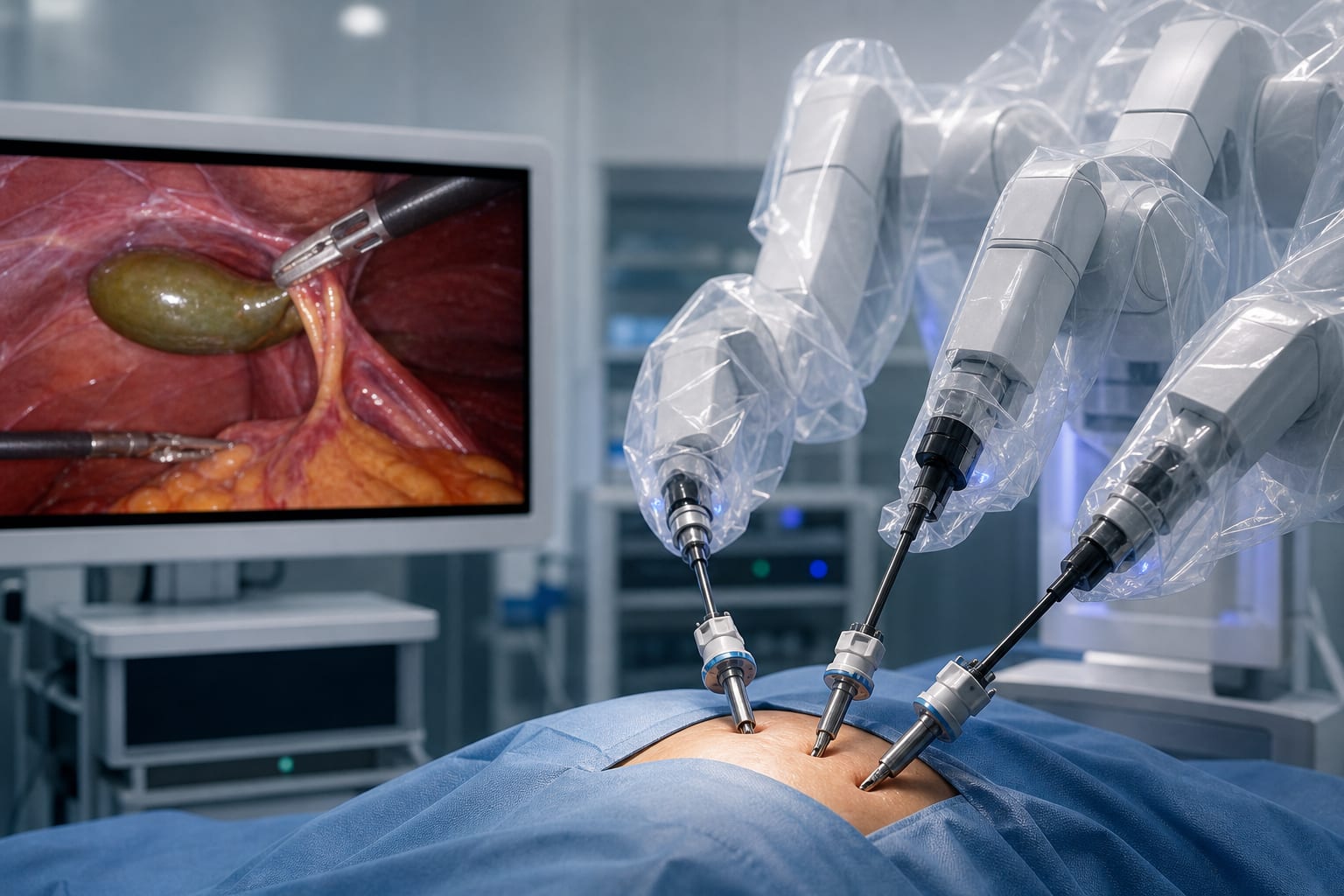
Clinical Scorecard: Comparative Analysis of Robotic-Assisted Versus Conventional Laparoscopic Cholecystectomy in Pediatric Patients: Impact on Gastrointestinal Recovery Time
At a Glance
Category
Detail
Condition
Cholecystectomy in Pediatric Patients
Key Mechanisms
Robotic platforms offer three-dimensional visualization, improved ergonomics, and wristed instruments for enhanced surgical dexterity.
Target Population
Children aged ≤18 years undergoing cholecystectomy for benign gallbladder disease.
Care Setting
Tertiary pediatric referral center
Key Highlights
Robotic-assisted cholecystectomy resulted in shorter hospital stays (2 days vs. 4 days).
Early oral feeding within 24 hours was achieved in 100% of robotic cases compared to 69.2% in conventional cases.
Passage of flatus within 24 hours was observed in 93.3% of robotic cases versus 30.8% in conventional cases.
No conversions to open surgery or surgical site infections were reported.
Postoperative complications were rare and comparable between robotic and conventional groups.
Guideline-Based Recommendations
Diagnosis
Cholecystectomy is indicated for symptomatic gallbladder disease, recurrent biliary pain, and complications such as cholecystitis.
Management
Robotic-assisted cholecystectomy is a safe and feasible approach in pediatric patients.
Monitoring & Follow-up
Monitor for postoperative complications and gastrointestinal recovery.
Risks
Longer operative times and higher costs associated with robotic surgery.
Patient & Prescribing Data
Pediatric patients undergoing cholecystectomy for benign gallbladder disease.
Robotic surgery may promote early postoperative recovery despite longer operative times.
Clinical Best Practices
Consider robotic-assisted surgery for complex cases where enhanced visualization and dexterity may be beneficial.
Ensure thorough preoperative assessment to determine suitability for robotic versus conventional approaches.