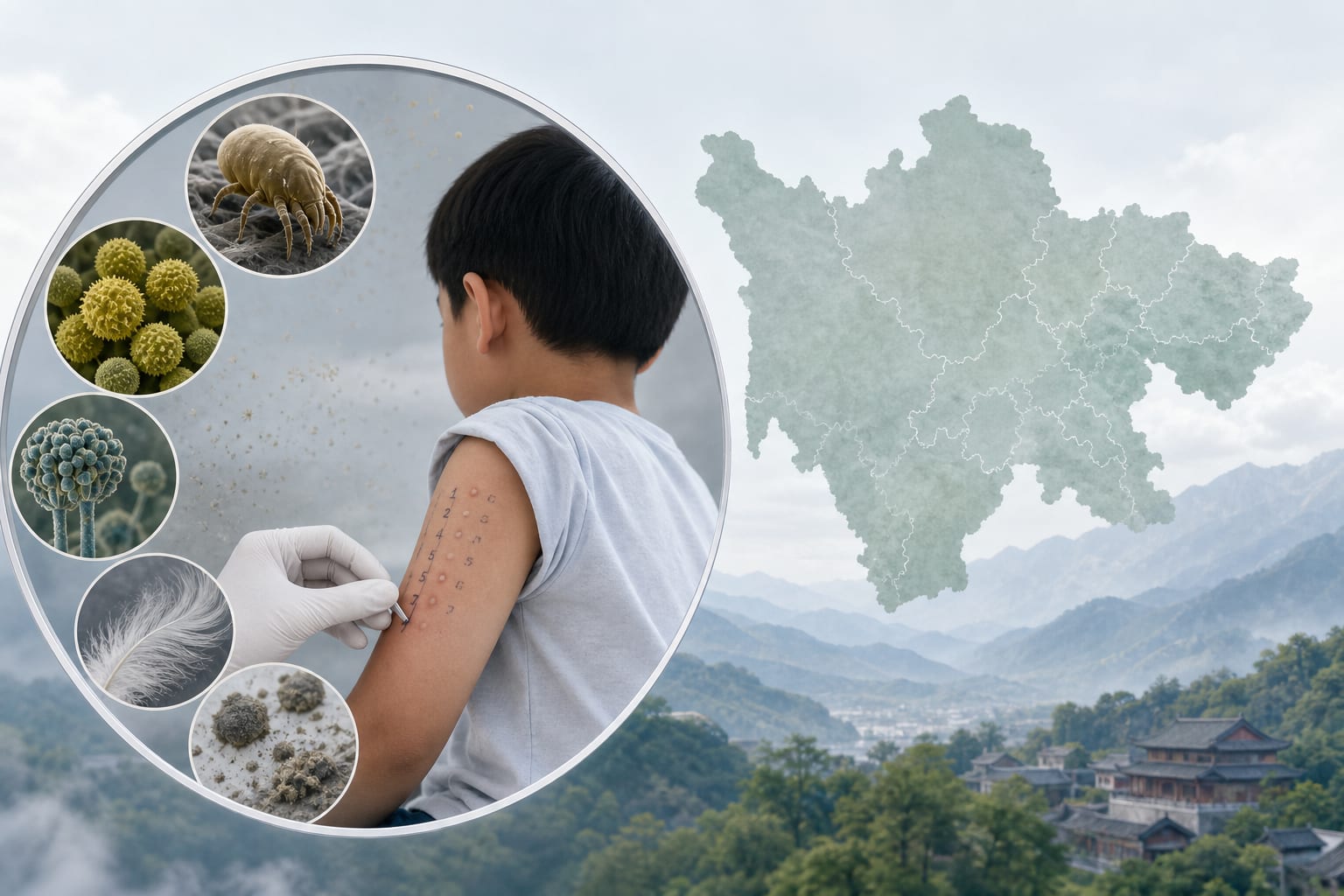
Distributional characteristics analysis of aeroallergens among children With allergic respiratory diseases in Sichuan province, China - Scorecard - MDSpire
Clinical Scorecard: Analysis of Aeroallergen Distribution Patterns in Pediatric Patients with Allergic Respiratory Conditions in Sichuan Province, China
At a Glance
Category
Detail
Condition
Respiratory allergic diseases in children
Key Mechanisms
Sensitization to inhaled allergens leading to allergic responses
Target Population
Pediatric patients with respiratory allergic diseases
Care Setting
Outpatient department of West China Second University Hospital
Key Highlights
52.4% of children showed positive skin prick test (SPT) results.
Most prevalent allergens: Dermatophagoides pteronyssinus, Dermatophagoides farinae, and house dust.
86.5% of sensitized children were sensitized to two or more allergens.
Sensitization rates increased with age, particularly in children with concomitant atopic diseases.
Findings emphasize the influence of local climate and geography on allergen exposure.
Guideline-Based Recommendations
Diagnosis
Utilize standardized skin prick testing for allergen sensitization assessment.
Management
Implement individualized immunotherapy strategies based on allergen sensitization profiles.
Monitoring & Follow-up
Regularly monitor sensitization patterns in pediatric populations to adapt management strategies.
Risks
Children with concomitant atopic diseases are at higher risk for progressive allergic disease.
Patient & Prescribing Data
Children with respiratory allergic diseases in Sichuan Province.
Higher sensitization rates observed in children with allergic rhinitis and atopic comorbidities.
Clinical Best Practices
Conduct comprehensive allergen screening in pediatric patients with respiratory allergies.
Consider geographic and climatic factors when assessing allergen exposure.