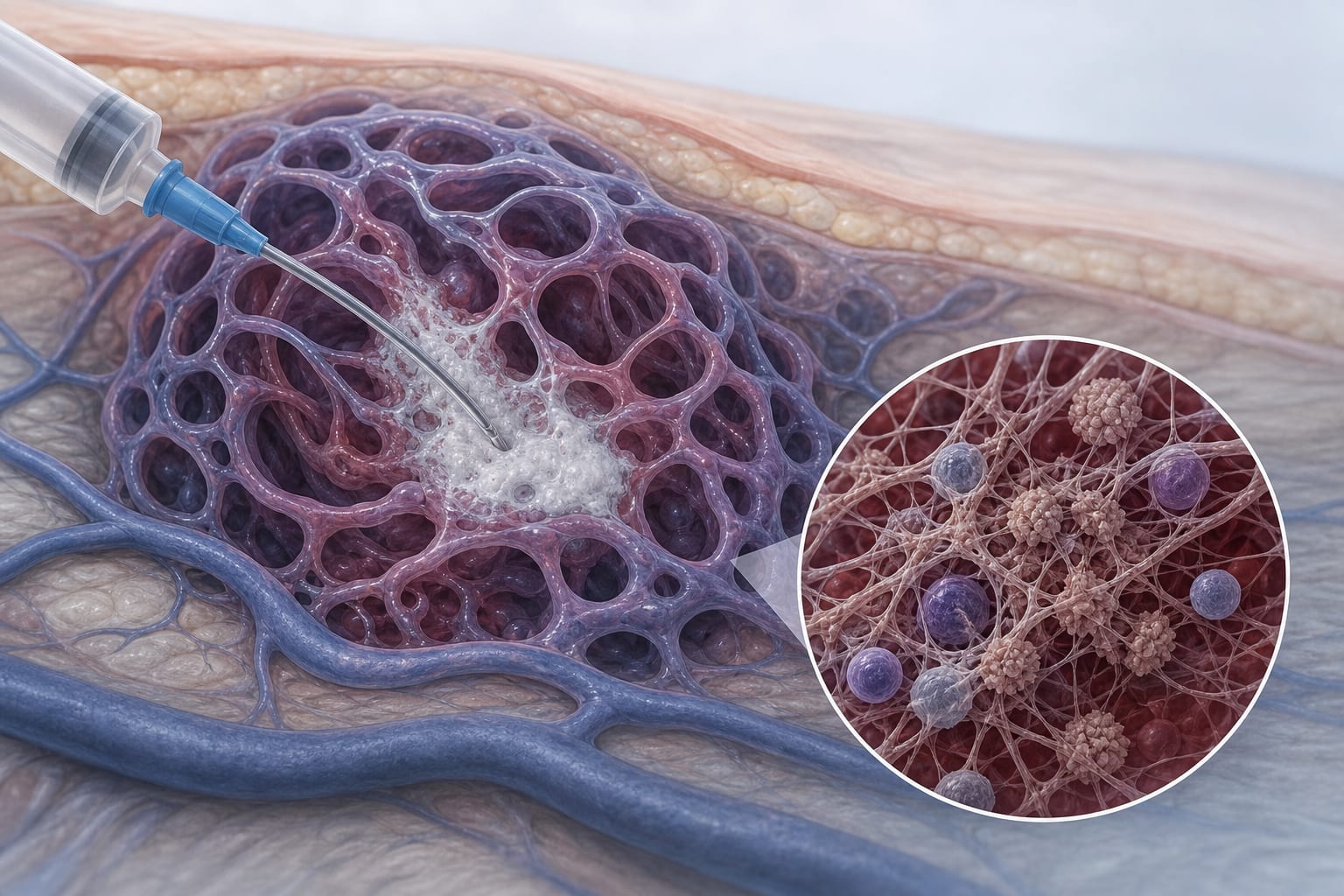
Venous malformation with localized intravascular coagulopathy in children treated with sclerotherapy and LWMH
-
By
-
Xiao Gao
-
Xuming Wang
-
Yuhua Wei
-
Shuai Niu
-
Le Yang
-
Lei Xu
-
July 1, 2026
-
Clinical Scorecard: Localized Intravascular Coagulopathy in Pediatric Venous Malformations: Outcomes of Sclerotherapy and Low Molecular Weight Heparin Treatment
At a Glance
| Category | Detail |
|---|
| Condition | Localized Intravascular Coagulopathy (LIC) |
| Key Mechanisms | Chronic thrombogenic activation within venous malformations (VMs) leads to localized coagulation abnormalities. |
| Target Population | Pediatric patients with venous malformations |
| Care Setting | Retrospective cohort study in a hospital setting |
Key Highlights
- 44.8% of pediatric VM patients exhibited LIC, with varying severity.
- Sclerotherapy is the primary intervention for managing LIC.
- Low molecular weight heparin (LMWH) serves as an adjuvant therapy to correct coagulation abnormalities.
- LIC severity correlates with lesion burden, not demographic factors.
- Routine screening for occult VMs in unexplained pediatric coagulopathy is recommended.
Guideline-Based Recommendations
Diagnosis
- LIC is defined as D-dimer ≥0.60 μg/ml.
Management
- Sclerotherapy is the core intervention for LIC control.
- LMWH should be administered preoperatively and postoperatively.
Monitoring & Follow-up
- Monitor D-dimer and fibrinogen levels post-treatment.
Risks
- Severe LIC can lead to disseminated intravascular coagulation (DIC).
Patient & Prescribing Data
Pediatric patients with venous malformations undergoing sclerotherapy.
LMWH administration is crucial for managing coagulation status and preventing DIC.
Clinical Best Practices
- Use multi-point puncture and imaging techniques for effective sclerotherapy.
- Administer LMWH at least one week prior to interventional procedures.
Related Resources & Content