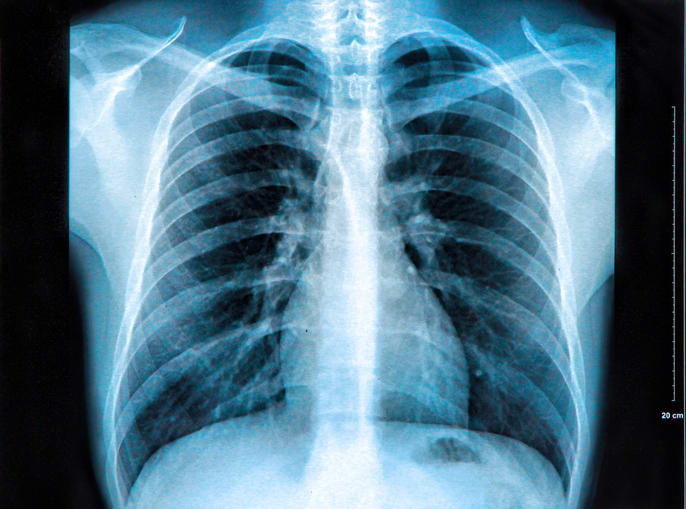
AI may estimate chest fluid with similar efficacy to radiologists
A general-purpose AI model performed comparably to experienced readers, but substantial errors highlighted the limits of chest radiography for quantifying pleural fluid.
By
Andrea Surnit
October 6, 2026
Clinical Scorecard: AI may estimate chest fluid with similar efficacy to radiologists
At a Glance
Category Detail
Condition Pleural Effusion Estimation Key Mechanisms Comparison of AI and radiologists in estimating pleural effusion volume using chest radiography and CT as reference. Target Population Adult patients with confirmed pleural effusion of at least 20 mL. Care Setting Tertiary institution
Key Highlights
AI model shows comparable accuracy to experienced radiologists in estimating pleural effusion volume. Moderate agreement with CT-derived volumes across AI and radiologists. Mean estimation errors were 300 mL for radiologist 1, 250 mL for radiologist 2, and 264 mL for AI. AI sensitivity and specificity for identifying effusions of at least 300 mL were both 78%. Estimation error varied based on imaging and patient characteristics. Guideline-Based Recommendations
Diagnosis
Use CT as the reference standard for pleural effusion volume estimation. Management
Consider AI as a supplementary tool for estimating pleural effusion volume. Monitoring & Follow-up
Monitor estimation errors and factors influencing accuracy in clinical practice. Risks
Be aware of substantial variability in individual volume estimates. Patient & Prescribing Data
Adult patients undergoing chest radiography and CT for pleural effusion assessment.
AI may assist in estimating pleural effusion volume but should not replace clinical judgment.
Clinical Best Practices
Utilize upright radiographs to reduce estimation errors. Acknowledge the limitations of chest radiography in estimating pleural fluid volume. Related Resources & Content