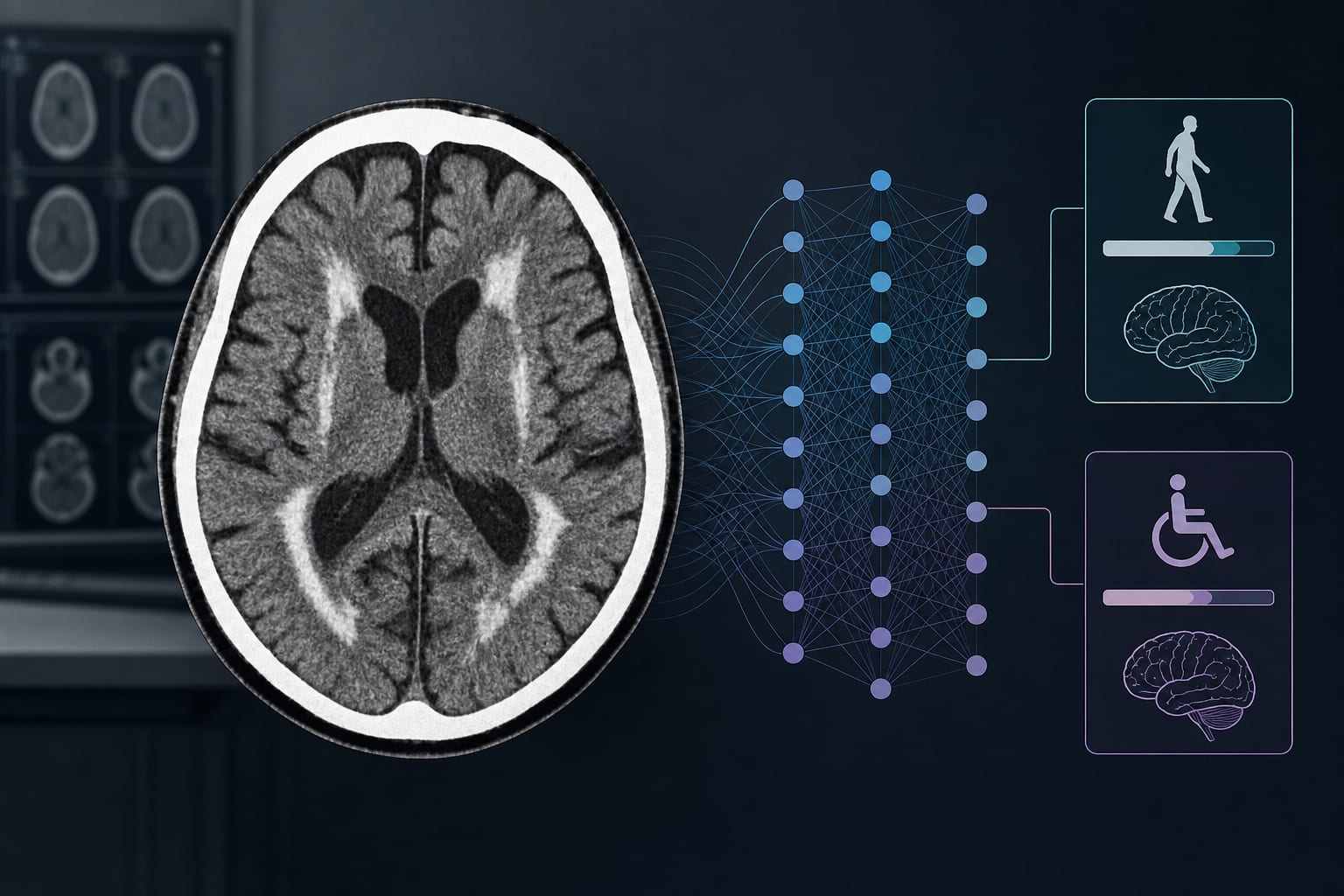
Clinical Scorecard: Enhanced prediction of stroke outcomes post-thrombectomy using a modified small vessel disease score: Insights from a CT-based machine learning analysis
At a Glance
Category
Detail
Condition
Ischemic Stroke (IS) due to Large Vessel Occlusion (LVO)
Key Mechanisms
Cerebral small vessel disease (cSVD) evaluated through modified Small Vessel Disease (mSVD) score and Brain Frailty Score (BFS)
Target Population
Individuals with anterior circulation LVO who underwent mechanical thrombectomy
Care Setting
Tertiary care facility in a middle-income nation
Key Highlights
mSVD score is a significant independent predictor of unfavorable outcomes post-thrombectomy.
Severe mSVD (score = 3) correlates with an 84.47% likelihood of poor outcomes.
mSVD outperforms BFS and individual CT indicators in predicting 90-day outcomes.
Incorporating mSVD into initial CT assessments may improve risk stratification.
Guideline-Based Recommendations
Diagnosis
Utilize admission CT to assess cSVD indicators including leukoaraiosis, atrophy, and lacunes.
Management
Consider mSVD score in treatment planning for patients undergoing mechanical thrombectomy.
Monitoring & Follow-up
Evaluate functional outcomes using the modified Rankin Scale (mRS) at 90 days post-stroke.
Risks
Advanced age, elevated NIHSS, and increased severity of leukoaraiosis and atrophy are linked to adverse outcomes.
Patient & Prescribing Data
351 individuals with anterior circulation LVO undergoing MT.
Higher mSVD scores correlate with decreased treatment effectiveness.
Clinical Best Practices
Incorporate mSVD score in initial assessments to enhance predictive accuracy for outcomes.
Monitor for signs of hemorrhagic transformation post-thrombectomy.