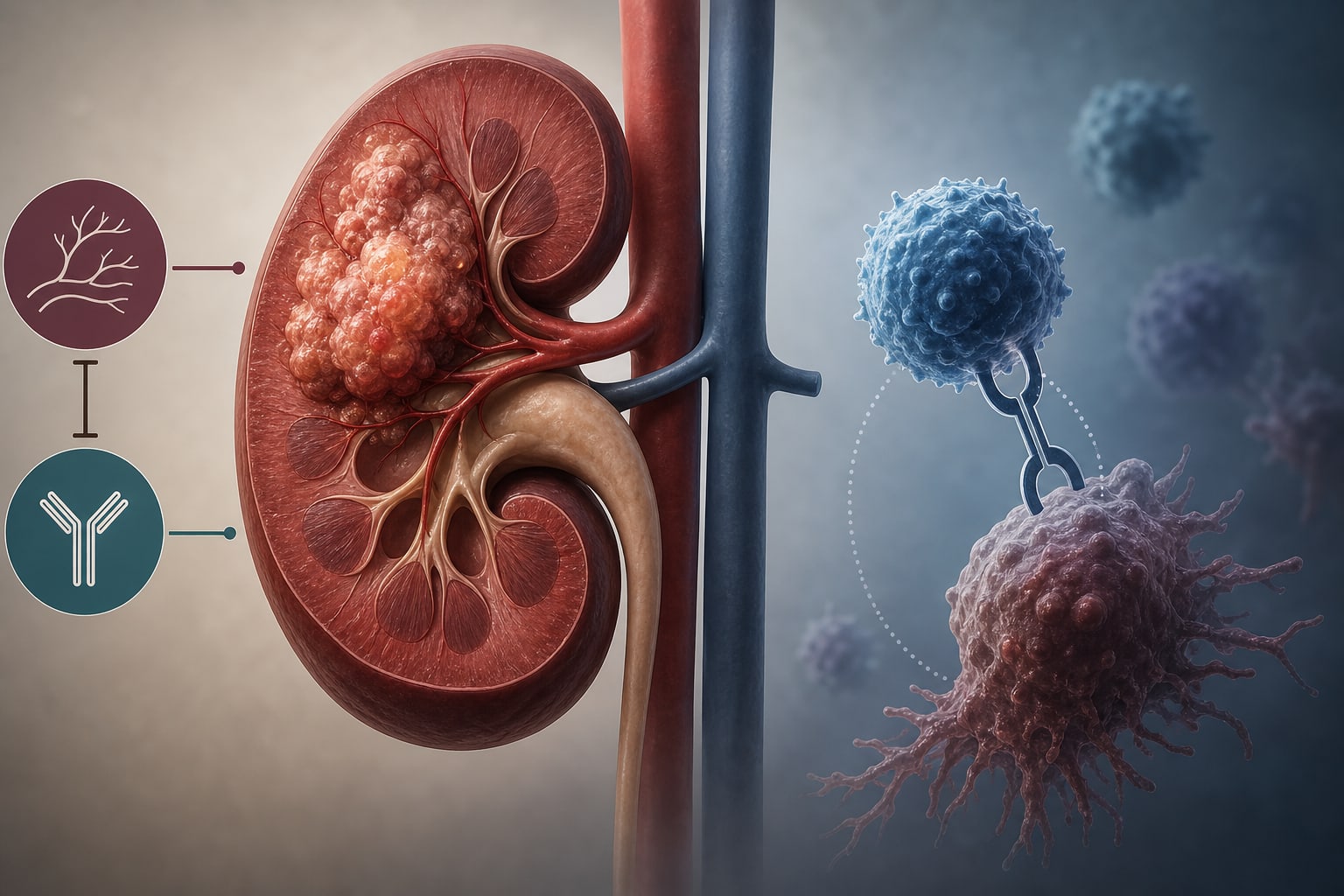
Clinical Scorecard: Effects of the COVID-19 Pandemic on the Management of Renal Cancer
At a Glance
Category
Detail
Condition
Renal cell carcinoma (RCC)
Key Mechanisms
COVID-19 pandemic led to healthcare strain causing postponement/cancellation of non-urgent care and patient avoidance of medical services, impacting RCC diagnosis and treatment.
Target Population
Patients newly diagnosed with renal cancer in the Netherlands between 2018 and 2021
Care Setting
Dutch healthcare system including hospitals and oncology/urology departments
Key Highlights
During the first COVID-19 wave, RCC diagnoses declined by approximately 30%, mainly in early-stage (T1a/T1b) tumors and elderly patients (>70 years).
Surgical treatments were prioritized by urgency; partial nephrectomies and focal therapies were delayed if capacity was limited, while radical nephrectomies were recommended within 6 weeks.
Systemic therapy for metastatic RCC was advised to be delayed if possible; maintenance immunotherapy was recommended to be canceled or replaced by targeted therapy.
Guideline-Based Recommendations
Diagnosis
Maintain RCC diagnostic procedures where possible despite pandemic constraints.
Recognize potential underdiagnosis especially in early-stage tumors and elderly patients during COVID-19 waves.
Management
Prioritize radical nephrectomy surgery within 6 weeks regardless of pandemic status.
Delay partial nephrectomies and focal therapies unless surgical capacity allows.
Delay systemic therapy in metastatic RCC if possible; cancel maintenance immunotherapy and consider tyrosine kinase inhibitors as alternatives.
Monitoring & Follow-up
Monitor changes in RCC diagnosis rates and stage distribution during pandemic periods.
Track treatment modifications and surgical capacity constraints.
Risks
Risk of delayed diagnosis particularly in early-stage RCC and elderly patients due to healthcare avoidance and downscaling.
Potential undertreatment or delayed treatment impacting patient outcomes.
Patient & Prescribing Data
Patients with newly diagnosed RCC during the COVID-19 pandemic in the Netherlands
Increased rates of no active treatment and decreased radical nephrectomy for T1a RCC during certain COVID periods; increased use of radiotherapy noted but likely unrelated to COVID-19.
Clinical Best Practices
Adhere to prioritization guidelines for surgical treatment based on urgency during healthcare capacity constraints.
Consider alternative systemic therapies to immunotherapy to reduce patient immunosuppression risk during pandemic.
Maintain surveillance for delayed diagnoses and adjust care pathways to mitigate impact of healthcare disruptions.
by Hilin Yildirim, Adriaan D. Bins, Corina van den Hurk, R. Jeroen A. van Moorselaar, Martijn G. H. van Oijen, Axel Bex, Patricia J. Zondervan, Katja K. H. Aben