Simulated tears of antero-posterior rotator cuff force-couple and reduced glenoid concavity decrease anterior glenohumeral stability: a robot-assisted biomechanical analysis of a load and shift sequence - Scorecard - MDSpire
Advertisement
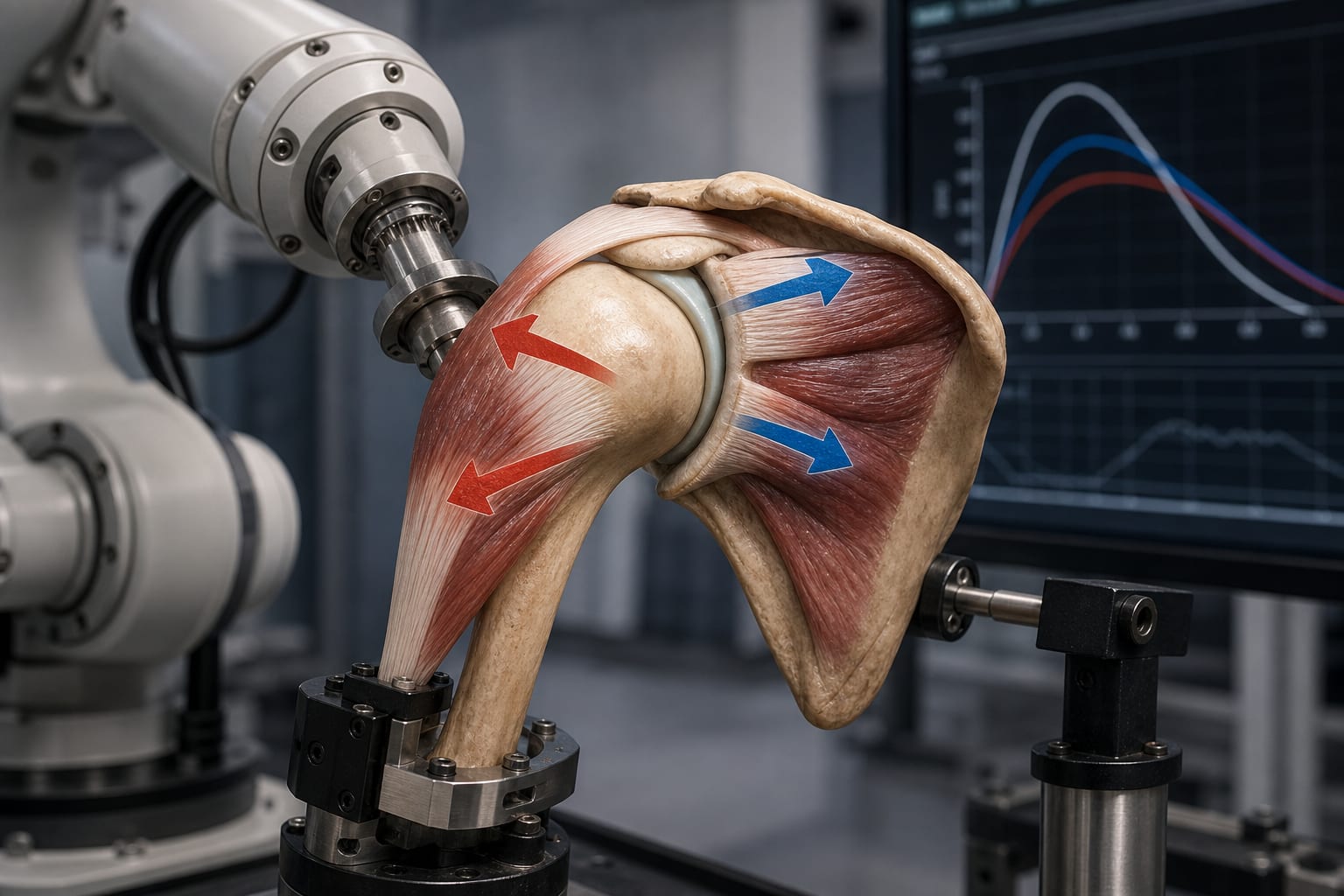
Simulated tears of antero-posterior rotator cuff force-couple and reduced glenoid concavity decrease anterior glenohumeral stability: a robot-assisted biomechanical analysis of a load and shift sequence
Clinical Scorecard: Impact of Simulated Antero-Posterior Rotator Cuff Force-Couple and Diminished Glenoid Concavity on Anterior Glenohumeral Stability: A Robot-Assisted Biomechanical Study of Load and Shift Dynamics
At a Glance
Category
Detail
Condition
Glenohumeral instability
Key Mechanisms
Influence of rotator cuff dynamics and glenoid concavity on stability
Target Population
Individuals with rotator cuff tears and shoulder instability
Care Setting
Biomechanical research and clinical evaluation
Key Highlights
Rotator cuff and glenoid concavity are critical for glenohumeral stability.
Tears of the subscapularis tendon significantly impact anterior stability.
Low glenoid depth increases the risk of rotator cuff tears.
Robot-assisted models provide realistic simulations for studying shoulder dynamics.
High rates of shoulder dislocations are linked to rotator cuff injuries.
Guideline-Based Recommendations
Diagnosis
Assess for rotator cuff tears and glenohumeral instability through imaging.
Management
Consider surgical intervention for significant rotator cuff tears affecting stability.
Monitoring & Follow-up
Regular follow-up for patients with shoulder instability and rotator cuff injuries.
Risks
Increased risk of re-dislocation in patients with rotator cuff tears.
Patient & Prescribing Data
Patients with shoulder instability and rotator cuff tears.
Surgical correction may be necessary to prevent recurrent dislocations.
Clinical Best Practices
Utilize advanced imaging techniques for accurate diagnosis.
Incorporate biomechanical assessments in treatment planning.
Educate patients on the risks associated with rotator cuff injuries.