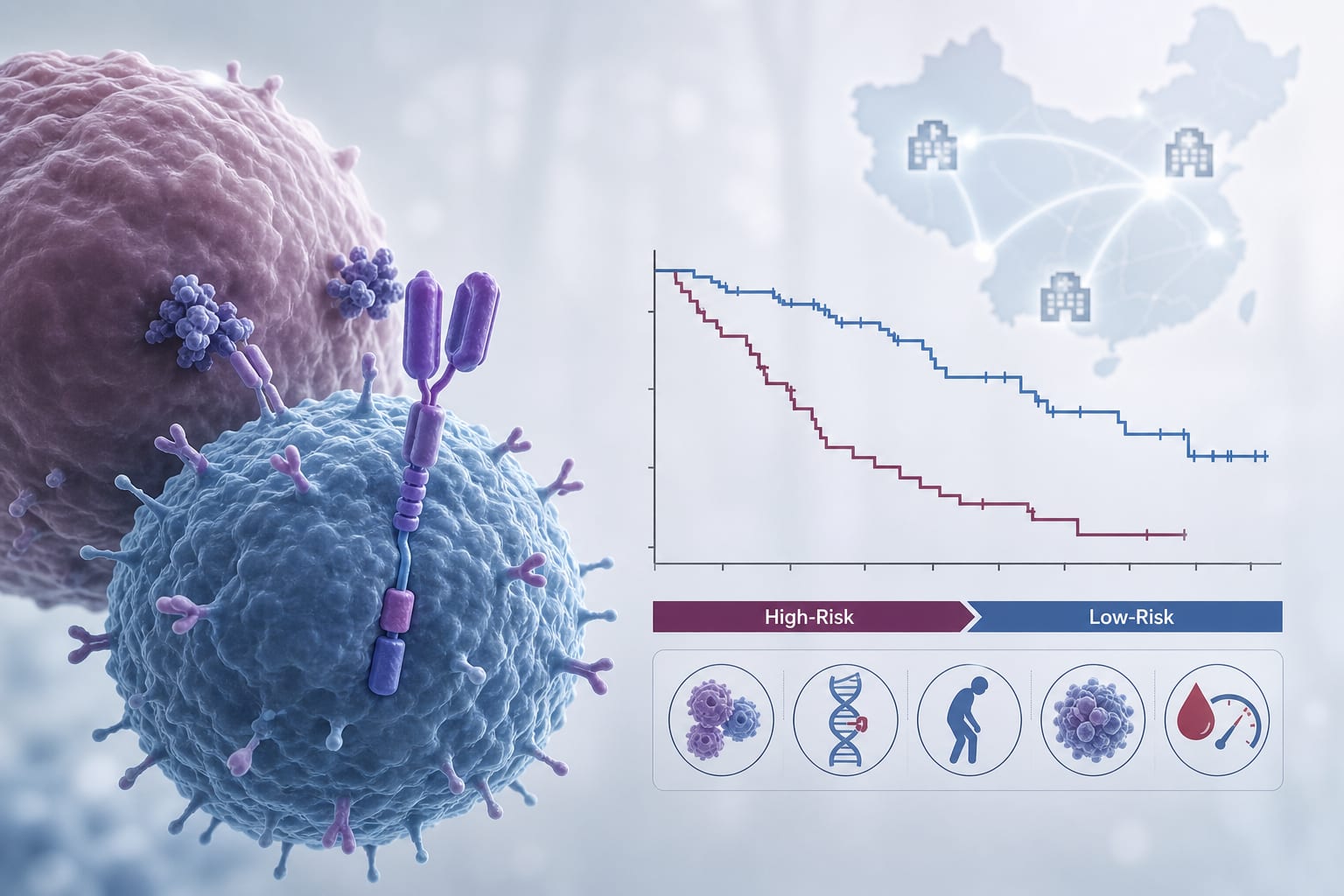
Single dose of 5 Gy can damage erythrocytes and consequently induces lymphocyte depletion in spleen and circulating blood
-
By
-
Peimeng You
-
Xiaohang Qin
-
Yinghui Li
-
Huiling Ye
-
Yuhui Zhao
-
Guangshan Wang
-
Cuimeng Tian
-
Shuo Yin
-
Junyu Li
-
Teng Ma
-
Feng-Ming (Spring) Kong
-
Jian-Yue Jin
-
June 19, 2026
-
Clinical Scorecard: A Single Exposure to 5 Gy Causes Erythrocyte Damage and Results in Lymphocyte Reduction in Spleen and Blood Circulation
At a Glance
| Category | Detail |
|---|
| Condition | Radiation-induced lymphopenia (RIL) |
| Key Mechanisms | Erythrocyte damage leading to lymphocyte depletion via splenic clearance. |
| Target Population | Patients undergoing radiotherapy for solid tumors. |
| Care Setting | Oncology and hematology |
Key Highlights
- 5 Gy irradiation damages erythrocytes and depletes lymphocytes.
- Lymphocyte depletion is observed in both peripheral blood and spleen.
- Irradiated erythrocytes are phagocytosed by macrophages in the spleen.
- RIL is associated with poor prognosis in cancer patients.
- Direct radiation exposure to lymphocytes is not the sole cause of RIL.
Guideline-Based Recommendations
Diagnosis
- Monitor lymphocyte counts in patients receiving radiotherapy.
Management
- Consider strategies to mitigate RIL in patients undergoing radiotherapy.
Monitoring & Follow-up
- Regular assessment of peripheral blood lymphocyte levels post-radiation.
Risks
- Increased risk of disease progression and metastasis associated with RIL.
Patient & Prescribing Data
Cancer patients receiving radiotherapy.
Low-dose radiation can indirectly affect immune response by damaging erythrocytes.
Clinical Best Practices
- Implement monitoring protocols for lymphocyte levels in irradiated patients.
- Educate patients on the risks of RIL and its implications for treatment.
Related Resources & Content